


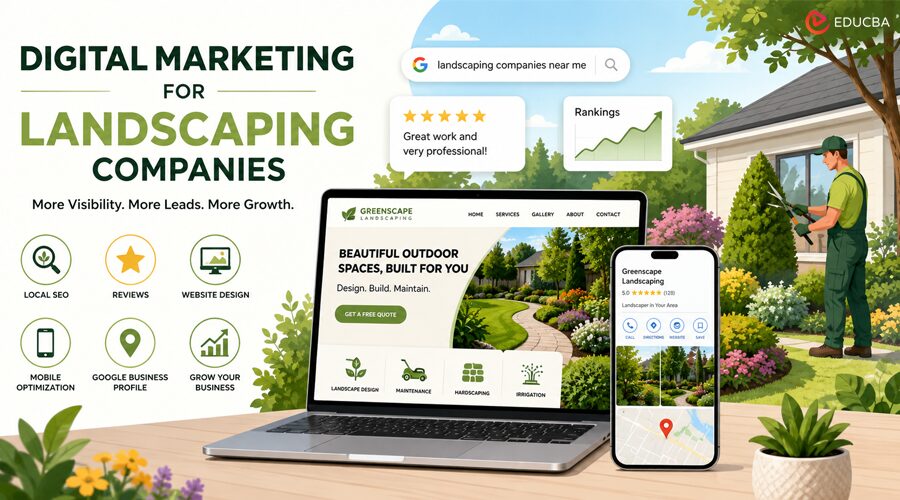
Landscaping is not mentioned much at marketing conferences. It does not appear in the case studies circulating on LinkedIn. It does not have the glossy reputation of SaaS or e-commerce. However, if you actually look at what is happening in the industry, landscaping has become one of the more instructive examples of digital marketing for landscaping companies and how a traditional, relationship-driven trade adapts or fails to adapt to a digital economy.
Anyone studying seo for landscapers over the past few years has watched the gap between top performers and laggards widen at a remarkable pace. Five years ago, the difference between a well-marketed landscaping company and an average one was modest. Today, it is the difference between being booked solid through October and chasing every job that walks in the door. The change did not happen overnight, nor did it result from a single breakthrough tactic. It happened because the buyer changed, the platforms changed, and a quiet group of operators figured out how to ride those changes through effective digital marketing for landscaping companies.
How the Landscaping Customer Evolved?
In 2015, a residential landscaping customer found a contractor through a yard sign, a neighbor’s recommendation, or, if they were proactive, a search on Angie’s List or HomeAdvisor. The buying decision was relatively quick and relatively trust-based. Most operators did not need much of a digital presence because customers were not really looking online.
By 2026, that has been turned on its head. Today’s residential customer almost always begins with a Google search. They compare Instagram portfolios, read multiple sets of reviews, watch project videos, scroll through before-and-after galleries, and visit three or four company websites before they pick up the phone. Many of them never call at all; they fill out a contact form at midnight and expect a response by morning.
Commercial landscaping has gone through a parallel shift. Property managers and HOA boards who once relied on referrals now run formal RFP processes that include digital due diligence. A landscaping company without a credible web presence often gets eliminated before it even reaches the bid stage.
This change in buyer behavior is the single biggest reason digital marketing for landscaping companies matters more now than ever. The decisions are being made online, often before any human conversation has happened.
What Top-performing Landscaping Websites Actually Do Differently?
When you look at the best landscaping website examples and compare them to typical industry sites, the differences are striking, and they are not really about aesthetic taste. There are about a handful of structural choices.
- Real galleries, not stock photography: The websites that convert showcase actual project work, organized by service category, with enough volume to demonstrate range. Stock photos of generic green lawns instantly kill credibility. Skeptical buyers in 2026 can spot them in two seconds.
- Service pages with substance: A “Lawn Care” page that is a paragraph and a form does not help anyone. A page that walks through what is included, how the service works, what pricing tiers look like, and what questions homeowners typically ask before signing up sells that page.
- Geographic specificity: Landscaping is hyperlocal. A company serving four suburbs needs four real service-area pages, not one with a city dropdown. Climate, soil, common plant choices, and seasonal timing differ enough that generic content cannot cover them all.
- Mobile-first conversion paths: Most residential landscaping traffic arrives on phones, often on weekends when homeowners are walking their yards. Forms that ask for fifteen fields get abandoned. Click-to-call buttons that don’t work get ignored. Short, mobile-friendly conversion paths get filled out.
- Social proof done well: Reviews pulled in from multiple platforms, Google, Yelp, Houzz, and Facebook, rather than handpicked testimonials on a static page. Modern buyers verify everything; sites that make verification easy build trust faster.
- Speed: Landscaping sites are notorious for being loaded with huge uncompressed project images. A mobile page that takes six seconds to load can lose many visitors before the images even appear.
The Local SEO Foundation that Quietly Does the Heavy Lifting
A beautiful website that no one can find is a billboard in the woods. Top-performing landscaping companies pair their site with a disciplined local SEO operation, and it is that combination, not either piece alone, that produces the leads.
The components are not exotic, but they require ongoing discipline:
- A complete, regularly updated Google Business Profile with photos, services, hours, and posts.
- NAP (name, address, phone) consistency across every directory, citation site, and social profile.
- A steady flow of fresh, detailed reviews regularly, not periodic bursts.
- Service-area pages on the website that align with the Business Profile’s geography.
- Local backlinks from chambers of commerce, neighborhood blogs, suppliers, partner trades, and regional publications.
- Schema markup helps search engines and AI understand what the business does and where it serves customers.
The landscaping companies dominating their local markets have been doing this consistently for years. They did not suddenly start ranking; they earned it through compounding monthly effort that competitors could not match. This is one of the strongest examples of successful digital marketing for landscaping companies.
What the AI Search Shift Means for Landscapers?
The next wave is already here. When a homeowner asks ChatGPT, Perplexity, or Google’s AI Overviews, “Who is the best landscaper in Denver?” the answer comes from a different signal set than the classic ten blue links. Authority, structured content, citations across the web, review depth, and entity clarity all matter more.
Landscaping companies that have invested in a clean digital foundation are already appearing in these AI-mediated answers. Those that relied on paid ads or thin lead-generation pages are slipping out of visibility entirely. For homeowners searching from a phone at 9 p.m., being invisible in the AI layer is the same as not existing.
The lesson is not that landscapers suddenly need a new strategy. It is the strategy that’s worked for serious operators all along: depth, consistency, real authority, structured content now has more leverage than ever.
Mistakes the Rest of the Industry is Still Making
A few patterns recur among landscaping companies that have invested in marketing but are not seeing results.
Treating the website as a one-time build. Sites get launched and then sit untouched for three years. Search engines reward sites that update and grow. Stale sites slide silently.
Buying leads instead of building a brand. Lead-buying platforms can fill a calendar in the short term, but the operator who relies on them for five years ends up owning nothing. The one who built local SEO and a real website has an appreciating asset.
Ignoring reviews because “our work speaks for itself.” It might, but it cannot speak in Google’s local pack. Without a steady review pipeline, even excellent companies get outranked by mediocre ones that ask every customer.
Posting AI-generated content at volume. The models recognize generic, low-effort writing that they were trained to. Sites that flooded their blogs with formulaic output over the last two years are now seeing those pages quietly de-prioritized.
Final Thoughts
Landscaping has become a digital business whether the industry wanted it or not. Customers research online, decide online, and increasingly first encounter contractors through AI-mediated answers they do not even think of as search. The companies winning are not the ones with the biggest crews or the lowest prices. They are the ones whose digital marketing strategy for landscaping companies and digital presence do the real work every hour of every day, long before a single phone call happens.
The good news is that the playbook is not a secret. The bad news is that it takes years of consistent execution to build. The operators starting today will, in two years, look like they got lucky. The ones still waiting will keep wondering why the calendar is not as full as it used to be.
Recommended Articles
We hope this guide on Digital Marketing for Landscaping Companies helps you build a stronger online presence and attract more qualified local customers. Explore these recommended articles for more insights on local SEO, website optimization, AI search, online branding, and digital marketing strategies for service businesses.


