


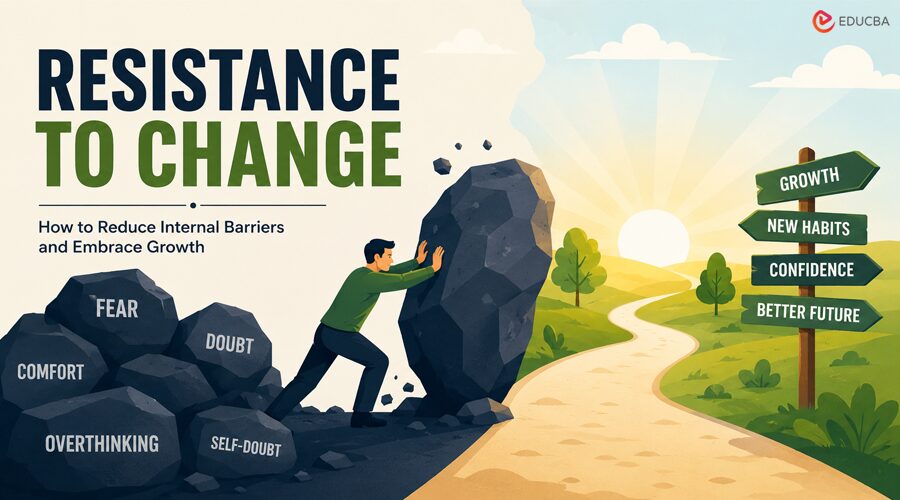
Change can sound exciting when it is still an idea. A better routine, a healthier relationship with money, a stronger body, a new career path, or a calmer way of living can all feel motivating from a distance. However, when real action is required, resistance to change begins to surface. That resistance may look like procrastination, overthinking, irritation, avoidance, or sudden doubt. You might know the change would help, but your mind starts building reasons to stay where you are. Someone facing financial pressure may explore resources like personal finance debt relief, but even practical next steps can feel difficult when the mind is busy predicting failure, discomfort, or loss.
Your Brain Likes Familiar Problems
One reason change feels threatening is that familiar problems are still familiar. Old routines, spending patterns, and habits may be unhealthy, stressful, or limiting, yet they often feel familiar, comforting in the moment, and easier than change.
Internal resistance often begins when your brain treats uncertainty like danger. It says, “What if this does not work?” “What if I fail?” “What if people judge me?” “What if I cannot keep it up?” Those questions can sound practical, but they are often fear stories wearing the mask of caution. Reducing resistance does not mean pretending those fears are silly. It means noticing them without letting them control the whole decision.
Anxiety Often Comes From the Story You Add
Change itself is not always the main source of anxiety. Sometimes the anxiety comes from the story you attach to it. Starting a budget is one action. The story might be, “This will prove I am bad with money.” Going back to school is one action. The story might be, “Everyone else is ahead of me.” Setting a boundary is one action. The story might be, “People will leave if I disappoint them.”
The action may be challenging, but the story makes it heavier. A helpful first step is to write down the exact fear. Not just “I am stressed,” but “I am afraid that if I try this and fail, it will mean I cannot change.” Once the fear is visible, it becomes easier to question.
Separate Facts From Predictions
Resistance grows when predictions are treated like facts. “This will be hard” may be true. “This will ruin everything” is a prediction. “I have struggled before” may be true. “I will always struggle” is a prediction. Try dividing your thoughts into two columns. In one column, write facts. In the other, write predictions.
Facts might include your current schedule, account balance, energy level, or past attempts. Predictions might include fears about failure, rejection, discomfort, or embarrassment. This simple exercise gives your logical mind more room. You may still feel nervous, but you can see that not every scary thought deserves authority.
Self Compassion Lowers the Threat
Many people try to force change through criticism. They tell themselves they are lazy, weak, irresponsible, or behind. This may create a short burst of pressure, but it usually increases resistance over time. Nobody wants to move toward a goal that feels like punishment.
Self compassion helps lower the threat. The sounds like, “This is hard, and I can take one step.” It says, “I have avoided this before, but I can try a smaller approach.” It says, “I do not need to shame myself into growing.” The Center for Mindful Self Compassion describes self compassion as responding to difficulty with kindness, common humanity, and mindfulness. That approach matters because change becomes easier when your inner voice is firm but not cruel.
Shrink the First Step to Overcome Resistance to Change
A major reason people resist change is that they make the first step too large. “Fix my finances” is overwhelming. “Review one account” is manageable. “Get healthy” is vague. “Walk for ten minutes after lunch” is specific. “Change my whole life” is too heavy. “Clean one surface” is doable.
Small steps reduce emotional friction. They show your brain that change does not have to happen all at once. You are not signing a contract to become perfect forever. You are taking the next manageable action. This is important because action often reduces resistance better than thinking does. Once you begin, the change becomes less abstract. Your brain gets new evidence: “I can do this part.”
Use a Growth Mindset
A fixed mindset treats difficulty as proof that you are not capable. A growth mindset treats difficulty as part of learning. That shift can dramatically reduce resistance. If you see discipline as something you either have or lack, every mistake can feel like a final judgment. If you view it as a skill that can be developed, mistakes become useful feedback. And if you believe you are simply bad with money, each setback tends to reinforce that belief.
If you believe money habits can improve, each review becomes practice. Stanford psychologist Carol Dweck’s work on growth mindset explains how beliefs about learning and ability affect motivation and behavior. In everyday life, this means you do not have to feel naturally good at change before you begin. You can become better through repetition.
Expect Discomfort Without Obeying It
Change usually brings discomfort. That does not mean something is wrong. It means your system is adjusting. Setting boundaries can feel awkward. Changing spending habits may feel like deprivation. Learning a new skill can bring feelings of insecurity.
You may feel restless as you replace an old coping habit with a healthier one. Instead of treating discomfort as a stop sign, treat it as information. Ask, “Is this dangerous, or is this unfamiliar?” If it is unfamiliar, you can slow down without quitting.
Design for Less Resistance
Your environment can either increase or decrease resistance. If the new habit requires too much effort, your brain will keep looking for escape routes. Make the desired action easier. Put workout clothes where you can see them. Keep your budget link on your phone’s home screen. Prepare meals before the week gets stressful. Remove shopping apps if impulse spending is a trigger. Set reminders for important tasks. Keep the first step visible.
Also, make the old pattern slightly harder. Add a waiting period before purchases. Put your phone in another room during focused work. Cancel reminders from brands that trigger spending. Reduce the number of decisions you need to make when your energy is low. Change becomes more sustainable when your surroundings support the person you are becoming.
Replace Fear With Curiosity
Fear asks, “What if this goes wrong?” Curiosity asks, “What can I learn from trying?” Fear wants certainty before action. Curiosity allows action to create information. A curious approach might sound like, “I will test this routine for two weeks.” “I will track my spending without judging it.” “I will try one conversation and see what happens.” “I will learn what makes this hard.” This turns change into an experiment instead of a final exam. You are allowed to adjust, learn and improve the method.
Resistance Gets Smaller With Repetition
The first time you change a pattern, it may feel uncomfortable. The second time may still feel strange. But with repetition, the new action becomes less threatening. Your brain starts to recognize it. The unfamiliar becomes familiar. That is why consistency matters more than intensity. You do not need one dramatic transformation. You need repeated proof that change is survivable.
Reducing internal resistance to change is not about eliminating fear forever. It is about recognizing the fear story, treating yourself with compassion, taking a small next step, and choosing growth over avoidance. Over time, the change that once felt threatening can become part of how you live.
Recommended Articles
We hope this comprehensive guide on resistance to change helps you better understand the psychology behind why change feels difficult and how to overcome it. Check out these recommended articles for more insights and strategies to support your personal growth and mindset transformation.

