
What is Competency Mapping?
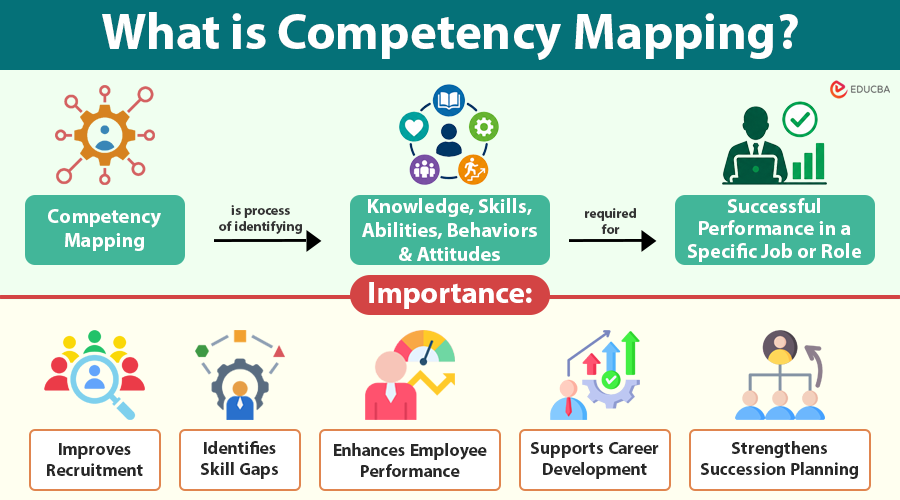
Competency mapping is the process of identifying knowledge, skills, abilities, behaviors, and attitudes required for successful performance in a specific job or role. It involves comparing an employee’s existing competencies with those required for a position to identify strengths and skill gaps.
For example, a sales manager’s role may require competencies such as communication, negotiation, leadership, customer relationship management, and problem-solving. Through competency mapping, organizations can assess whether employees possess these competencies and determine areas for improvement.
Table of Contents:
Key Takeaways:
- Competency mapping identifies required skills, knowledge, behaviors, and abilities for specific job roles.
- It helps organizations identify skill gaps and design targeted employee development programs.
- Competency mapping improves recruitment, performance management, succession planning, and overall workforce effectiveness.
- Regular competency assessments align employee capabilities with organizational goals and business growth.
Importance of Competency Mapping
Competency mapping plays an important role in human resource management.
1. Improves Recruitment
Competency mapping helps organizations recruit candidates whose qualifications, skills, and behaviors closely match job requirements.
2. Identifies Skill Gaps
Competency assessments reveal employee skill deficiencies, enabling organizations to design targeted training and development programs.
3. Enhances Employee Performance
Employees clearly understand expected competencies, improving productivity, accountability, job effectiveness, and overall performance outcomes.
4. Supports Career Development
Competency mapping guides employees in career planning by identifying competencies required for future advancement opportunities.
5. Strengthens Succession Planning
Organizations can identify high-potential employees and prepare them effectively for future leadership and critical roles.
Key Components of Competency Mapping
Competency mapping focuses on several essential components:
1. Knowledge
Knowledge includes theoretical concepts, industry expertise, and practical understanding required to perform job responsibilities effectively.
2. Skills
Skills are acquired capabilities enabling employees to complete tasks efficiently, accurately, and consistently in workplace settings.
3. Abilities
Abilities represent innate or developed capacities that help individuals successfully perform activities and solve workplace challenges.
4. Behaviors
Behaviors are observable actions and patterns of conduct that significantly influence employee performance, teamwork, and organizational success.
5. Attitudes
Attitudes reflect an individual’s mindset, values, and approach toward work, affecting motivation, productivity, and collaboration.
Types of Competencies
Organizations generally classify competencies into the following types.
1. Core Competencies
Core competencies are essential behaviors, values, and skills expected of all employees across all roles within organizations.
Examples:
- Integrity
- Teamwork
- Communication
- Customer focus
2. Functional Competencies
Functional competencies include the job-specific knowledge, expertise, and abilities necessary to perform particular roles effectively and efficiently.
Examples:
- Financial analysis for accountants
- Coding skills for software developers
- Digital marketing expertise for marketers
3. Behavioral Competencies
Behavioral competencies encompass observable behaviors, interpersonal skills, and attitudes influencing employee interactions, collaboration, and workplace performance.
Examples:
- Leadership
- Collaboration
- Adaptability
- Conflict resolution
4. Technical Competencies
Technical competencies involve specialized knowledge, technical expertise, and practical abilities required to perform specific technical tasks.
Examples:
- Programming languages
- Data analysis
- Machine operation
- Network administration
5. Leadership Competencies
Leadership competencies comprise the skills and behaviors that enable managers to guide teams, make decisions, and achieve organizational goals.
Examples:
- Strategic thinking
- Decision-making
- Team management
- Change management
Competency Mapping Process
Organizations typically follow a structured process for competency mapping.
Step 1: Define Organizational Goals
Begin by understanding business objectives and workforce requirements.
Step 2: Identify Key Roles
Determine critical positions that require competency mapping.
Step 3: Conduct Job Analysis
Gather information about job responsibilities, tasks, and expectations.
Methods may include:
- Interviews
- Observation
- Questionnaires
- Job descriptions
- Focus groups
Step 4: Identify Required Competencies
List competencies necessary for successful job performance.
For example:
| Job Role | Key Competencies |
| Sales Executive | Communication, Negotiation, Customer Focus |
| HR Manager | Leadership, Conflict Resolution, Employee Relations |
| Software Developer | Coding, Problem Solving, Analytical Thinking |
Step 5: Assess Employee Competencies
Evaluate employees using various assessment methods.
Common methods include:
- Performance reviews
- Self-assessments
- Manager evaluations
- Psychometric tests
- Skill assessments
- 360-degree feedback
Step 6: Identify Competency Gaps
Compare current competencies with required competencies to determine gaps.
Step 7: Develop Improvement Plans
Design training and development programs to address identified gaps.
Step 8: Monitor and Review
Continuously evaluate employees’ progress and update competency frameworks as needed.
Methods of Competency Mapping
Several methods are used to perform competency mapping.
1. Interviews
Interviews gather detailed information from employees and managers regarding job responsibilities, required competencies, and expectations.
2. Questionnaires
Questionnaires systematically collect competency-related information from employees, providing standardized data for analysis and evaluation purposes.
3. Observation
Observation involves supervisors monitoring employees during tasks to identify demonstrated competencies, behaviors, and performance patterns.
4. Assessment Centers
Assessment centers use simulations, exercises, and role-plays to evaluate employee competencies in realistic workplace scenarios.
5. Psychometric Assessments
Psychometric assessments measure personality traits, aptitude, cognitive abilities, and behavioral characteristics using standardized testing methods.
6. 360-Degree Feedback
360-degree feedback gathers competency evaluations from supervisors, peers, subordinates, and customers to provide a comprehensive employee assessment.
7. Performance Appraisal
Performance appraisal analyzes existing performance records to assess employee competencies, strengths, weaknesses, and development needs.
Benefits of Competency Mapping
Competency mapping offers numerous benefits.
1. Better Talent Acquisition
Competency mapping enables organizations to recruit candidates whose skills, knowledge, and behaviors align with job requirements.
2. Effective Training Programs
Organizations can design targeted training programs to address identified competency gaps and effectively improve employee capabilities.
3. Increased Productivity
Employees possessing appropriate competencies perform tasks efficiently, resulting in higher productivity and improved organizational performance.
4. Improved Employee Engagement
Employees clearly understand expectations and career opportunities, increasing motivation, engagement, and commitment to organizational goals.
5. Stronger Performance Management
Competencies establish objective performance standards, enabling fair evaluations, constructive feedback, and continuous employee improvement processes.
6. Enhanced Succession Planning
Organizations systematically identify and develop high-potential employees, ensuring leadership continuity and long-term organizational stability.
Challenges of Competency Mapping
Despite its benefits, competency mapping can present certain challenges.
1. Time-Consuming Process
Developing comprehensive competency frameworks requires significant time, effort, and collaboration across multiple organizational departments.
2. Difficulty in Defining Competencies
Defining and measuring certain competencies, especially behavioral traits, can be challenging and sometimes inconsistent across evaluators.
3. Subjective Assessments
Personal biases and differing evaluator perspectives may influence competency assessments, reducing accuracy and fairness.
4. Frequent Updates Required
Organizations must regularly update competency frameworks to reflect evolving business needs, technologies, and job responsibilities.
5. Employee Resistance
Some employees may perceive competency assessments negatively, leading to resistance, anxiety, or reduced participation levels.
6. Resource Intensive
Implementing competency mapping often requires specialized tools, expert consultants, training programs, and considerable organizational resources.
Examples of Competency Mapping
Below are examples illustrating how competency mapping is applied across industries and job roles to assess skills, identify gaps, and support employee development.
1. Information Technology Company
An IT organization maps competencies for software developers.
Required competencies:
- Programming languages
- Problem-solving
- Teamwork
- Analytical thinking
- Communication
Employees lacking specific technical skills receive targeted training.
2. Banking Sector
A bank identifies competencies for relationship managers.
Required competencies:
- Customer service
- Financial knowledge
- Sales ability
- Communication
- Relationship management
Competency assessments help determine promotion readiness.
3. Manufacturing Organization
A manufacturing company maps competencies for production supervisors.
Required competencies:
- Process management
- Safety awareness
- Leadership
- Quality control
- Decision-making
Training programs are designed to strengthen supervisory skills.
Final Thoughts
Competency mapping helps organizations identify, assess, and develop employee capabilities effectively. It improves recruitment, training, performance management, and succession planning while aligning workforce skills with business objectives. This strategic approach enhances individual performance, supports organizational growth, and ensures long-term business success.
Frequently Asked Questions (FAQs)
Q1. How often should competency mapping be updated?
Answer: Organizations should review and update competency frameworks regularly, typically once a year or whenever significant changes occur in business strategies, technologies, or job roles, to ensure continued relevance.
Q2. Who is responsible for competency mapping in an organization?
Answer: Competency mapping is typically managed by the HR department in collaboration with managers, team leaders, and subject-matter experts who provide insights into job requirements and performance expectations.
Q3. Can competency mapping be used for employee promotions?
Answer: Yes, competency mapping helps organizations evaluate employees’ readiness for higher roles by assessing whether they possess the competencies required for promotion and leadership responsibilities.
Recommended Articles
We hope that this EDUCBA information on “Competency Mapping” was beneficial to you. You can view EDUCBA’s recommended articles for more information.


