


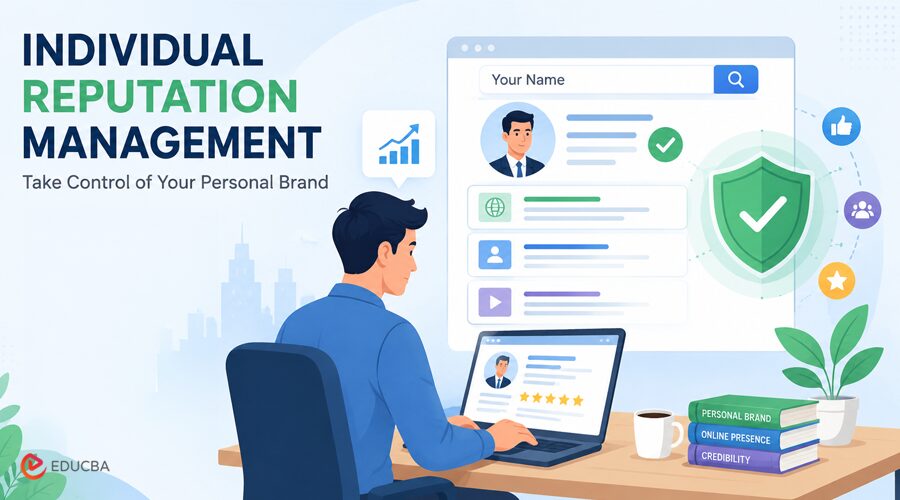
People often search your name before they speak to you. A recruiter checks your background. A client looks for proof that you are credible. An investor, journalist, partner, or board member may do the same before a meeting.
That first search can help you or hurt you. A strong profile, current bio, interview, article, or professional page builds trust before you enter the room. An old article, a thin LinkedIn profile, a bad photo, an outdated directory listing, or a misleading result can have the opposite effect. That is why individual reputation management is no longer only for public figures.
How Can Individuals Take Control Of Their Online Reputation?
1. Search Your Name As Someone Else Would
The first step in effective individual reputation management is understanding what people already see when they search for you.
Your name will not look the same in every search. One person may type only your full name. Another may add the city, company, job title, school, old business name, interview, review, or lawsuit. Check those versions in Google and Bing, then look at image results, LinkedIn, YouTube, and public social profiles tied to your name.
Do the same search on mobile. Results can shift by device, location, and search history. Page one matters most, but page two is worth checking too. One new article, profile update, or social post can push a weak result higher than expected.
Write down what appears. Keep the good results, questionable results, outdated profiles, personal information, duplicates, and anything that feels inaccurate. Personal reputation management works better when you are not guessing. You need a clear picture of what people already see.
If you would rather not piece that together on your own, TheBestReputation offers a free online presence audit that maps out what currently ranks for your name, a faster way to see the full picture before you decide what to fix.
2. Decide What Your Name Should Be Known For
A successful individual reputation management strategy needs a target. Without one, you only react to whatever search engines show. An executive may want to be known for leadership in healthcare. A founder may need credibility around fundraising and product vision. A consultant may want search results tied to a niche service.
This does not mean creating a fake image. It means choosing the parts of your experience that deserve to be easier to find. If your strongest work is buried in old profiles or scattered mentions, search engines have no clear story to tell.
Start with a short positioning statement for yourself. Include your name, field, role, location if relevant, and the topics you want connected to your work. Then make sure your website bio, LinkedIn, speaker profiles, author pages, and media mentions support that same direction.
3. Fix The Profiles You Control First
Fix the pages that already show up for your name first. A LinkedIn profile, company bio, personal site, directory listing, podcast page, author bio, or an old social account may already be sitting on page one. If those pages are outdated or thin, they still shape the first impression, just not in your favor.
Use the same name format across important profiles. Keep job titles current. Replace vague descriptions with specific experience, industries, results, and areas of expertise. A profile that says “business leader and strategist” tells people almost nothing. A profile that says “healthcare operations executive focused on multi-location clinic growth” gives search engines and readers something clearer to go on.
This is the quiet work behind individual reputation management. It is not dramatic, but it matters. Strong owned profiles can fill page one with accurate information and make weaker results less visible.
4. Create A Strong Personal Website Or Bio Page
A personal website gives people a single, clean place to learn who you are. It can show the current version of your background instead of leaving them to piece it together from old profiles. A homepage, short bio, media page, contact details, and a few useful articles will usually do the job.
The page should answer basic questions fast. Who are you? What do you do? Whom do you work with? What topics are you qualified to speak about? Where has your work appeared? If someone needs to verify your background, they should not have to piece it together from five different sites.
A personal website also gives search engines a central source for your name. Add a clear title tag, short bio, professional photo, links to verified profiles, and updated contact or media information. For many people, this becomes the anchor for individual reputation management because it helps push accurate information to the top.
5. Build Search Results With Useful Content
Good reputation content should not read like a vanity project. It should give people a reason to trust your judgment. Articles, interviews, opinion pieces, case studies, conference talks, podcast appearances, and quoted expert comments can all help.
Pick topics that match your real work. A lawyer might publish guidance on common client questions. A founder might explain lessons from building a team. A doctor might write about patient education. A financial professional might discuss risk, planning, or market behavior without giving personalized advice.
For a broader view, TheBestReputation breaks down online reputation management for individuals into the parts people usually face in real life: finding what ranks, building stronger content, dealing with negative results, and keeping watch after the cleanup. That is closer to how reputation issues actually work: rarely one page, rarely one fix.
6. Deal With Negative Or Outdated Results Carefully
A key part of individual reputation management is strategically addressing harmful or outdated search results.
Not every bad result can be removed. Some pages violate policies, contain private information, are outdated, or are unflattering. The response depends on the result, who controls it, and whether it is inaccurate, harmful, or still newsworthy.
If the page contains personal contact information, start with the search engine’s own tools. Google’s guide to finding and removing personal info in Search results explains how its “Results About You” feature can help people find results that include details like a home address, phone number, or email address. It also explains an important limit: removing a result from Google does not always remove it from the source website.
For negative press, old legal mentions, complaint pages, or embarrassing content, the approach may involve removal requests, correction requests, legal review, content suppression, or stronger positive assets. Be careful with anyone promising instant deletion. Good reputation management services should explain what is realistic before they touch the problem.
7. Strengthen Third-Party Signals
Your own website matters, but it should not be the only source saying good things about you. Search results look stronger when credible third-party pages support the same professional story. That can include media mentions, guest articles, association pages, conference bios, alumni features, podcasts, awards, client interviews, and professional directories.
Specific mentions are better than generic ones. A line that says you spoke about cybersecurity risk for healthcare providers is stronger than a bio that only says you are “experienced.” A podcast page with your topic, title, and summary can be more effective than a bare mention.
This is where individual reputation work extends beyond SEO. You are building proof around your name. The stronger the pattern across trusted sites, the easier it is for people to understand why you are credible.
8. Watch Social Media Before It Becomes A Search Problem
Social media plays an important role in modern individual reputation management.
A social profile does not have to rank first to change how someone sees you. An old Facebook post, a sharp comment on YouTube, a half-empty X profile, or an Instagram bio from another stage of life can color everything else a person finds. Screenshots and shared posts make it even messier because “private” does not always stay private.
Look at your public profiles with fresh eyes. A photo that made sense years ago may no longer fit. A username, bio, tagged post, or old comment can seem harmless until a client, employer, journalist, or board member sees it out of context. You do not need to scrub out personality. You need to know what is still attached to your name.
Social media also gives you the chance to support your reputation actively. Share useful comments, industry observations, talks, articles, and professional updates. A living profile looks better than one that has been abandoned for years.
9. Monitor Your Name Regularly
Reputation problems rarely arrive with a warning. A directory can pull an old address. A new profile can appear without you creating it. Someone can mention your name in a blog post, tag you in a photo, or publish a page that starts moving up in search months later.
A strange result on page two is easy to ignore until it moves up. Same with an old photo, a directory listing with personal details, or a social profile you no longer use. Google Alerts can catch some new mentions for your name, company, and common name variations. If something odd shows up, save the URL or a screenshot before it disappears or changes.
People with public-facing work need to watch more closely. Founders, executives, doctors, lawyers, consultants, and speakers can have one old result follow them into every new conversation. Online reputation management for individuals works better when those problems are caught early, before they become the first thing people see.
Building A Personal Brand Through Individual Reputation Management
Before a call, someone searches for the name. LinkedIn opens first, then maybe an old interview, a company bio, a photo, or a directory listing. A minute later, they already have a rough picture of the person. Sometimes it is accurate. Sometimes it is just whatever Google happened to show first.
The best results for your name should not be leftovers. An old profile, a half-empty directory page, or a forgotten bio can say more than you want it to say. Better pages should be there too: current work, clear credentials, recent interviews, useful articles, and proof that aligns with who you are now.
That is the goal of individual reputation management. Instead of letting search engines define your personal brand, you actively shape the information people find. Over time, this helps build trust, credibility, and a professional reputation that supports your career and business opportunities.
Recommended Articles
We hope this guide to individual reputation management helps you take greater control of what people find when they search your name online. Explore our recommended articles below to learn more about personal branding, online reputation protection, and building long-term professional credibility.


