


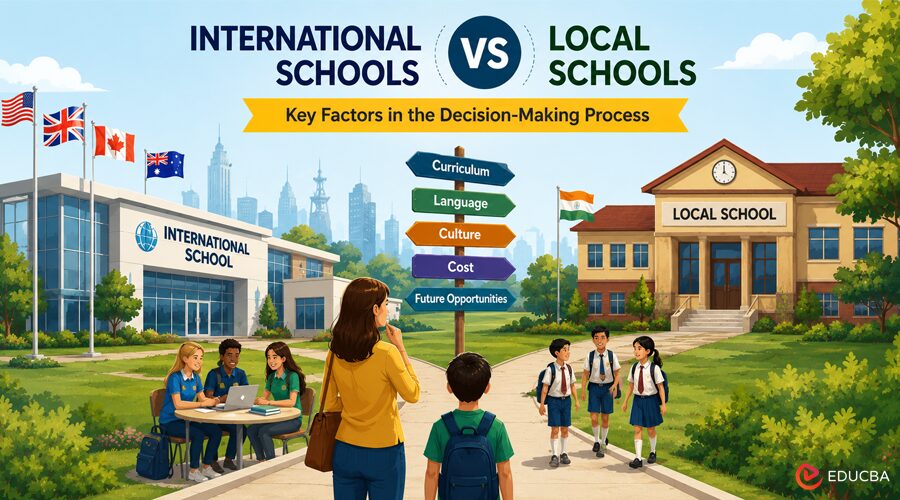
Few things are more important to parents than educating their children. A modern education is especially relevant in an increasingly competitive economy. More people are vying for limited jobs than ever, and sound pedagogy can signify the difference between those who succeed and those who do not. For various reasons, parents constantly weigh the pros and cons of international schools vs local schools. When deciding where to enroll their children, globally mobile working professionals, expatriate families, and those considering overseas university pathways must consider all factors. And there are many factors worth exploring.
International schools and local schools offer divergent educational experiences for students. There is no single best template that applies to everyone. The right choice invariably depends on a variety of factors. These can include the child’s personality, future university plans, language preferences, budget, and family dynamics. International schools typically offer greater diversity of ideas, cultural immersion, and a broader perspective. By contrast, local schools require less upheaval and lower levels of exposure to foreign cultures, ideas, and integration. While there are no hard-and-fast rules, many of these factors are realities students must contend with.
Key Differences Between International Schools vs Local Schools
The debate between international and local schools often centers on curriculum, language, and the learning environment.
1. Primary Differences
International Schools
International schools routinely offer instruction in English. This is common, since English is the lingua franca of the world. Further, these schools often follow various curricula, such as the American, British, or IB systems. Since they attract multinational student populations, there will always be a greater focus on diversity, equity, and inclusion. It is all about a worldwide perspective and an internationally accepted qualification. The best international schools worldwide welcome students from all over the world and work incredibly hard to ensure everyone feels at home through cultural acclimatization.
Local Schools
Local schools fall under the jurisdiction of the country’s education department. In other words, they follow the national curriculum. They typically teach in the local language, whatever that may be. From a pedagogical perspective, local schools are focused on preparing students for domestic examinations and tertiary education. The focus is on immersion in local culture, arts, and sporting activities. While a certain international flavor often finds its way into local education through technology, pervasive culture, or best practices, the focus remains on the host country’s educational goals. And that may suit learners and their families just fine. It is all about what works best in each specific situation.
2. The Curriculum and University Pathways
International Schools
In international schools, the focus is on the International Baccalaureate (IB), American, or British curricula. Qualifications from these schools are internationally recognized, and this sort of education is beneficial to families who wish to relocate or pursue higher education abroad.
Local Schools
As stated earlier, local schools are aligned with the national university systems. They offer improved preparation for local entrance examinations and familiarity with domestic educational standards. As parents, it is critically important to talk to children. Ask them where they want to attend university. What are their career goals?. Parents must actively engage with their children to help formulate long-term pathways to success through education and skills development.
3. Cultural Immersion and Language Development
International Schools
The International schools provide strong exposure to English and, in some cases, other global languages such as French, Spanish, or Arabic. International schools offer multicultural classrooms that foster a tolerant learning environment. This exposure helps students develop strong communication skills, global awareness, and adaptability in international settings. However, the level of integration with local culture may be more limited compared to local schools.
Local Schools
Local schools offer deeper cultural immersion and stronger ties to the host country’s traditions and values. Students are more likely to develop native-level proficiency in the local language. This environment helps build a strong sense of cultural identity and community connection, an important factor for many families when comparing international schools to local schools.
4. Class Size, Cost, and Extracurricular Opportunities
International Schools
International schools generally offer smaller class sizes, allowing for more personalized attention and interactive learning. The teaching approach often focuses on critical thinking, creativity, and collaboration. However, these schools are usually more expensive. Extracurricular activities like arts, sports, and clubs are widely available but may incur additional costs.
Local Schools
Local schools often have larger class sizes and a more traditional teaching structure. Despite this, they remain more affordable and accessible, especially as many are government-subsidized. Extracurricular activities are often included at minimal or no extra cost, making them a more budget-friendly option for many families.
Final Thoughts
While it would be desirable to provide a blueprint for everyone, every family is different. It is important to understand the advantages of international schools vs local schools. There is no universal winner in this contest. International schools may offer global curricula and multilingual environments, but local schools often provide stronger cultural integration and affordability. More often than not, it is about what the parents are doing. Work-related contracts or lifestyle preferences routinely dictate where students attend school. By evaluating all the factors outlined in this guide, students and parents will be better equipped to make informed decisions.
Recommended Articles
We hope this comprehensive guide on international schools vs local schools helps you better understand the key differences. Check out these recommended articles for more insights and guidance on choosing the right educational pathway.


