


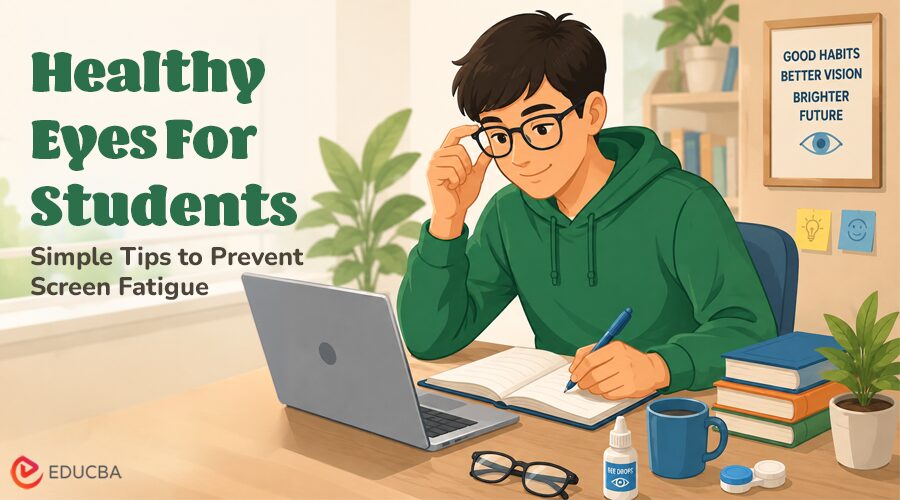
Student life is hard on the eyes. Long hours reading, back-to-back lectures on a laptop, late nights finishing assignments, and the constant pull of a phone screen in between. Most students accept tired, strained eyes as part of the deal, unaware that a few straightforward habits could significantly improve the experience. Eye health tends to get attention only when something goes wrong. A prescription that has been quietly changing for a year without anyone noticing, dry eyes that have become a background discomfort, or headaches that have been put down to stress when the actual cause is uncorrected vision. The good news is that maintaining healthy eyes for students does not require expensive treatments or major lifestyle changes. A few consistent habits can make a lasting difference.
5 Essential Habits to Maintain Healthy Eyes for Students
Here are five things worth building into student life before problems arise.
1. Get a Regular Eye Test
This is the one that gets skipped most consistently, usually because nothing feels noticeably wrong. The issue is that vision changes gradually enough that most people do not notice the shift until the correction is significantly overdue. For students, an uncorrected or undercorrected prescription creates a real and measurable problem. Reading and screen work at close range for extended periods is harder when your eyes are compensating for a prescription that no longer matches your vision. People often attribute the resulting fatigue, difficulty concentrating, and headaches to their workload when the actual cause is the eyewear sitting on, or not sitting on, their face.
Eye tests are recommended every two years for people with no existing conditions and annually for contact lens wearers or anyone with a known eye health concern. Students in the UK are entitled to an NHS-funded eye test, which removes cost as a reason to put it off. If you already wear prescription glasses, check when the prescription was last updated. A prescription more than two years old in an active student’s lifestyle is worth reviewing.
2. Take Screen Breaks Seriously
The 20-20-20 rule is the most consistently recommended habit for eye health among screen users, yet also the most consistently ignored. Every 20 minutes, take a 20-second break to look at something about 20 feet away. The reasoning behind it is straightforward. The body does not intend the eye muscles used for near focus to stay fixed for hours.
Sustained close work causes them to fatigue in exactly the way a clenched hand would, producing the blurred vision, aching sensation behind the eyes, and difficulty refocusing that most students experience by the end of a long study session. The 20-20-20 rule does not require stopping work. It only requires brief gaze shifts, taking little time while reducing eye strain throughout the day.
3. Use Eye Drops for Dry Eyes
Dry, gritty, uncomfortable eyes are one of the most common complaints among students, and the cause is almost always the same. Concentrated screen use reduces the blink rate to roughly a third of its natural frequency. The tear film that maintains moisture on the eye’s surface can break down more quickly than the eye replaces it, creating a dry, gritty sensation that many people mistakenly believe is unavoidable. Eye drops for dry eyes, specifically preservative-free lubricating drops, address this directly.
Applied once or twice during a long study session, they restore the tear film and relieve discomfort without affecting vision or contact lens wear, if you choose lens-compatible drops. This is particularly relevant for contact lens wearers. Extended wear in library or university environments, which tend to have low humidity and recirculating air, dries the lens surface faster than usual and worsens discomfort over the course of a long day. Contact lens–friendly drops keep lenses hydrated and reduce the need to remove them early.
4. Look After Your Prescription Glasses and Contact Lenses
Wearing an outdated or damaged pair of prescription glasses through a full semester of reading and screen work compounds every other strain your eyes are under. A scratched lens reduces contrast and clarity. A frame that no longer sits correctly misaligns the optical centers, creating a visual distortion that accumulates quietly over hours.
For contact lens wearers, hygiene and replacement schedules matter more than most students give them credit for. Using daily disposable lenses for longer than intended, reusing or “topping up” solution instead of replacing it, or sleeping in lenses that are not approved for overnight wear can all greatly raise the risk of eye infections. If cost is the reason for stretching lenses or delaying a replacement pair, it is worth knowing that prescription glasses bought online have come down considerably in price, and a functional backup pair does not need to be expensive to be useful.
5. Move More and Eat Well
This one tends to surprise people because the connection between general fitness and eye health is not something most students think about, but it is genuine. Regular exercise supports healthy blood flow, including to the tiny vessels that nourish the retina and optic nerve. Yoga and fitness routines that break up long periods of sitting can also help correct postural habits that contribute to eye strain. Leaning toward screens strains the neck and shoulders, often causing headaches mistaken for eye fatigue.
Nutrition also plays an important role. Omega-3s in oily fish help maintain the tear film and reduce moisture loss that leads to dry eyes. Meanwhile, vitamins A, C, and E, along with zinc and lutein found in leafy greens, contribute to long-term retinal health. None of this requires a significant dietary overhaul. Adding a few healthy foods to your diet can make a noticeable difference over a year.
A Quick Reference
| Habit | What It Addresses | How Often |
| Eye test | Prescription accuracy, eye health check | Every 1 to 2 years |
| 20-20-20 rule | Muscle fatigue from near focus | Every 20 minutes during screen use |
| Eye drops for dry eyes | Tear film and surface discomfort | As needed during study sessions |
| Lens and glasses care | Optical clarity and infection risk | Daily |
| Movement and nutrition | Circulation, posture, long-term eye health | Ongoing |
Final Thoughts
Maintaining healthy eyes for students does not require complicated routines or significant lifestyle changes. An eye test once every couple of years, a brief screen break every twenty minutes, a bottle of lubricating drops in a desk drawer, and reasonable care of whatever correction you wear covers most of what student eye health actually requires. The problems that develop from ignoring all of this, worsening prescriptions caught late, chronic dry eye, or persistent headaches from uncorrected vision, take considerably more time and effort to deal with than the habits that prevent them.
Recommended Articles
We hope this comprehensive guide on healthy eyes for students helps you build better habits for long-term vision care and reduced eye strain. Check out these recommended articles for more insights and tips to support your health and overall well-being during student life.

