


Updated June 19, 2026
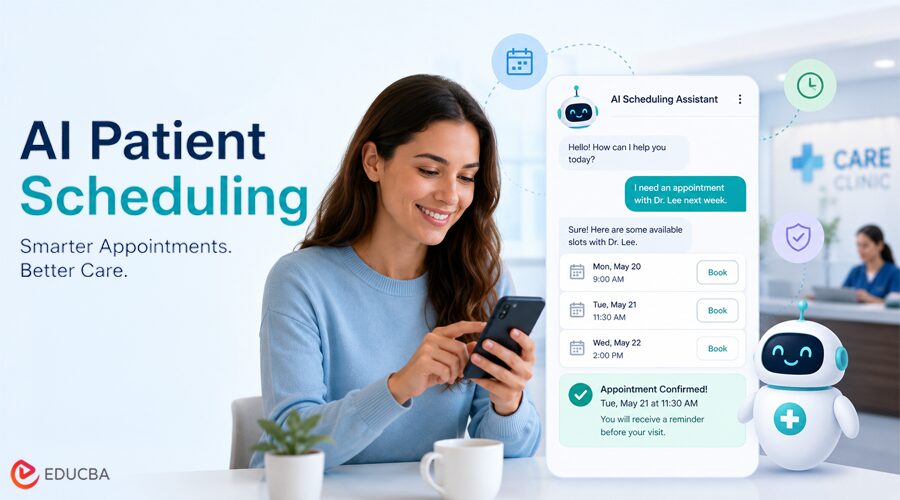
Booking a medical appointment has long been one of the most frustrating parts of healthcare. Patients call during business hours, wait on hold, and sometimes hang up before anyone answers. Clinics, meanwhile, lose revenue to no-shows and spend staff time on repetitive phone work. AI patient scheduling is an emerging solution to this problem, using artificial intelligence to automate appointment booking, confirmation, and management. This article covers what the technology is, how it works, and why healthcare organizations are adopting it.
Defining AI Patient Scheduling
AI patient scheduling refers to software that uses artificial intelligence to handle appointment booking and related tasks without constant human involvement. Instead of a receptionist manually checking a calendar and entering details, the system interprets a patient request, finds a suitable slot, and completes the booking on its own.
These systems can operate across multiple channels. A patient might speak to a voice assistant over the phone, type into a chat window on a website, or respond to a text message. Whatever the channel, the goal is the same: turn a scheduling request into a confirmed appointment quickly and accurately, at any time of day.
The Core Technologies Behind It
Several branches of artificial intelligence work together to make this possible. Understanding each one clarifies how the overall system functions.
Natural Language Processing
Natural language processing (NLP) enables software to understand human speech and text. When a patient says “I need to see Dr. Lee sometime next week,” NLP breaks that sentence into meaningful parts: the provider, the timeframe, and the intent to book. This is what lets patients interact in plain language rather than navigating rigid menus.
Machine Learning
Machine learning helps the system get better over time. By analyzing historical data, it learns patterns such as which appointment types take longer, when cancellations tend to happen, and which patients are likely to miss a visit. These insights help the software make smarter scheduling decisions.
Predictive Analytics
Predictive analytics uses historical data to forecast future outcomes. In scheduling, it can estimate demand for certain days, anticipate no-show risk, and suggest optimal appointment spacing. This reduces gaps in a provider’s calendar and keeps the practice running efficiently.
System Integration
None of this works in isolation. The AI must connect to the practice’s existing software, particularly the electronic health record and practice management systems. Integration lets the AI read real-time availability, verify patient information, and write confirmed appointments back into the official record.
How Does the Process Works Step by Step?
To see how these pieces fit together, consider a typical booking handled by an AI system.
First, the patient initiates contact through a call, chat, or text. The AI greets them and asks what they need. Next, NLP interprets the request, identifying the provider, visit type, and preferred timing. The system then checks the connected calendar for open slots that meet the requirement, taking into account provider rules and appointment length.
Once it finds suitable options, the AI presents them to the patient and confirms the patient’s choice. It may also verify insurance details or collect basic information at this stage. After the patient agrees, the system books the appointment, records it, and sends a confirmation. Later, it can automatically send reminders and handle rescheduling if plans change.
Throughout this flow, the AI knows its limits. When a request is complex or falls outside its confidence range, it transfers the conversation to a human staff member with full context attached, so the patient never has to repeat themselves.
Key Benefits for Patients and Providers
The advantages of this technology fall into a few clear categories.
For patients, the biggest gain is convenience. They can book at any hour without waiting on hold, which suits people who work during typical office hours. For providers, the technology reduces administrative burden, freeing staff to focus on in-person care and complex requests.
Practices also see operational improvements. Automated reminders cut no-show rates, around-the-clock booking captures appointments that would otherwise be lost, and balanced scheduling makes better use of provider time. For organizations operating on tight margins, such as community health centers and independent clinics, these efficiencies translate into real financial and capacity gains.
Common Use Cases
AI patient scheduling appears in several settings. Primary care practices use it to manage high call volumes. Specialty clinics rely on it to coordinate complex visit types. Dental and vision offices use it for routine recall appointments. Large health systems deploy it to standardize booking across many locations. Vendors such as HealthTalk A.I. provide platforms that combine these scheduling capabilities with broad integration into existing healthcare systems.
Things to Consider Before Adopting
Organizations evaluating these tools should weigh a few factors. Integration depth matters most, since a system that cannot connect to existing records offers limited value. Data security is equally critical, given the sensitivity of health information, so buyers should look for recognized certifications and proven safeguards. Finally, a smooth handoff to human staff ensures that patients with unusual needs are never left stuck.
AI patient scheduling is no longer a futuristic concept. It is a practical tool reshaping how healthcare manages one of its most common interactions, making the experience faster for patients and lighter for the teams who serve them.
Recommended Articles
We hope this guide on AI patient scheduling helps you streamline appointment booking, reduce administrative workload, and improve the patient experience. Explore our recommended articles below to learn more about healthcare automation, AI-powered patient engagement, and digital tools transforming medical practice operations.


