
What is Thematic Investing?
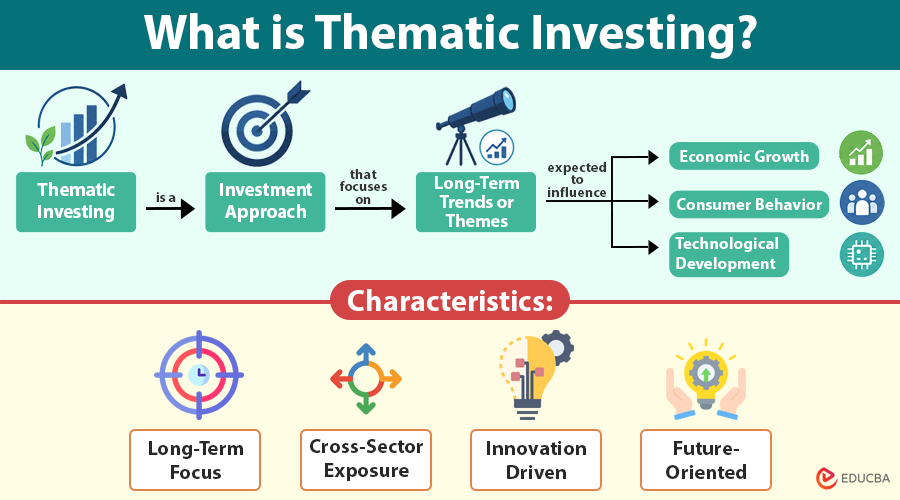
Thematic investing is a investment approach that focuses on long-term trends or themes expected to influence economic growth, consumer behavior, and technological development.
Rather than selecting investments based on traditional categories such as industries or sectors, thematic investors identify broader themes that could create substantial future opportunities.
For example, an investor who believes artificial intelligence will reshape multiple industries may invest in companies developing AI software, semiconductor manufacturers, cloud computing providers, and robotics firms.
Table of Contents:
- Meaning
- Working
- Characteristics
- Types
- Advantages
- Risks
- Difference
- Real-World Example
- Who Should Consider Thematic Investing?
Key Takeaways:
- Thematic investing focuses on long-term trends expected to shape future economies and industries.
- Investors gain exposure through companies benefiting from emerging themes across multiple sectors.
- Potential returns can be significant, but concentration, volatility, and valuation risks remain.
- Successful thematic investing requires research, diversification, patience, and a long-term investment horizon.
How Does Thematic Investing Work?
Thematic investing begins with identifying a trend that is likely to grow over many years. The process generally follows these steps:
1. Identify a Theme
Investors analyze emerging trends such as:
- Artificial Intelligence (AI)
- Renewable Energy
- Electric Vehicles (EVs)
- Robotics
- Cybersecurity
- Aging Population
- Clean Water
- Digital Payments
2. Research Beneficiary Companies
The next step is to identify companies that could benefit from the theme.
For example, within the electric vehicle theme, investors may consider:
- EV manufacturers
- Battery producers
- Charging infrastructure providers
- Semiconductor companies
3. Build a Portfolio
Investors create a portfolio containing stocks, ETFs, mutual funds, or other assets linked to the selected theme.
4. Monitor Long-Term Developments
Thematic investing typically calls for patience and a long-term outlook because themes frequently take years to grow.
Characteristics of Thematic Investing
Several characteristics distinguish thematic investing from traditional investment approaches.
1. Long-Term Focus
Thematic investing targets trends expected to grow over many years, allowing investors to benefit from long-term transformations.
2. Cross-Sector Exposure
Investment themes span multiple industries, providing diversified exposure to companies benefiting from the same underlying trend.
3. Innovation Driven
Many themes are powered by technological advancements, disruptive business models, and evolving consumer demands across markets.
4. Future-Oriented
Focuses on emerging opportunities and growth potential, prioritizing future developments over current market conditions.
Types of Thematic Investing
Thematic investments generally fall into several types.
1. Technological Themes
Investments targeting innovative technologies expected to transform industries, improve efficiency, and drive future economic growth globally.
Examples:
- Artificial Intelligence
- Robotics
- Automation
- Quantum Computing
2. Environmental Themes
Investments focused on sustainability initiatives addressing climate challenges, resource conservation, and environmentally responsible development worldwide.
Examples:
- Renewable Energy
- Clean Water
- Sustainable Agriculture
- Green Infrastructure
3. Demographic Themes
Investments based on population shifts, aging societies, urban growth, and evolving consumer demographics over time.
Examples:
- Aging Population
- Urbanization
- Rising Middle Class
4. Economic Themes
Investments aligned with changing economic structures, consumer spending patterns, digitalization, and global market expansion.
Examples:
- Digital Payments
- E-commerce
- Emerging Markets
5. Social Themes
Investments centered on evolving lifestyles, societal preferences, healthcare needs, education trends, and workplace transformation.
Examples:
- Health and Wellness
- Remote Work
- Online Education
Advantages of Thematic Investing
Below are some of the advantages that make thematic investing an attractive strategy for investors seeking long-term growth opportunities.
1. Exposure to Future Growth
Investors can profit from new trends and sectors through thematic investing before they become widely accepted and well-known.
2. Portfolio Diversification
Investment themes often span multiple sectors, industries, and geographic regions, helping reduce concentration risk within portfolios.
3. Alignment with Personal Beliefs
Investors can support causes and trends they value, such as sustainability, innovation, healthcare advancement, or social progress.
4. Potential for Higher Returns
Identifying successful long-term themes early may provide opportunities for significant capital appreciation and stronger investment performance.
5. Innovation Participation
Thematic investing offers exposure to innovative companies developing advanced technologies, products, and services that shape future markets.
Risks of Thematic Investing
Despite its benefits, it carries several risks.
1. Concentration Risk
Focusing heavily on one theme reduces diversification, increasing vulnerability to sector-specific downturns and market disruptions.
2. Valuation Risk
Popular investment themes may become overpriced, increasing the likelihood of corrections and reducing future returns.
3. Theme Failure Risk
Some trends fail to achieve expected adoption, causing investments to underperform or lose value.
4. Market Volatility
Thematic investments often experience sharp price swings due to changing sentiment, innovation cycles, and uncertainty.
5. Regulatory Changes
New regulations or policy changes can negatively affect specific industries, profitability, and growth prospects.
Difference Between Thematic Investing and Traditional Investing
The table below highlights the key differences between thematic investing and traditional investing:
| Feature | Thematic Investing | Traditional Investing |
| Focus | Future trends | Existing sectors and industries |
| Time Horizon | Long-term | Short- to long-term |
| Investment Basis | Structural themes | Financial fundamentals |
| Diversification | Theme-based | Sector-based |
| Growth Potential | Higher | Moderate |
| Risk Level | Higher | Generally lower |
Real-World Example of Thematic Investing
The following example illustrates how thematic investing works in practice by focusing on a long-term growth trend rather than a single company or industry.
Consider an investor who believes artificial intelligence will become a major economic driver.
Instead of investing in a single AI company, the investor builds a diversified thematic portfolio containing:
- AI software developers
- Semiconductor manufacturers
- Cloud infrastructure providers
- Robotics companies
- Data analytics firms
As AI adoption expands across industries, multiple businesses within the theme may benefit, reducing reliance on a single company.
Who Should Consider Thematic Investing?
Thematic investing may be suitable for:
1. Long-term Investors
Investors willing to hold investments for years while benefiting from emerging trends and long-term growth potential.
2. Growth-Oriented Investors
Individuals seeking higher returns by investing in companies positioned to benefit from transformative market trends.
3. Technology Enthusiasts
Investors interested in technological advancements and innovative businesses shaping future industries and consumer behavior.
4. Sustainability-Focused Investors
Those who prefer investments aligned with environmental, social, and governance goals while pursuing financial growth.
5. Investors Seeking Innovation Exposure
Individuals wanting portfolio exposure to disruptive innovations, emerging industries, and evolving global economic opportunities.
Final Thoughts
Thematic investing targets long-term trends such as artificial intelligence, renewable energy, cybersecurity, healthcare innovation, and digital transformation. It offers growth potential by focusing on future-oriented industries but carries risks including concentration and volatility. Success requires careful research, diversification, and patience, making it appealing for investors seeking exposure to transformative economic changes.
Frequently Asked Questions (FAQs)
Q1. Is thematic investing risky?
Answer: Yes. Thematic investing can involve higher risk due to concentration, market volatility, and uncertainty surrounding future trends.
Q2. Are thematic ETFs a good investment?
Answer: Thematic ETFs can provide diversified exposure to a specific trend while reducing company-specific risk, making them a popular choice for many investors.
Q3. Can beginners invest in thematic funds?
Answer: Yes. Beginners can gain exposure through thematic ETFs or mutual funds, which provides diversification and professional management.
Q4. How long should investors hold thematic investments?
Answer: Thematic investing typically requires a long-term horizon, often five years or more, to allow trends sufficient time to develop.
Recommended Articles
We hope that this EDUCBA information on “Thematic Investing” was beneficial to you. You can view EDUCBA’s recommended articles for more information.

