
What is Mobile Commerce?
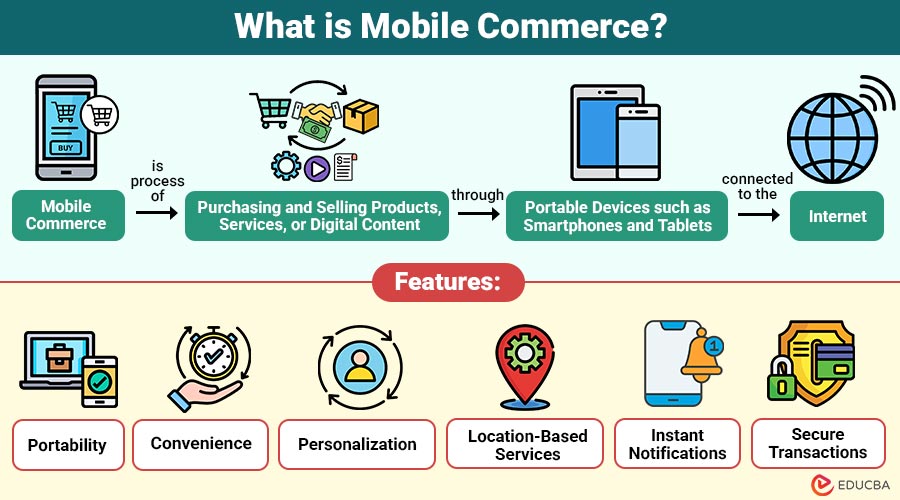
Mobile commerce (m-commerce) is the process of purchasing and selling products, services, or digital content through portable devices such as smartphones and tablets connected to the internet. As a branch of e-commerce, it enables consumers and businesses to conduct transactions conveniently from virtually any location and at any time, without relying on a desktop or laptop computer.
For example, a customer uses a shopping app to order groceries, pays with a digital wallet, and tracks the delivery on their smartphone. This entire process represents mobile commerce.
Table of Contents:
Key Takeaways:
- Mobile commerce enables convenient purchasing, payments, banking, and services through smartphones and tablets anywhere.
- Technologies like AI, digital wallets, NFC, cloud computing, and 5G drive mobile commerce.
- Personalization and location-based services help businesses deliver relevant offers and improve customer satisfaction.
- Growing smartphone adoption and digital payment usage continue accelerating global mobile commerce growth.
How Does Mobile Commerce Work?
Mobile commerce relies on several technologies working together to facilitate transactions.
Step 1: Product Discovery
Users find products through:
- Mobile apps
- Mobile websites
- Social media advertisements
- Search engines
Step 2: Product Evaluation
Customers:
- Read reviews
- Compare prices
- Watch product videos
- Check ratings
Step 3: Mobile Checkout
Users proceed to payment using:
- Credit cards
- Debit cards
- Mobile wallets
- Buy-now-pay-later services
Step 4: Order Confirmation
The system confirms the transaction and sends notifications via the following:
- SMS
- Mobile app alerts
Step 5: Delivery Tracking
Customers monitor shipment status directly from their mobile devices.
Types of Mobile Commerce
Mobile commerce encompasses various transaction types.
1. Mobile Shopping
Mobile shopping allows customers to browse products, compare prices, place orders, and complete purchases directly through smartphones and tablets.
2. Mobile Banking
Mobile banking enables users to check balances, transfer funds, pay bills, deposit checks, and manage accounts remotely.
3. Mobile Payments
Mobile payments facilitate secure digital transactions through wallets, QR codes, contactless technology, and peer-to-peer payment platforms.
4. Mobile Ticketing
Mobile ticketing allows users to purchase, store, access, and present digital tickets conveniently from their smartphones.
5. Mobile Content Purchases
Mobile content purchases involve buying digital products such as e-books, subscriptions, courses, streaming services, and games.
6. Social Commerce
Social commerce enables customers to discover, evaluate, and purchase products seamlessly on social media platforms.
Features of Mobile Commerce
Several features distinguish mobile commerce from traditional e-commerce.
1. Portability
Portability enables users to browse products, compare options, and make purchases from virtually any location globally.
2. Convenience
Convenience allows customers to complete shopping, payments, and service transactions quickly using mobile devices anywhere.
3. Personalization
Personalization uses customer behavior and preferences to deliver relevant product recommendations, offers, and experiences.
4. Location-Based Services
Location-based services enable businesses to send targeted promotions, discounts, and notifications based on customer locations.
5. Instant Notifications
Instant notifications provide real-time updates about orders, promotions, deliveries, discounts, and important transaction activities.
6. Secure Transactions
Secure transactions utilize encryption, authentication, and advanced security technologies to protect sensitive customer information.
Benefits of Mobile Commerce
Mobile commerce provides benefits for both consumers and businesses.
For Consumers:
1. Anytime Shopping
Customers are not constrained by store working hours and can use mobile devices to shop whenever and wherever they like.
2. Faster Transactions
Stored payment information enables quicker checkouts, reducing purchase time and significantly improving shopping convenience.
3. Better User Experience
Mobile apps offer intuitive navigation, personalized recommendations, and seamless interactions for enhanced customer satisfaction.
4. Easy Price Comparison
Users can compare products, prices, reviews, and features across multiple sellers within minutes.
5. Access to Exclusive Deals
Many brands provide app-exclusive discounts, rewards, promotions, and special offers to mobile shoppers.
For Businesses:
1. Increased Sales Opportunities
Businesses reach customers anywhere, expanding market access and consistently generating more sales opportunities.
2. Higher Customer Engagement
Push notifications maintain customer interaction, promote offers, and strengthen ongoing brand relationships effectively.
3. Improved Customer Insights
Mobile platforms collect behavioral data, helping businesses understand preferences and improve decision-making.
4. Personalized Marketing
Businesses deliver targeted promotions and recommendations based on customer interests, behavior, and purchase history.
5. Greater Customer Retention
Loyalty programs and personalized experiences encourage repeat purchases and strengthen long-term customer relationships.
Technologies Powering Mobile Commerce
Modern mobile commerce depends on several advanced technologies.
1. Mobile Applications
Mobile applications deliver optimized shopping experiences, personalized recommendations, faster navigation, and seamless purchasing processes.
2. Responsive Web Design
Responsive web design automatically adjusts website layouts for different screen sizes, devices, and resolutions.
3. Digital Wallets
Digital wallets simplify payments, store financial information securely, and enable faster checkout experiences.
4. Near Field Communication
NFC technology facilitates secure contactless payments by enabling communication between compatible devices in close proximity.
5. Artificial Intelligence
Artificial intelligence enhances recommendations, automates support, personalizes offers, and significantly improves customer engagement.
6. Cloud Computing
Cloud computing provides scalable infrastructure, secure storage, and real-time access to business and customer data.
7. 5G Technology
5G technology delivers faster speeds, lower latency, improved reliability, and enhanced real-time shopping experiences.
Challenges of Mobile Commerce
Despite its advantages, mobile commerce presents several challenges.
1. Security Concerns
Businesses must safeguard sensitive customer data from cyberattacks, fraud, unauthorized access, and security breaches.
2. Small Screen Limitations
Limited screen space can hinder navigation, product visibility, and overall user experience on devices.
3. Connectivity Issues
Unstable internet connections may interrupt browsing, payments, and transaction completion during mobile shopping.
4. App Abandonment
Users may uninstall apps due to storage limitations, poor performance, or insufficient ongoing engagement.
5. Device Fragmentation
Businesses must optimize applications for various devices, screen sizes, and operating system versions.
6. Privacy Regulations
Organizations must comply with changing data privacy laws to protect customer information and avoid penalties.
Real-World Examples
The following examples demonstrate how leading companies use mobile commerce to provide convenient shopping, payment, booking, and customer engagement experiences through mobile devices.
1. Amazon
Amazon’s mobile app enables users to browse products, make purchases, manage accounts, and track deliveries seamlessly.
2. Walmart
Walmart’s mobile platform offers online shopping, product scanning, mobile payments, and convenient order management.
3. Starbucks
Starbucks’ mobile app supports ordering, digital payments, loyalty rewards, and personalized customer engagement experiences.
4. Airbnb
Airbnb allows travelers to search listings, book accommodations, communicate with hosts, and manage reservations.
Difference Between Mobile Commerce and E-Commerce
The table below highlights the key differences between mobile commerce and e-commerce:
| Feature | Mobile Commerce | E-Commerce |
| Device Used | Smartphones and tablets | Desktop, laptop, mobile devices |
| Accessibility | Anywhere, anytime | Often desktop-focused |
| Location-Based Services | Available | Limited |
| Push Notifications | Supported | Limited |
| User Convenience | Very high | Moderate to high |
| Payment Methods | Mobile wallets, NFC, QR codes | Traditional online payments |
Final Thoughts
Mobile commerce has transformed digital transactions by enabling shopping, banking, payments, and services through mobile devices. Growing smartphone usage and digital payment adoption make mobile experiences essential for businesses. By leveraging AI, digital wallets, NFC, and 5G, companies can boost engagement, increase revenue, and remain competitive in a mobile-driven marketplace.
Frequently Asked Questions (FAQs)
Q1. What role does the artificial intelligence play in mobile commerce?
Answer: Artificial intelligence enhances mobile commerce with personalized recommendations, chatbots, fraud detection, predictive analytics, and customer support.
Q2. What technologies support mobile commerce?
Answer: Key technologies include mobile apps, digital wallets, NFC, AI, cloud computing, responsive web design, and 5G networks.
Q3. What are key factors for a successful mobile commerce strategy?
Answer: A successful mobile commerce strategy combines user-friendly design, fast performance, secure payments, personalization, support, and marketing.
Recommended Articles
We hope that this EDUCBA information on “Mobile Commerce” was beneficial to you. You can view EDUCBA’s recommended articles for more information.


