
What is the Halo Effect?
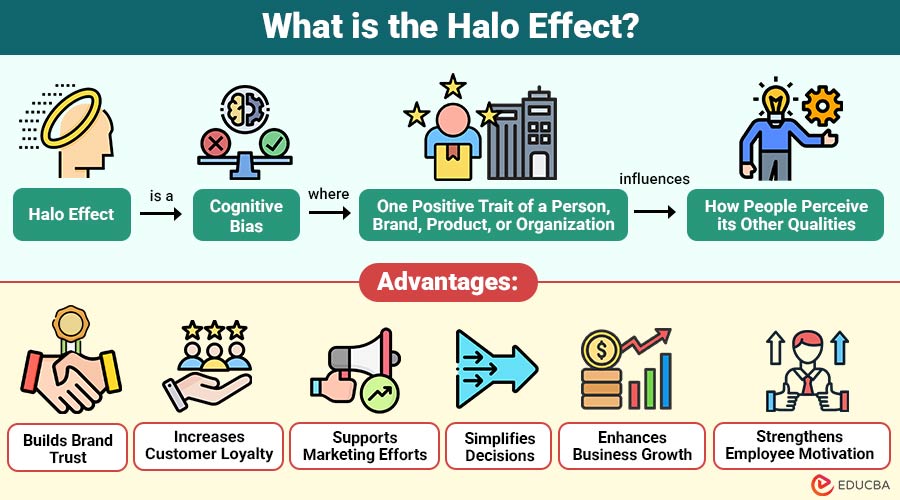
Halo Effect is a cognitive bias where one positive trait of a person, brand, product, or organization influences how people perceive its other qualities. As a result, individuals often assume additional positive characteristics without sufficient evidence.
For example, if a brand is known for high-quality smartphones, consumers may believe its other products are equally reliable. The halo effect commonly influences marketing, branding, recruitment, education, and consumer decision-making.
Table of Contents:
- Meaning
- Working
- Characteristics
- Causes
- Examples
- Advantages
- Disadvantages
- How to Avoid the Halo Effect?
Key Takeaways:
- The halo effect causes positive traits to significantly influence perceptions of unrelated qualities.
- Strong first impressions often shape judgments, unconsciously influencing decisions across various situations.
- Businesses benefit through increased trust, loyalty, marketing effectiveness, and customer retention rates.
- Objective evaluations and evidence-based assessments help reduce halo effect bias effectively overall.
How Does the Halo Effect Work?
The halo effect occurs because the human brain prefers simplified decision-making. Rather than evaluating every characteristic independently, people often rely on a general impression.
Step 1: Initial Positive Impression
A person notices a positive trait, such as:
- Attractive appearance
- Strong reputation
- High-quality product
- Excellent customer service
Step 2: Generalization
The positive impression spreads to other characteristics.
Step 3: Formation of Overall Judgment
People assume additional positive qualities even when there is little evidence to support them.
Step 4: Decision-Making
The favorable perception influences decisions such as:
- Purchasing a product
- Hiring a candidate
- Choosing a service provider
- Trusting a brand
This process often happens unconsciously and affects judgments without people realizing it.
Characteristics of Halo Effect
The halo effect has several defining characteristics:
1. Based on First Impressions
Initial impressions strongly shape future perceptions, influencing how people evaluate individuals or brands.
2. Creates Positive Bias
One positive characteristic leads people to assume other qualities are equally favorable.
3. Influences Decision-Making
Perceptions and assumptions often guide decisions more than objective facts and evidence.
4. Occurs Unconsciously
People are usually unaware that this cognitive bias affects their judgments and evaluations.
5. Applies Across Various Situations
The halo effect influences perceptions in business, education, marketing, recruitment, and relationships.
6. Simplifies Evaluations
People use overall impressions to assess multiple traits quickly with less effort.
Causes of Halo Effect
The halo effect arises from various psychological and social factors that influence how people form perceptions and make judgments.
1. Positive First Impressions
Strong initial experiences create lasting perceptions that influence future judgments and evaluations.
2. Cognitive Shortcuts
The brain uses mental shortcuts to make quick judgments with limited information available.
3. Brand Reputation
A respected brand often benefits from favorable assumptions about all its products.
4. Physical Appearance
Attractive individuals are frequently perceived as more competent, intelligent, and trustworthy.
5. Emotional Influence
Positive emotions associated with one trait can shape overall perceptions and opinions.
6. Social Proof
Reviews, recommendations, and endorsements create positive impressions that influence broader judgments.
Examples of Halo Effect
The following examples illustrate how the halo effect influences perceptions and decision-making in different situations.
1. Consumer Products
A customer purchases a smartphone from a popular brand and has a positive experience. As a result, they assume the brand’s other products are also high quality.
2. Celebrity Endorsements
Consumers may trust a product simply because it is endorsed by a famous celebrity they admire.
3. Workplace Evaluation
Managers may rate a high-performing employee positively across all categories, even when some skills need improvement.
4. Online Reviews
A business with excellent ratings may be assumed to provide superior service across all areas, even if some aspects have not been evaluated.
Advantages of Halo Effect
Although it is a bias, the halo effect can offer certain advantages.
1. Builds Brand Trust
Positive customer experiences strengthen trust, encouraging confidence in a company’s products, services, and overall reputation.
2. Increases Customer Loyalty
Happy customers are more inclined to continue with a brand over time and make additional purchases.
3. Supports Marketing Efforts
A strong brand image enhances advertising effectiveness and improves customer response to promotional campaigns.
4. Simplifies Decisions
Consumers rely on positive impressions, enabling faster purchasing decisions with less evaluation effort required.
5. Enhances Business Growth
A favorable reputation attracts new customers, expands market reach, and creates valuable business opportunities.
6. Strengthens Employee Motivation
Positive recognition boosts employee confidence, encouraging higher performance, productivity, and workplace engagement levels.
Disadvantages of Halo Effect
The halo effect can also lead to inaccurate judgments and poor decisions.
1. Distorted Evaluations
People may overlook weaknesses and overvalue abilities based on a single observed positive characteristic.
2. Poor Hiring Decisions
Employers may overestimate candidates based on appearance, confidence, or educational qualifications alone.
3. Unfair Assessments
Individuals may receive excessive praise or criticism that is unrelated to their actual performance.
4. Misleading Purchases
Consumers may choose products based on reputation rather than actual quality or performance.
5. Reduced Objectivity
The bias interferes with rational thinking and evidence-based evaluation during decision-making processes.
6. Overlooked Problems
Organizations may ignore important issues due to an overall positive public image.
How to Avoid the Halo Effect?
Organizations and individuals can reduce the influence of the halo effect through the following methods:
1. Evaluate Objectively
Assess each characteristic independently to avoid relying solely on overall impressions and assumptions.
2. Use Data and Evidence
Base decisions on measurable facts, performance metrics, and reliable evidence whenever possible.
3. Implement Structured Assessments
Use standardized evaluation criteria to ensure fair, consistent, and unbiased decision-making processes.
4. Seek Multiple Opinions
Gather diverse perspectives to minimize personal biases and significantly improve evaluation accuracy.
5. Focus on Specific Attributes
Analyze individual strengths and weaknesses separately rather than making broad assumptions.
6. Increase Awareness
Understanding this bias helps individuals recognize and reduce its influence on judgments.
Final Thoughts
The Halo Effect is a cognitive bias where one positive trait shapes overall perceptions of a person, brand, product, or organization. It influences consumer behavior, hiring, education, and business decisions. While it can enhance trust and loyalty, it may also cause inaccurate judgments, making objective evaluation and evidence-based decision-making essential.
Frequently Asked Questions (FAQs)
Q1. How does social media contribute to the halo effect?
Answer: Popular influencers, high follower counts, and positive engagement can create favorable impressions that affect audience opinions and purchasing behavior.
Q2. Are experienced professionals less likely to be affected by the halo effect?
Answer: Not necessarily. While experience may reduce bias, even skilled professionals can be influenced by positive first impressions and assumptions.
Q3. What role does trust play in the halo effect?
Answer: Trust strengthens positive perceptions, making people more likely to believe favorable information about a person, product, or organization.
Q4. Is the halo effect always based on positive qualities?
Answer: The halo effect typically involves positive impressions. Its opposite, known as the “horn effect,” occurs when one negative trait creates an unfavorable overall perception.
Recommended Articles
We hope that this EDUCBA information on “Halo Effect” was beneficial to you. You can view EDUCBA’s recommended articles for more information.

