


What is Multi-Touch Attribution (MTA)?
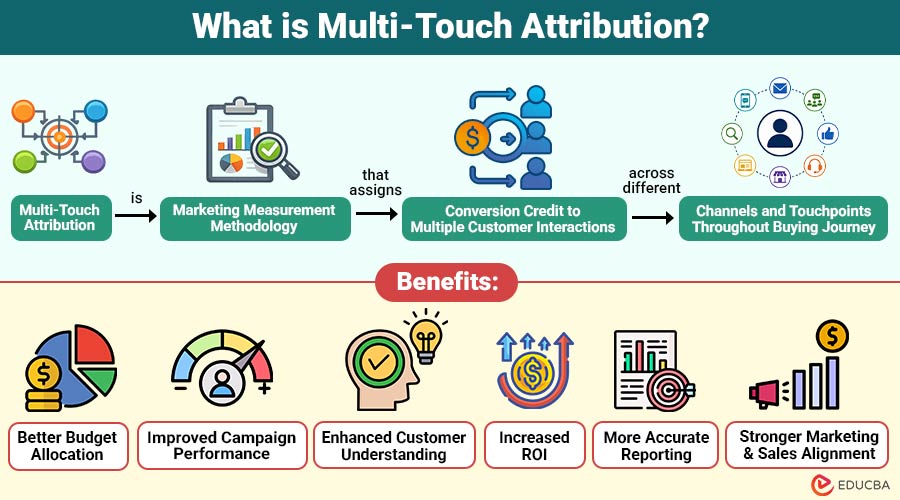
Multi-Touch Attribution is marketing measurement methodology that assigns conversion credit to multiple customer interactions across different channels and touchpoints throughout buying journey.
Instead of attributing 100% of the conversion value to first or last interaction, multi-touch attribution distributes credit among various touchpoints that influenced the customer’s decision.
Example:
Consider a customer who follows this path before purchasing a product:
- Sees a Facebook advertisement
- Reads a blog article
- Downloads an eBook
- Clicks on an email campaign
- Purchases through the company website
Using multi-touch attribution, credit is shared among these interactions based on the selected attribution model rather than assigning all credit to the final website visit.
Table of Contents:
Key Takeaways:
- Multi-touch attribution distributes conversion credit across multiple customer interactions throughout purchasing journeys.
- Provides deeper visibility into channel performance, enabling smarter marketing budget allocation decisions.
- Attribution models vary significantly, ranging from equal-distribution methods to machine-learning approaches.
- Effective implementation improves campaign optimization, customer understanding, reporting accuracy, and ROI.
Why is Multi-Touch Attribution Important?
Multi-Touch Attribution is important because it helps businesses understand how different marketing touchpoints contribute to conversions and overall campaign success.
1. Understand the Complete Customer Journey
Tracks every customer interaction, providing a comprehensive view of the path to conversion.
2. Identify High-Performing Marketing Channels
Reveals which marketing channels contribute most effectively to customer engagement and conversions.
3. Improve Campaign Optimization
Helps marketers refine strategies by understanding which touchpoints drive the best results.
4. Allocate Budgets More Effectively
Enables smarter spending decisions by investing more in channels with proven performance.
5. Increase Marketing ROI
Improves returns by focusing resources on activities that generate meaningful business outcomes.
6. Enhance Customer Experience
Identifies customer preferences and interactions, helping create more personalized and relevant experiences.
How Does Multi-Touch Attribution Work?
The process of multi-touch attribution generally involves several steps:
1. Data Collection
Organizations collect customer interaction data from various sources, including:
- Website visits
- Social media engagements
- Paid advertisements
- Email campaigns
- Mobile applications
- Webinars
- Content downloads
2. Customer Journey Mapping
The collected data is used to build a timeline of interactions leading to a conversion.
Example:
| Touchpoint | Channel |
| First Visit | Organic Search |
| Product View | Website |
| Ad Click | Google Ads |
| Email Open | Email Marketing |
| Purchase | Direct Visit |
3. Attribution Model Application
An attribution model determines how conversion credit is distributed across touchpoints.
4. Performance Analysis
Marketers analyze the results to understand which channels contribute most effectively to conversions.
Types of Multi-Touch Attribution Models
Several attribution models are commonly used in marketing analytics.
1. Linear Attribution Model
Distributes conversion credit evenly across all customer touchpoints, treating every interaction as equally valuable.
2. Time Decay Attribution Model
Assigns more credit to touchpoints occurring closer to conversion, reflecting their stronger influence on decisions.
3. Position-Based Attribution Model
Gives most credit to the first and last interactions while distributing the remaining credit among the middle touchpoints.
4. W-Shaped Attribution Model
Focuses on first touch, lead generation, and opportunity creation, giving these important milestones significant credit.
5. Data-Driven Attribution Model
Precisely calculates each touchpoint’s contribution to conversions using statistical analysis and machine learning.
Difference Between Multi-Touch Attribution and Single-Touch Attribution
The table below highlights the key difference between multi-touch attribution and single-touch attribution:
| Feature | Multi-Touch Attribution | Single-Touch Attribution |
| Credit Assignment | Multiple touchpoints | One touchpoint |
| Customer Journey Visibility | High | Limited |
| Accuracy | More comprehensive | Less comprehensive |
| Data Requirements | Higher | Lower |
| Optimization Capability | Strong | Basic |
| Complexity | Moderate to High | Low |
Benefits of Multi-Touch Attribution
Multi-Touch Attribution offers several benefits by providing more accurate understanding of how marketing efforts influence customer conversions and business growth.
1. Better Budget Allocation
Helps organizations invest marketing budgets in channels that genuinely influence customer conversions.
2. Improved Campaign Performance
Reveals which channel combinations generate stronger engagement, conversions, and overall campaign success.
3. Enhanced Customer Understanding
Provides insights into customer interactions and behaviors throughout the entire buying journey.
4. Increased ROI
Focuses resources on marketing activities that contribute most effectively to revenue growth.
5. More Accurate Reporting
Delivers clearer performance data for evaluating marketing effectiveness and business impact.
6. Stronger Marketing and Sales Alignment
Helps teams understand prospect progression and collaborate more effectively toward conversions.
Challenges of Multi-Touch Attribution
Despite its advantages, implementing multi-touch attribution can be challenging.
1. Data Fragmentation
Customer interactions occur across multiple platforms, creating disconnected data and attribution challenges.
2. Tracking Limitations
Privacy regulations and browser restrictions reduce tracking accuracy and the amount of customer data available.
3. Model Selection
Choosing the right attribution model requires understanding business goals and customer behavior.
4. Technical Complexity
Advanced attribution implementation often requires specialized tools, integrations, and analytical expertise.
5. Cross-Device Tracking Issues
Consumers use a variety of devices, making it challenging to reliably link interactions.
Real-World Examples
The following examples demonstrate how organizations use multi-touch attribution to understand customer journeys and optimize marketing performance.
1. E-Commerce Retailer
An online retailer tracks the following journey:
- Instagram advertisement
- Product review blog
- Retargeting ad
- Email promotion
- Purchase
Multi-touch attribution reveals that both content marketing and retargeting campaigns significantly influence conversions, leading to better budget allocation.
2. SaaS Company
A software provider identifies these touchpoints:
- LinkedIn advertisement
- Webinar registration
- Product demo
- Sales consultation
- Subscription purchase
Using attribution analysis, the company discovers that webinars play a crucial role in moving prospects toward conversion.
3. Financial Services Firm
A financial institution observes that customers often interact with:
- Search ads
- Educational articles
- Email nurturing campaigns
- Consultation requests
Attribution modeling helps identify the most effective channels for generating qualified leads.
Popular Multi-Touch Attribution Tools
Several tools help businesses track customer journeys, measure marketing performance, and assign conversion credit across multiple touchpoints.
1. Google Analytics
Provides attribution reporting, customer journey analysis, and marketing performance insights.
2. Adobe Analytics
Offers advanced attribution modeling and detailed cross-channel customer analytics.
3. HubSpot
Tracks marketing touchpoints and measures campaign contribution to conversions.
4. Salesforce Marketing Cloud
Helps analyze customer journeys and attribute revenue across channels.
5. Rockerbox
Provides multi-touch attribution and cross-channel marketing measurement capabilities.
Final Thoughts
Multi-touch attribution helps businesses understand how various marketing channels contribute to customer conversions. By distributing credit across multiple touchpoints, it provides more accurate performance insights than single-touch models. This enables better budget allocation, campaign optimization, informed decision-making, improved ROI, and stronger marketing strategies that support long-term business growth.
Frequently Asked Questions (FAQs)
Q1. Which businesses benefit most from multi-touch attribution?
Answer: E-commerce companies, SaaS providers, financial institutions, B2B organizations, and enterprises with complex customer journeys benefit significantly from multi-touch attribution.
Q2. What data is required for multi-touch attribution?
Answer: Businesses need customer interaction data from sources such as websites, social media, email campaigns, paid advertisements, CRM systems, and mobile applications.
Q3. Can multi-touch attribution improve marketing ROI?
Answer: Yes. By identifying channels and touchpoints that contribute most to conversions, businesses can invest resources more effectively and increase returns on marketing spend.
Recommended Articles
We hope that this EDUCBA information on “Multi-Touch Attribution” was beneficial to you. You can view EDUCBA’s recommended articles for more information.


