


What is Horn Effect?
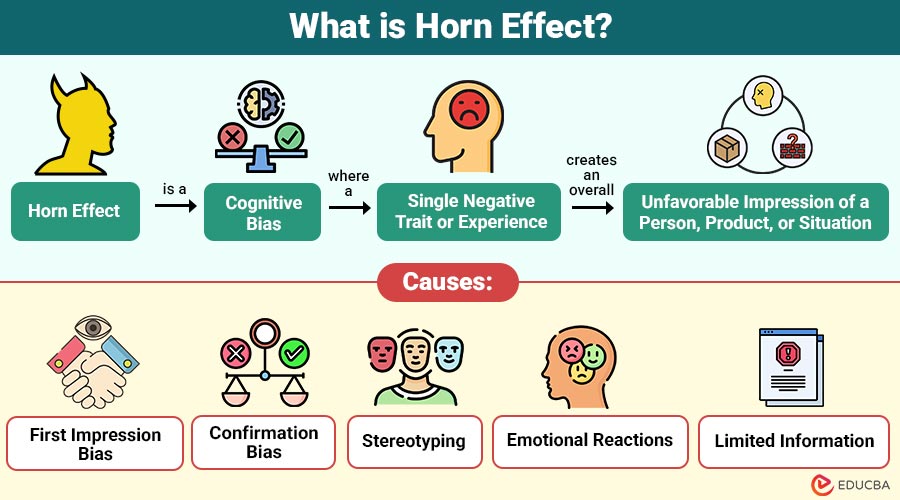
Horn effect is a cognitive bias where a single negative trait or experience creates an overall unfavorable impression of a person, product, or situation. This negative perception can overshadow positive qualities and lead to unfair judgments. It is the opposite of the halo effect, in which a single positive trait influences overall perception.
Table of Contents:
- Meaning
- Working
- Characteristics
- Causes
- Examples
- Impact
- Difference
- How to Avoid Horn Effect?
- Challenges
Key Takeaways:
- A single negative impression can unfairly influence overall perceptions and decision-making processes.
- The Horn Effect often causes strengths and achievements to be overlooked completely.
- Recognizing this bias promotes fairer evaluations, stronger relationships, and better workplace outcomes.
- Objective assessments and diverse perspectives help reduce negative judgment-based cognitive biases.
How Does the Horn Effect Work?
The Horn Effect occurs when people form judgments quickly and rely on limited information. Instead of evaluating all available evidence objectively, they focus on a single negative factor and use it to assess the entire person or situation.
The process typically follows these steps:
- A person notices a negative characteristic or behavior.
- The negative impression becomes highly memorable.
- Other positive information receives less attention.
- The observer develops an overall unfavorable opinion.
- Future interactions are interpreted through the same negative lens.
As a result, the affected individual may be judged unfairly despite possessing numerous strengths and positive attributes.
Characteristics of the Horn Effect
Some common characteristics include:
1. Reliance on First Negative Impressions
People often form lasting judgments based on an initial unfavorable encounter, overlooking later positive experiences.
2. Overgeneralization of One Weakness
A single flaw or mistake is unfairly used to define someone’s overall abilities and character.
3. Biased Evaluation of Future Behavior
Negative perceptions influence expectations, causing future actions to be interpreted unfavorably regardless of intent.
4. Ignoring Positive Evidence
Individuals tend to dismiss achievements and strengths that contradict their established negative opinions.
5. Emotional Rather than Objective Judgment
Decisions are often driven by feelings and personal biases instead of factual assessment.
6. Influence on Workplace and Personal Decisions
Negative impressions can significantly affect hiring, promotions, relationships, teamwork, and overall trust.
Causes of the Horn Effect
The Horn Effect can arise from various psychological biases and situations that lead people to form unfairly negative overall impressions based on limited or unfavorable information.
1. First Impression Bias
People often form opinions within seconds of meeting someone. If the initial interaction is negative, it may shape all future perceptions.
2. Confirmation Bias
Once a negative opinion is formed, people tend to seek information that confirms their existing belief.
3. Stereotyping
Preconceived notions about certain groups, roles, or characteristics can reinforce negative judgments.
4. Emotional Reactions
Strong emotions such as frustration, disappointment, or anger can amplify negative perceptions.
5. Limited Information
People often make judgments based on incomplete information, increasing the likelihood of biased conclusions.
Examples of the Horn Effect
The Horn Effect appears in many aspects of daily life.
1. Workplace
An employee makes a mistake during an important presentation. Despite the employee’s consistently strong performance throughout the year, management has begun to view the employee as unreliable.
2. Recruitment
A candidate struggles to answer one interview question. The interviewer concludes that the candidate lacks competence and ignores other impressive qualifications.
3. Education
A student behaves disruptively in one class. The teacher may assume the student is generally irresponsible, which could affect future evaluations.
4. Customer Service
A customer receives a delayed order and subsequently views the company’s products, support, and brand reputation negatively.
5. Social Relationships
A person makes an awkward comment during a gathering. Others may incorrectly perceive them as unfriendly or socially incompetent.
Impact of the Horn Effect
The impact of the Horn Effect can be significant for both individuals and organizations.
1. Unfair Judgments
Individuals are assessed unfairly based on a single mistake rather than overall achievements.
2. Reduced Opportunities
Negative perceptions can limit promotions, career growth, and valuable opportunities.
3. Workplace Conflict
Misunderstandings from biased assumptions often damage teamwork and professional relationships.
4. Lower Employee Morale
Feeling unfairly evaluated reduces motivation, engagement, confidence, and workplace satisfaction.
5. Poor Decision-Making
Biased evaluations lead organizations to make ineffective hiring, promotion, and management decisions.
Difference Between Horn Effect and the Halo Effect
The table below highlights the key differences between the Horn Effect and the Halo Effect :
| Aspect | Horn Effect | Halo Effect |
| Definition | Negative traits influence overall perception | A positive trait influences overall perception |
| Focus | Weaknesses or mistakes | Strengths or achievements |
| Outcome | Unfavorable evaluation | Favorable evaluation |
| Decision Impact | Can lead to unfair criticism | Can lead to excessive praise |
| Example | One error makes an employee seem incompetent | One achievement makes an employee seem exceptional |
How to Avoid Horn Effect?
Recognizing and managing this bias can improve fairness and decision-making.
1. Evaluate Multiple Factors
Considering various aspects of a person’s performance prevents one negative trait from dominating judgment.
2. Use Objective Criteria
Applying measurable standards ensures evaluations are based on facts rather than personal perceptions.
3. Seek Additional Information
Collecting information from multiple sources helps create a balanced and accurate assessment.
4. Challenge Assumptions
Questioning initial impressions reduces the risk of forming unfair conclusions from limited evidence.
5. Encourage Diverse Perspectives
Including different viewpoints minimizes individual biases and supports more objective decision-making.
6. Focus on Long-Term Performance
Assessing consistent performance patterns provides a fairer evaluation than isolated incidents alone.
Challenges in Overcoming the Horn Effect
Here are some common challenges that make it difficult to recognize and overcome the Horn Effect in everyday decisions and evaluations.
1. Natural Tendency to Focus on Negative Information
People naturally remember negative experiences more strongly than positive ones.
2. Time Pressure in Decision-Making
Limited time encourages quick judgments, significantly increasing reliance on biased impressions.
3. Emotional Reactions to Mistakes
Strong emotions can magnify errors and overshadow an individual’s positive qualities.
4. Existing Stereotypes and Assumptions
Preconceived beliefs influence perceptions, making objective evaluations more difficult.
5. Lack of Structured Evaluation Systems
Without clear criteria, decisions often rely on subjective opinions and biases.
Final Thoughts
The Horn Effect is a cognitive bias in which a single negative trait, behavior, or experience shapes an overall unfavorable perception of a person, product, or organization. This bias can influence evaluations, decisions, and relationships. Recognizing and addressing it helps promote fairer judgments, objective assessments, and more effective decision-making in professional and personal settings.
Frequently Asked Questions (FAQs)
Q1. Why does the Horn Effect occur?
Answer: It occurs due to first impressions, confirmation bias, stereotypes, emotional reactions, and limited information.
Q2. Where is the Horn Effect commonly seen?
Answer: It commonly appears in recruitment, performance evaluations, education, leadership assessments, marketing, and social interactions.
Q3. How can organizations reduce the Horn Effect?
Answer: Organizations can use objective evaluation criteria, structured assessments, multiple reviewers, and bias-awareness training to minimize their impact.
Q4. Is the Horn Effect always based on actual mistakes?
Answer: The Horn Effect can arise from misunderstandings, stereotypes, limited information, or biases, and can influence judgments even when the perception is inaccurate.
Recommended Articles
We hope that this EDUCBA information on “Horn Effect” was beneficial to you. You can view EDUCBA’s recommended articles for more information.

