


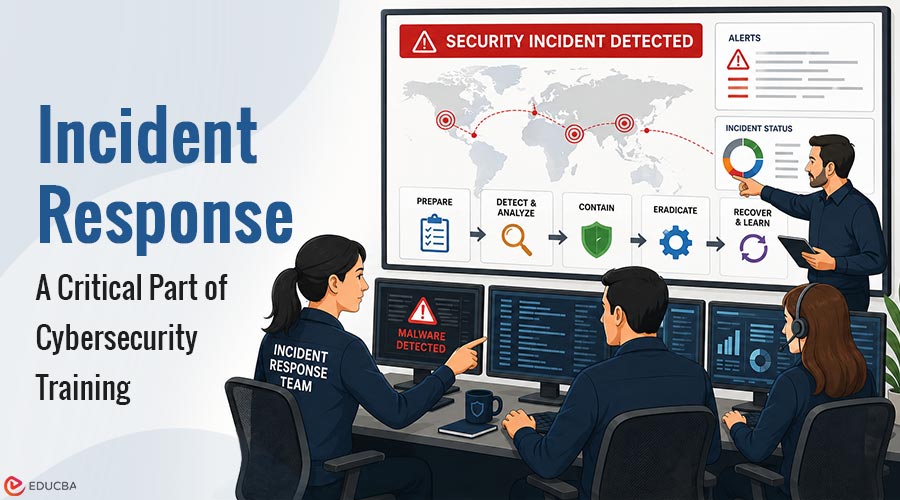
Cybersecurity threats are growing more advanced as organizations expand their digital operations, cloud infrastructure, and interconnected systems. Businesses across industries now face growing risks from ransomware attacks, phishing campaigns, insider threats, and large-scale data breaches. As a result, the training is shifting beyond prevention-focused approaches to include incident response in cybersecurity, enabling organizations to detect, contain, and recover from security incidents more effectively.
Why Incident Response Skills Are Becoming Essential?
Traditional cybersecurity training often focuses heavily on perimeter defense, password management, and threat prevention. While preventive security measures remain important, organizations now recognize that cyber incidents can still occur even within highly protected environments.
Modern cybersecurity professionals must understand how to respond quickly and effectively when attacks happen. Incident response training helps teams develop the technical, operational, and communication skills required to manage cyber threats while minimizing business disruption and data loss.
The Role of Structured Response Planning
A structured incident response strategy enables organizations to respond more efficiently during security incidents by establishing clear procedures, assigning responsibilities, and defining communication protocols. Without proper planning, businesses may struggle to contain threats quickly, increasing operational and financial damage.
Many organizations developing cyber incident response plan Australia are focusing on improving employee preparedness through practical cybersecurity training and simulation exercises. These efforts help teams identify threats, escalate incidents, and coordinate responses more effectively.
Cybersecurity Training Beyond Technical Teams
Cybersecurity is no longer solely the responsibility of IT departments. Human error continues to play a major role in many security incidents, underscoring the importance of organization-wide cybersecurity awareness.
Modern training programs often include executives, operational staff, customer service teams, remote employees, and technical security personnel. Businesses are increasingly recognizing that stronger security awareness across all departments can improve incident detection and reduce response delays during active threats.
The Influence of Ransomware and Advanced Threats
The growing number of ransomware attacks and the increasing sophistication of cybercriminals have greatly driven demand for incident response expertise. Businesses must now prepare for highly coordinated attacks that can disrupt operations, compromise sensitive data, and erode customer trust.
Organizations implementing a cyber incident response plan in Australia are increasingly prioritizing realistic training environments that simulate real-world attack scenarios. These exercises help cybersecurity teams improve decision-making, communication, and recovery strategies under pressure.
Technology and Automation in Incident Response
Modern cybersecurity training increasingly incorporates automation tools, artificial intelligence, and threat detection platforms to enable faster response times. Security information and event management platforms, endpoint monitoring solutions, and automated threat analysis tools are helping organizations enhance visibility and coordinate incident response more effectively.
Training professionals to work alongside these technologies is becoming essential as businesses adopt more advanced cybersecurity infrastructures. Understanding both technical tools and operational response procedures helps organizations build stronger overall security resilience.
The Future of Incident Response in Cybersecurity Training
As cyber threats continue evolving, incident response capabilities are expected to become an even more important part of cybersecurity education and workforce development. Businesses increasingly require professionals who can not only prevent attacks but also manage incidents effectively when they occur.
Future cybersecurity training will likely place even greater emphasis on practical simulations, cross-department coordination, cloud security response, and real-time threat management. This shift reflects a broader understanding that strong cybersecurity resilience depends not only on defense systems but also on the ability to respond quickly, strategically, and effectively during active cyber incidents.
Final Thoughts
Incident response in cybersecurity training is now a vital component of modern digital defense. As threats become more advanced and disruptive, organizations must prepare their teams to respond with confidence, speed, and coordination. A well-designed incident response strategy, combined with practical cybersecurity training, helps businesses reduce risk, improve recovery, and strengthen long-term security resilience.
Recommended Articles
We hope this guide to incident response in cybersecurity helps you understand its importance in cybersecurity training. Check out these recommended articles for more insights and strategies.


