


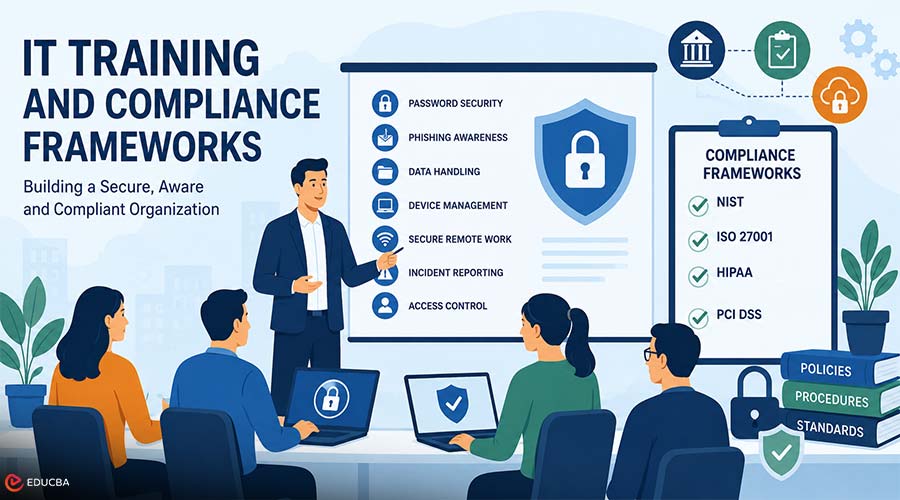
Modern companies depend on secure systems, skilled employees, and clear rules. A single weak password or a careless click can expose customer data, disrupt operations, and erode trust. That is why IT training and compliance frameworks work together. Training teaches employees how to act safely and correctly. Compliance frameworks provide companies with a roadmap for building secure and reliable systems. Many organizations now focus on implementing NIST 800-171 controls because these standards protect sensitive information and support government contract requirements. Companies use these controls to strengthen access management, incident response, and data protection.
What Does IT Training Mean in Practice?
IT training teaches employees how to use systems, protect data, and follow company policies. Effective training goes beyond basic presentations. It builds habits that employees can use during daily work.
A strong program usually covers:
- Password security
- Phishing awareness
- Data handling rules
- Device management
- Secure remote work
- Incident reporting
- Access control procedures
Think of IT training like a fire drill in an office building. Employees do not wait for a real fire before learning where the exits are. In the same way, workers should know how to spot a phishing email before attackers strike. Training also varies by job role. A software developer needs guidance on secure coding. A finance employee needs training on payment fraud and sensitive records. An IT administrator requires more in-depth instruction in system monitoring and access control. Companies that repeat training throughout the year usually achieve better results than those that offer only annual sessions. Frequent practice helps employees remember procedures during stressful situations.
Understanding Compliance Frameworks
A compliance framework is an organized set of rules, controls, and best practices. These frameworks help organizations protect information, reduce risk, and meet legal or contractual obligations. Frameworks create consistency. Without them, security decisions often become scattered and reactive. One department may follow strict procedures while another stores sensitive files in unsafe locations.
A framework serves as a blueprint for building a structure. Builders follow detailed plans to avoid weak foundations or unsafe wiring. Compliance frameworks guide organizations similarly by setting standards for security, monitoring, and accountability. Several major frameworks shape modern IT operations.
1. NIST Cybersecurity Framework
The National Institute of Standards and Technology developed the NIST Cybersecurity Framework to help organizations manage cybersecurity risks using a structured approach.
The framework focuses on five core functions:
- Identify
- Protect
- Detect
- Respond
- Recover
These functions help organizations understand risks, defend systems, detect threats quickly, and restore operations after incidents.
2. ISO 27001
ISO 27001 is a global standard that sets out requirements for managing information security. It helps organizations build formal security processes and maintain continuous improvement. Companies often adopt ISO 27001 when they work across multiple countries or need to demonstrate strong security controls to partners and clients.
3. HIPAA
The Health Insurance Portability and Accountability Act protects healthcare information in the United States. Hospitals, insurance companies, and medical service providers comply with HIPAA rules to protect patient data. HIPAA training often focuses on privacy rules, access restrictions, and secure communication.
4. PCI DSS
The Payment Card Industry Data Security Standard applies to organizations that process payment card information. Retailers, online stores, and payment processors use PCI DSS controls to reduce fraud and protect financial data.
Why IT Training And Compliance Frameworks Must Work Together?
Training and compliance frameworks support each other. One cannot succeed without the other. A company may invest in advanced security tools and detailed compliance policies, but employees can still create risks if they do not understand those rules. For example, a worker might accidentally send sensitive files over an unsecured channel because no one explained the approved process. The opposite problem also exists. Employees may receive excellent training, but weak company policies can still leave systems exposed.
Successful organizations combine both elements:
- Frameworks define the rules
- Training teaches employees how to follow them
- Audits verify whether controls work correctly
- Continuous updates improve weak areas
This cycle creates stronger security over time.
Common Challenges During Implementation
Many companies struggle during the early stages of compliance and training projects. The most common problem is complexity. Framework documents often contain technical language that overwhelms non-technical staff. Another challenge involves employee engagement. Workers sometimes treat security training as a mere formality rather than an important business function.
Organizations can improve participation by:
- Using short and practical lessons
- Showing real attack examples
- Running phishing simulations
- Explaining the business impact of mistakes
- Updating material regularly
Budget limitations also create pressure. Small businesses may lack dedicated compliance teams or security specialists. In these cases, organizations often start with high-risk areas first, such as access management and data protection. Leadership support matters as well. Employees rarely take compliance seriously if management ignores policies or skips training.
Measuring Success
Companies should measure training and compliance performance with clear metrics. Useful measurements include:
- Phishing test success rates
- Incident response times
- Audit findings
- Policy violation frequency
- Employee training completion rates
- Time required to patch systems
These metrics show whether programs improve security behavior over time. For example, a company may discover that phishing click rates dropped from 25% to 5% after monthly awareness exercises. That change provides direct evidence that training works. Compliance audits also reveal gaps before attackers exploit them. Finding weaknesses during an internal review is far less expensive than handling a public data breach.
Final Thoughts
IT training and compliance frameworks help organizations protect systems, data, and business operations. Training equips employees with practical skills to handle threats and follow security procedures. Compliance frameworks provide the structure that keeps security efforts organized and measurable. Companies that pair clear policies with continuous training are often better equipped to respond quickly to threats, minimize operational risks, and strengthen trust with clients and partners. In a business environment shaped by ransomware, phishing attacks, and strict data regulations, that combination is no longer optional. It has become a core part of modern business survival.
Recommended Articles
We hope this guide to IT training and compliance frameworks helps you strengthen cybersecurity awareness and build more secure business operations. Check out these recommended articles for more insights, best practices, and strategies related to IT security, compliance, and workforce training.


