


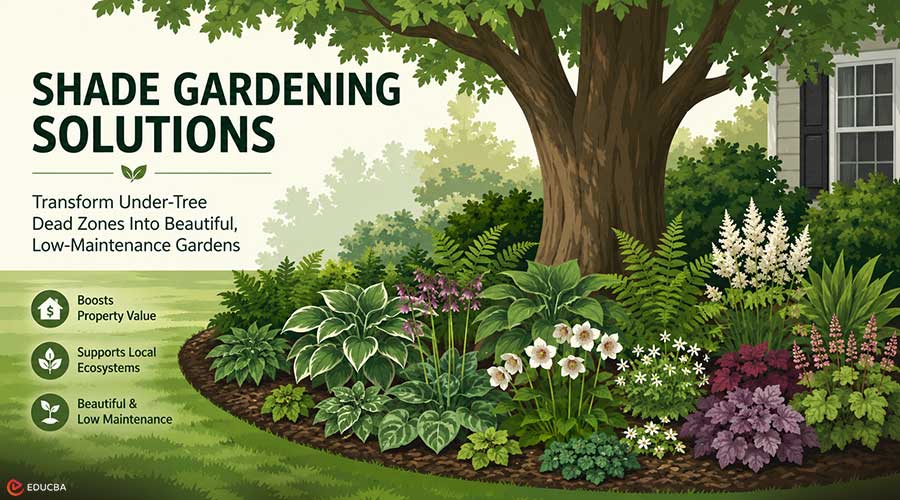
Urban Forestry Meta-Analysis Shows Tree Canopy Adds Significant Value to Homes, Prompting Renewed Interest in Shade Gardening Solutions
A recent meta-analysis published in Urban Forestry & Urban Greening, drawing on 17 hedonic property value studies across U.S. cities, estimates that home values increase by $9 to $134 per home for every 1% increase in surrounding tree canopy cover. The findings are reshaping how homeowners are advised to approach a familiar problem: the bare patch of ground beneath their largest yard tree, where grass refuses to grow, no matter how many times the area is reseeded.
TN Nursery, a Tennessee-based grower of native plants, ferns, and shade perennials, reports rising homeowner interest in shade-gardening solutions for so-called “dead zones.” The traditional response, reseeding shade-tolerant grass each spring, typically fails because of three combined conditions: dense overhead canopy that blocks the light grass needs, dry root-zone soil that the canopy intercepts before rain can reach the ground, and intense competition from the tree’s own root system for whatever water and nutrients remain in the top foot of soil. Even shade-tolerant grass mixes need three to four hours of filtered light a day, and a dense, mature canopy often delivers less than two hours.
Why Grass Fails Under Mature Trees?
The common solution, reseeding shade-tolerant grass every spring, often produces disappointing results because the growing conditions beneath large trees are extremely challenging.
Several factors contribute to the issue:
- Dense canopy blocks sunlight.
- Tree branches intercept rainfall before it reaches the soil.
- Large root systems compete aggressively for water and nutrients.
Even grass blends marketed for low-light areas usually require several hours of filtered sunlight each day. Dense, mature canopies often provide far less, making it difficult to sustain healthy lawn growth.
A Woodland Understory is the Natural Solution
Experts at TN Nursery explain that the problem is not poor lawn care. Instead, the environment beneath a mature tree naturally functions more like a woodland understory than a traditional yard. Rather than forcing grass into unsuitable conditions, many homeowners are redesigning these spaces with plants that naturally thrive in cool, root-heavy, low-light environments. The result is a landscape that looks healthier, requires less maintenance, and complements the tree instead of competing with it.
Best Plants for Shade Gardening Solutions
Here are some of the best shade-loving plants that thrive in woodland-style garden conditions.
1. Foundation Shade Perennials
Several shade-loving perennials form the structural backbone of a healthy under-tree garden:
- Hostas provide large, architectural foliage.
- Ferns introduce texture and softness.
- Hellebores bloom in late winter when most gardens remain dormant.
- Heuchera offers colorful evergreen foliage in many climates.
These plants tolerate dry shade and root competition exceptionally well.
2. Native Woodland Plants
Native species also add ecological benefits to shade gardens by supporting regional pollinators and wildlife. Popular native shade plants include:
- Wild ginger
- Bloodroot
- Solomon’s seal
- Foamflower
- Virginia bluebells
Because these species evolved in woodland settings, they adapt naturally to the conditions beneath established trees.
3. Groundcovers and Flowering Shade Plants
Groundcovers help eliminate bare patches beneath trees while reducing maintenance requirements. Recommended options include:
- Sweet woodruff
- Sedge varieties
To add color and visual contrast, homeowners can incorporate flowering shade perennials such as:
- Astilbe
- Lungwort
- Brunnera
These additions prevent deep-shade gardens from appearing overly dark or monotonous.
Why Mature Trees Are Worth Protecting?
Recent research on property values highlights the significant long-term value of mature trees. Large canopy trees improve curb appeal, provide cooling benefits, and contribute measurable value to residential properties. Replacing those benefits is not something a newly planted sapling can accomplish quickly. Tree removal is also expensive, often costing thousands of dollars depending on size and location. Designing around existing trees is usually the more practical and environmentally responsible choice.
Choosing Plants Based on Tree Type
Successful under-tree landscaping depends heavily on site-specific plant selection. For example:
- Soil beneath maple and beech trees often remains extremely dry during summer.
- Conditions beneath oak trees are typically slightly more forgiving because rainfall penetrates the canopy more easily.
Understanding these differences is essential when planning shade gardening solutions. A plant that thrives beneath an oak may struggle beneath a maple. TN Nursery’s plant research library helps homeowners identify suitable species based on:
- Light exposure
- Soil moisture
- Mature plant size
- Regional adaptability
Planting Techniques That Protect Tree Health
Improper planting around trees can damage or even kill mature specimens. TN Nursery recommends several best practices:
- Avoid Covering the Root Flare: Adding extra soil around the base of a tree can trap moisture against the bark, causing rot and decline over time.
- Use Small Starter Plants: Small starter plants or bare-root stock require less digging, minimizing root disturbance.
- Never Cut Large Roots: If planting exposes a root thicker than a thumb, gardeners should relocate the plant slightly rather than cutting the root.
These simple techniques help preserve tree health while allowing the garden to fill in naturally over time.
Growing Interest in Shade Gardening Solutions
The company’s shade perennial collection is available year-round through the TN Nursery Official Website, which ships perennials, ferns, and vines nationwide. According to the company, the shaded portion of a yard was never an ideal location for traditional lawn grass. The latest property value research simply reinforces the value mature trees were already providing long before homeowners began landscaping beneath them.
About TN Nursery
TN Nursery is a Tennessee-based grower of native plants, perennials, ferns, trees, and shrubs serving more than 500,000 customers nationwide. With decades of experience growing native species at scale, the company supplies homeowners, landscape designers, and ecological restoration projects across the United States.
Its horticulture team has been featured in publications including Forbes, Newsweek, Martha Stewart, Good Housekeeping, and Bob Vila. TN Nursery also operates a horticulture scholarship program, donates plants to disaster recovery efforts, and maintains a free public plant research library.
Final Thoughts
The latest property value research highlights an important reality for homeowners: mature trees are not obstacles to landscaping but valuable assets that enhance both curb appeal and long-term home value. Instead of struggling to maintain grass in difficult, shaded areas, homeowners are increasingly turning to practical shade gardening solutions designed specifically for low-light, root-heavy environments.
By choosing shade-loving perennials, native groundcovers, and site-appropriate planting techniques, homeowners can transform under-tree “dead zones” into attractive, ecologically beneficial garden spaces. In the long run, working with the natural conditions around mature trees gives a more sustainable, attractive, and cost-effective landscaping plan.
Recommended Articles
We hope this guide to shade gardening solutions helps you transform difficult under-tree spaces into thriving, beautiful landscape features. Check out these recommended articles for more ideas, planting tips, and strategies for creating a healthier, more visually appealing garden.

