


What is Proxy Fight?
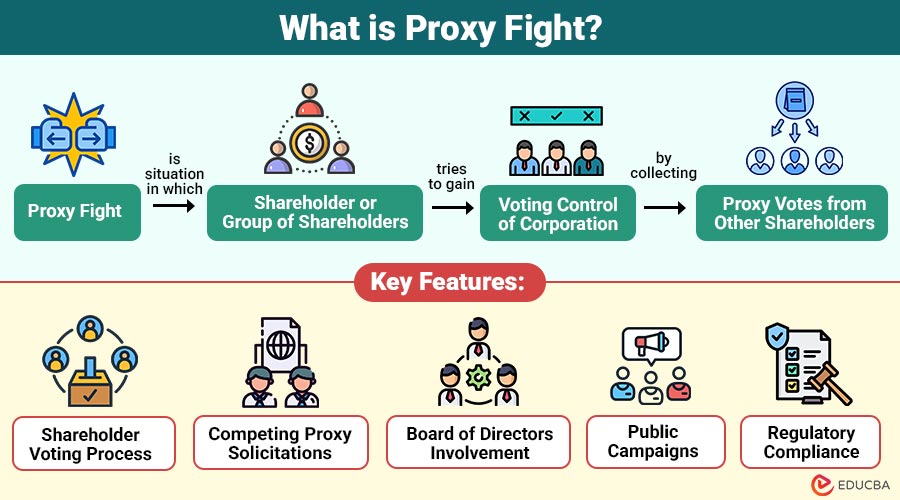
A proxy fight (also called a proxy battle or proxy contest) is a situation in which a shareholder or group of shareholders tries to gain voting control of a corporation by collecting proxy votes from other shareholders.
In publicly traded companies, shareholders may not attend meetings personally. Instead, they authorize someone else to vote on their behalf through a “proxy.” During a proxy fight, competing groups attempt to gather enough proxy votes to influence corporate decisions or replace the company’s board of directors. Proxy fights are usually initiated by activist investors, institutional shareholders, hedge funds, or dissatisfied investors who believe management is not acting in shareholders’ best interests.
Table of Contents:
- Meaning
- Key Features
- Working
- Common Causes
- Types
- Participants
- Advantages
- Disadvantages
- How do Companies Defend against Proxy Fights?
Key Takeaways:
- Proxy fights strengthen shareholder influence by challenging management decisions and enhancing accountability in corporate governance.
- Activist investors use proxy contests to demand leadership changes, restructuring, and enhanced shareholder value creation.
- Proxy fights may improve transparency, governance practices, and strategic decision-making within publicly traded corporations.
- Securities regulations ensure proxy fights remain transparent, fair, and compliant with established corporate governance standards.
Key Features of a Proxy Fight
Below are the major features that define how proxy fights operate within corporate governance and shareholder decision-making processes.
1. Shareholder Voting Process
Proxy fights rely heavily on shareholder voting rights. Investors vote on key company matters during annual or special meetings.
2. Competing Proxy Solicitations
Both management and opposing shareholders attempt to collect proxy votes from investors.
3. Board of Directors Involvement
Most proxy fights aim to replace some or all members of the board of directors.
4. Public Campaigns
Proxy battles often involve advertisements, investor presentations, media interviews, and public letters to shareholders.
5. Regulatory Compliance
Companies and investors must comply with securities regulations and disclosure requirements during proxy contests.
How Does a Proxy Fight Work?
A proxy fight usually follows a structured process.
Step 1: Shareholder Dissatisfaction
A shareholder or activist investor becomes dissatisfied with management performance, strategy, or governance.
Step 2: Proposal for Change
The investor proposes changes such as:
- Replacing board members
- Changing business strategy
- Selling assets
- Reducing costs
- Improving governance
Step 3: Proxy Solicitation
The opposing group contacts shareholders and asks them to authorize proxy votes in support of their proposals.
Step 4: Management Response
Company management defends its position and seeks support from shareholders.
Step 5: Shareholder Voting
During the annual general meeting (AGM) or special meeting, shareholders vote on the proposed resolutions.
Step 6: Outcome
Depending on the voting results:
- Management may remain in control
- Activist investors may gain board seats
- Strategic changes may occur
Common Causes of Proxy Fights
Below are some of the most common reasons why shareholders initiate proxy fights against a company’s management or board of directors.
1. Poor Financial Performance
Poor financial performance reduces shareholder confidence due to declining profits, weak growth, and falling stock prices.
2. Weak Corporate Governance
Weak corporate governance creates investor concerns regarding transparency, executive pay, conflicts of interest, and accountability practices.
3. Strategic Disagreements
occur when investors believe that management decisions negatively affect the company’s growth, profitability, or competitiveness.
4. Mergers and Acquisitions
Shareholders sometimes oppose acquisitions or mergers that they believe destroy shareholder value.
5. Underutilized Assets
Underutilized assets encourage investors to demand restructuring, asset sales, or operational improvements for better returns.
6. Leadership Issues
Leadership issues arise when shareholders lose trust in executives because of poor management or decision-making.
Types of Proxy Fights
Below are the major types of proxy fights commonly seen in corporate governance and shareholder activism situations.
1. Board Control Proxy Fight
Shareholders attempt to replace current board directors with preferred candidates to influence company management decisions.
2. Policy-Based Proxy Fight
Investors seek policy changes, governance reforms, or strategic adjustments without removing existing company leadership teams.
3. Takeover-Related Proxy Fight
An acquiring company seeks shareholder approval to support mergers, acquisitions, or corporate takeover proposals against management.
4. Activist Investor Campaign
Activist investors pressure management for operational improvements, cost reductions, restructuring, or enhanced shareholder value creation.
Participants in a Proxy Fight
Below are the key participants involved in a proxy fight and their roles in influencing corporate governance decisions.
1. Shareholders
Shareholders vote on important company matters, including board elections, mergers, and corporate governance decisions.
2. Board of Directors
The board represents shareholder interests and oversees company strategy, governance, and executive management performance.
3. Company Management
Company management handles daily business operations and implements strategic decisions approved by the board.
4. Activist Investors
Activist investors push for operational, financial, or governance changes to improve company performance and value.
5. Proxy Advisory Firms
Proxy advisory firms provide voting recommendations and analysis to help shareholders make informed voting decisions.
6. Securities Regulators
Securities regulators monitor proxy fights and ensure companies comply with corporate governance and disclosure laws.
Advantages of Proxy Fights
Proxy fights can provide several advantages to companies and shareholders.
1. Improves Accountability
Management becomes more accountable to shareholders regarding company performance, strategic decisions, and governance responsibilities.
2. Encourages Better Governance
Proxy contests promote transparency, stronger governance practices, and improved oversight of executive management activities.
3. Enhances Shareholder Rights
They empower shareholders to influence important corporate decisions and participate actively in company governance matters.
4. May Improve Company Performance
New leadership, operational reforms, or revised strategies may significantly increase profitability and overall shareholder value.
5. Prevents Management Entrenchment
Proxy fights reduce the risks of ineffective executives remaining in power despite prolonged poor corporate performance.
Disadvantages of Proxy Fights
Despite their benefits, proxy fights also have several disadvantages.
1. High Costs
Proxy contests often involve substantial legal, marketing, communication, and shareholder solicitation expenses for both parties.
2. Management Distraction
Executives may focus heavily on defending positions instead of managing regular business operations and strategic initiatives.
3. Short-Term Focus
Activist investors sometimes prioritize immediate financial gains rather than sustainable long-term company growth and stability.
4. Negative Publicity
Public corporate disputes may harm company’s reputation, investor confidence, and relationships with customers or partners.
5. Employee Uncertainty
Leadership conflicts can create workplace instability, reducing employee morale, productivity, and stakeholder confidence in management.
Real-World Examples
Below are some well-known proxy fight examples that demonstrate how shareholders challenge corporate management and influence business decisions.
1. Disney Proxy Fight
Activist investors challenged Disney’s leadership decisions and pushed for strategic improvements and governance changes.
2. Yahoo and Carl Icahn
Investor Carl Icahn launched a proxy fight against Yahoo’s management regarding its handling of acquisition negotiations.
3. Procter & Gamble vs Nelson Peltz
Nelson Peltz conducted one of the largest proxy battles in corporate history, seeking board representation at Procter & Gamble.
4. Hewlett-Packard Proxy Battle
Shareholders criticized the leadership decisions and strategic direction, leading to governance changes.
Legal and Regulatory Aspects of Proxy Fights
Proxy fights are regulated by securities laws to ensure transparency and fairness.
Companies and investors must:
1. Disclose Financial Interests
Companies and investors must disclose ownership stakes, financial interests, and potential conflicts of interest that influence proxy contest activities.
2. File Proxy Statements
Parties involved must file proxy statements that accurately include voting proposals, candidate details, and shareholder-related information.
3. Provide Accurate Shareholder Information
Companies must consistently provide complete, truthful, and timely shareholder information during proxy solicitation and voting processes.
4. Follow Voting Procedures
All participants must follow established voting procedures, regulatory guidelines, and corporate governance requirements during proxy contests.
How do Companies Defend against Proxy Fights?
Companies use several strategies to defend themselves.
1. Shareholder Communication
Management explains business strategies, financial performance, and future plans to maintain investor confidence and shareholder support.
2. Governance Reforms
Companies improve governance practices, transparency, and accountability to rebuild trust among dissatisfied shareholders and investors.
3. Negotiation with Activists
Some firms negotiate agreements with activist investors to avoid prolonged disputes and costly proxy contest battles.
4. Poison Pill Strategy
Companies adopt defensive measures, preventing hostile takeovers by making acquisitions expensive or less financially attractive.
5. Strong Financial Performance
Consistent profitability, growth, and operational success significantly reduce shareholder dissatisfaction and activist investor pressure.
Conclusion
A proxy fight is a corporate governance mechanism allowing shareholders to challenge management and influence company decisions. While costly and disruptive, proxy contests improve accountability, governance, and shareholder rights. Growing shareholder activism and strategic investor involvement continue making proxy fights important in modern corporate decision-making environments.
Frequently Asked Questions (FAQs)
Q1. Why do proxy fights occur?
Answer: They occur due to disagreements over company performance, governance, leadership, or strategy.
Q2. Are proxy fights legal?
Answer: Yes, proxy fights are legal when conducted according to securities regulations.
Q3. How do proxy fights affect stock prices?
Answer: They may increase or decrease stock prices depending on investor expectations.
Q4. Can management win a proxy fight?
Answer: Yes, management can retain control if shareholders support existing leadership.
Recommended Articles
We hope that this EDUCBA information on “Proxy Fight” was beneficial to you. You can view EDUCBA’s recommended articles for more information.


