


Updated May 15, 2026
What is Ambient Computing?
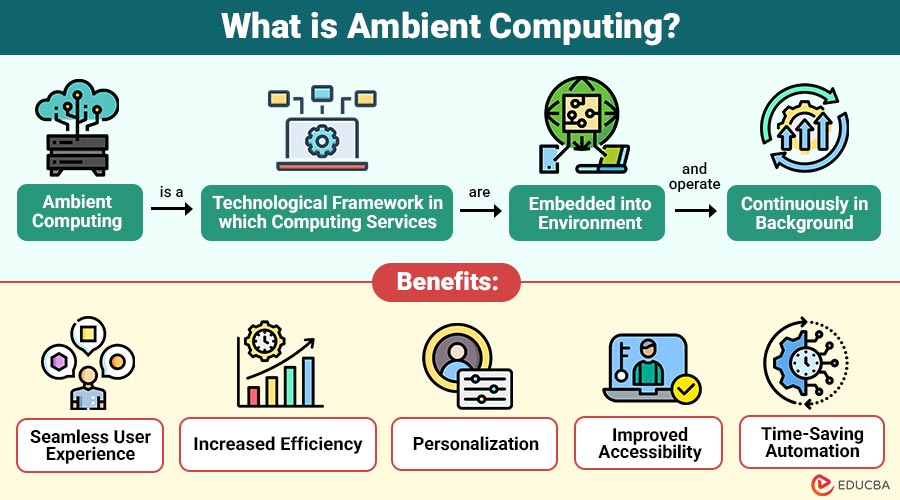
Ambient Computing is a technological framework in which computing services are embedded into the environment and operate continuously in the background. It lets devices and systems to communicate with each other, understand context, and make intelligent decisions without explicit user commands.
In simple terms, it is the evolution of computing from:
- User-driven interaction (manual control)
to - Context-driven automation (intelligent assistance)
For example, instead of manually adjusting your home thermostat, an ambient computing system learns your preferences, detects your presence, and adjusts the temperature automatically.
Table of Contents:
Key Takeaways:
- Ambient computing integrates AI, IoT, cloud, and edge computing systems to deliver seamless automation experiences.
- It enables context-aware automation that reduces manual effort and improves efficiency significantly overall.
- Continuous data collection powers personalized experiences but raises privacy and security concerns significantly.
- Ambient computing uses connected devices to create intelligent, responsive environments in everyday life.
Key Components of Ambient Computing
Here are the key components that work together to enable seamless, intelligent, and context-aware computing environments.
1. Artificial Intelligence
AI enables systems to learn from user behavior, predict needs, and make decisions. Machine learning models analyze patterns to provide personalized experiences.
2. Internet of Things
IoT connects physical devices like sensors, appliances, wearables, and vehicles to the internet, enabling real-time communication and data exchange.
3. Cloud Computing
Large amounts of data are stored and processed via cloud platforms, which enable ambient systems to operate well without requiring a lot of local processing power.
4. Edge Computing
Edge computing processes data closer to source (devices), reducing latency and improving response time.
5. Natural User Interfaces
Voice, gesture, and facial recognition allow users to interact with systems naturally, without keyboards or screens.
How Does Ambient Computing Work?
Ambient computing works by continuously collecting and analyzing contextual data, such as:
- Location
- Time
- User activity
- Environmental conditions
- Device interactions
Once the system understands the context, it automatically triggers appropriate actions.
For example:
- Your smartwatch detects that you are sleeping → smart lights dim automatically.
- Your calendar shows a meeting → your virtual assistant prepares a summary and alerts you.
- You enter your car → navigation starts and suggests the fastest route based on traffic.
This seamless coordination creates an environment where technology becomes almost invisible yet highly responsive.
Benefits of Ambient Computing
Here are the key benefits that demonstrate how ambient computing improves daily life through smarter, more automated, and more seamless digital experiences.
1. Seamless User Experience
Users interact less; systems run quietly in the background, creating smooth, uninterrupted digital experiences overall.
2. Increased Efficiency
Automation reduces manual work, speeds up processes, and improves overall productivity in daily activities.
3. Personalization
Systems learn user behavior and preferences, delivering highly tailored experiences and intelligent recommendations continuously.
4. Improved Accessibility
Voice and gesture controls help differently-abled users interact easily with technology without barriers.
5. Time-Saving Automation
Routine tasks execute automatically, reducing effort and saving significant time in everyday workflows.
Challenges of Ambient Computing
Despite its advantages, ambient computing also comes with challenges:
1. Privacy Concerns
Continuous data collection raises risks of misuse, surveillance, and unauthorized access to personal information.
2. Data Security
Highly connected systems are vulnerable to cyberattacks, hacking, and large-scale data breaches.
3. Dependence on Technology
Heavy automation may reduce human decision-making skills and increase reliance on systems.
4. High Implementation Cost
Developing smart environments requires significant investments in expensive hardware, sensors, and advanced infrastructure.
5. Technical Complexity
Integrating AI, IoT, and cloud systems creates a complex architecture that is hard to manage.
Difference Between Ambient Computing and Traditional Computing
The table below shows a clear comparison between ambient computing and traditional computing based on key features and interaction models.
| Feature | Ambient Computing | Traditional Computing |
| Interaction | Automatic and contextual | Manual input required |
| Devices | Connected ecosystem | Standalone systems |
| User Role | Passive beneficiary | Active user |
| Intelligence | AI-driven and predictive | Limited |
| Experience | Seamless and continuous | Task-based |
Real-World Examples of Ambient Computing
Ambient computing is already present in many modern technologies, even if we don’t always recognize it.
1. Smart Homes
Devices like smart thermostats, lighting systems, and security cameras automatically adjust based on user habits and environmental conditions.
2. Voice Assistants
Voice commands are understood by systems like Alexa, Google Assistant, and Siri, which can carry out duties like answering queries, managing appliances, and making reminders.
3. Wearable Devices
Fitness trackers monitor health data such as heart rate, sleep cycles, and activity levels to provide personalized insights.
4. Smart Cars
Modern vehicles use sensors and AI to assist with parking, lane detection, navigation, and safety alerts.
5. Retail Experiences
Stores use ambient systems to track customer preferences and offer personalized recommendations in real time.
Final Thoughts
Ambient computing shifts technology from active tools to intelligent environments that work seamlessly in the background. By integrating AI, IoT, cloud, and real-time data, it enables invisible yet essential support. Despite privacy and security challenges, its benefits are significant, shaping smarter homes, cities, workplaces, and healthcare for a more automated future.
Frequently Asked Questions (FAQs)
Q1. Does ambient computing require internet connectivity?
Answer: Yes, most ambient systems rely on internet connectivity through cloud or edge networks to process and share data in real time.
Q2. Can ambient computing work without user input?
Answer: Yes, it is designed to reduce or eliminate direct user input by automatically responding to context and behavior patterns.
Q3. Is ambient computing safe for personal data?
Answer: It can be safe if strong encryption, privacy policies, and cybersecurity measures are implemented. However, it still carries privacy risks due to continuous data collection.
Q4. What is the future scope of ambient computing?
Answer: The future scope includes fully automated smart cities, advanced healthcare monitoring, autonomous workplaces, and highly personalized digital ecosystems that operate with minimal human intervention.
Recommended Articles
We hope that this EDUCBA information on “Ambient Computing” was beneficial to you. You can view EDUCBA’s recommended articles for more information.


