


Updated June 15, 2026
What is a Modern Data Stack?
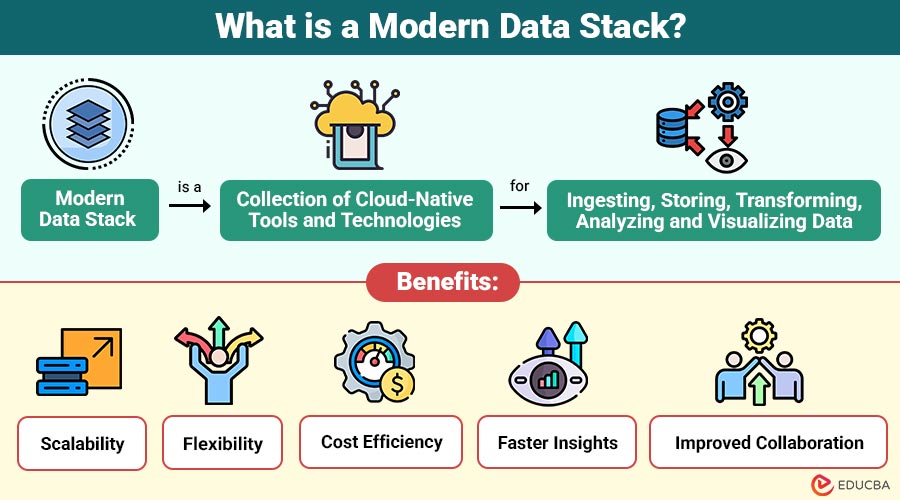
A modern data stack is a collection of cloud-native tools and technologies for ingesting, storing, transforming, analyzing, and visualizing data. It replaces legacy on-premises data warehouses and ETL systems with scalable, modular solutions.
Table of Contents:
- Meaning
- Key Components
- Architecture
- Difference
- Benefits
- Challenges
- Use Cases
- Real-World Example
- Best Practices
Key Takeaways:
- Modern data stack uses cloud-based tools to manage, process, and analyze data efficiently.
- It replaces traditional systems with scalable, flexible, and modular data architecture solutions.
- Automation and real-time processing enable faster insights and improved data-driven decision-making capabilities.
- Strong governance, security, and data quality practices are essential for reliable modern data stack implementations.
Key Components of the Modern Data Stack
Here are the essential components that together form a modern data stack and enable efficient data processing, analysis, and decision-making:
1. Data Sources
Data originates from applications, APIs, databases, and SaaS platforms like CRMs, ERPs, and analytics tools, forming the foundation of the data ecosystem.
2. Data Ingestion (ETL/ELT Tools)
Tools like Fivetran, Stitch, and Airbyte automate the efficient extraction, loading, and syncing of data across systems.
3. Data Storage (Cloud Warehouses & Lakes)
Platforms like Snowflake, Google BigQuery, and Amazon Redshift reliably store massive amounts of structured data.
4. Data Transformation
Tools like dbt clean, model, and transform raw data in warehouses using SQL to improve analytics and reporting outcomes.
5. Data Orchestration
Apache Airflow schedules, monitors, and manages data pipelines, ensuring processes run in order with proper dependencies and minimal failures.
Architecture of the Modern Data Stack
The modern data stack follows a streamlined architecture:
1. Data Collection
Data is collected from diverse sources such as applications, APIs, IoT devices, and databases, ensuring comprehensive coverage of both structured and unstructured information.
2. Data Ingestion
Data ingestion tools extract, replicate, and load data from multiple sources into centralized storage systems, enabling reliable and automated data movement pipelines.
3. Cloud Storage
Cloud storage systems, such as data warehouses and data lakes, securely store massive volumes of structured and unstructured data, enabling scalable access and management.
4. Transformation Layer
Data transformation tools clean, check, and organize raw data into a structured format, making it accurate and ready for analysis and reporting.
5. Analytics Layer
Analytics and BI tools process transformed data to generate reports, dashboards, and visual insights, helping businesses make data-driven decisions efficiently and effectively.
6. Data Activation
Data activation pushes insights into operational systems like marketing, CRM, and applications, enabling real-time actions, personalization, automation, and improved business outcomes.
Difference Between Modern Data Stack and Traditional Data Stack
The table below highlights the key differences between modern data stack and traditional data stack:
| Aspect | Modern Data Stack | Traditional Data Stack |
| Infrastructure | Cloud-based | On-premise |
| Scalability | Highly scalable | Limited |
| Processing | ELT | ETL |
| Flexibility | Modular | Rigid |
| Cost | Pay-as-you-go | High upfront |
| Maintenance | Automated | Manual |
Benefits of the Modern Data Stack
Here are the key benefits that make the modern data stack essential for data-driven organizations:
1. Scalability
Cloud-based platforms enable organizations to seamlessly scale storage and compute resources up or down to meet changing business demands.
2. Flexibility
Provide flexibility by allowing teams to select best-of-breed tools and integrate them across diverse systems and workflows.
3. Cost Efficiency
Pay-as-you-go pricing models reduce infrastructure expenses, eliminate upfront investments, and allow organizations to optimize spending based on actual usage patterns.
4. Faster Insights
Automated data pipelines and real-time processing help organizations get insights faster, so they can make quicker decisions and improve business performance.
5. Improved Collaboration
Centralized data systems improve collaboration by providing shared access to consistent data, enabling teams to work together and make decisions effectively.
Challenges of the Modern Data Stack
Here are the key challenges organizations may face when implementing and managing a modern data stack:
1. Tool Fragmentation
Using multiple tools across the data stack can increase complexity, making integration, maintenance, and overall system management more difficult for teams.
2. Data Governance
Maintaining data quality, security, and regulatory compliance across distributed systems requires strong governance frameworks, policies, and continuous monitoring.
3. Skill Requirements
Teams must possess expertise in cloud technologies, SQL, and data engineering concepts, making hiring, training, and retaining skilled professionals challenging.
4. Cost Management
Although flexible, it can quickly escalate costs without proper monitoring, optimization strategies, and efficient resource utilization across systems.
5. Data Integration Complexity
6. Vendor Lock-In Risks
Relying heavily on specific cloud providers or tools can create vendor lock-in, limiting flexibility and making migrations or changes costly and difficult.
Use Cases of Modern Data Stack
Here are the key use cases where the modern data stack delivers significant value across organizations:
1. Business Analytics
Organizations use BI tools to track KPIs, check performance, and find trends, helping them make better data-based decisions across teams
2. Customer Analytics
3. Marketing Optimization
Teams study campaign data, check performance, and improve marketing plans while giving customers personalized experiences across different channels to increase conversions.
4. Financial Reporting
Automated data pipelines ensure accurate, consistent, and real-time financial reporting, helping organizations maintain compliance, improve forecasting, and support strategic planning decisions.
5. Product Analytics
Companies analyze user interactions, behaviors, and feedback to enhance product features, improve the user experience, and drive innovation through actionable insights.
Within a modern data stack, product teams use event tracking, funnels, cohorts, and retention metrics to uncover insights into user behavior and prioritize roadmaps. To evaluate tools for this layer, consult this roundup of product analytics software comparing PLG-friendly and enterprise platforms, pricing, and integrations with warehouses, ETL/ELT, and CDPs. Choosing the right toolset enables self-serve dashboards, user journey mapping, and experimentation that tie back to reliable, governed data.
Real-World Example
Here is a practical example of how a modern data stack is implemented in a real-world business scenario:
A SaaS company uses a modern data stack to streamline its analytics:
- Data is collected from its app, CRM, and payment systems
- Ingested using Fivetran
- Stored in Snowflake
- Transformed using dbt
- Visualized in Tableau
This setup allows real-time dashboards, so leaders can quickly make decisions based on data.
Best Practices for Implementing a Modern Data Stack
Here are the essential best practices to ensure successful implementation and efficient management of a modern data stack:
1. Choose the Right Tools
Select tools aligned with business goals, scalability needs, and integration capabilities to ensure efficient workflows, performance, and long-term adaptability.
2. Focus on Data Quality
To preserve data accuracy, consistency, and dependability across all systems and analytical workflows, implement robust validation, cleaning, and monitoring procedures.
3. Automate Workflows
4. Ensure Security and Compliance
To protect sensitive data and follow legal rules, use strong access controls, encryption, and proper data management.
5. Optimize Costs
Continuously monitor resource usage, optimize queries, and adjust infrastructure to control costs effectively while maintaining performance and scalability across the data stack.
Final Thoughts
The modern data stack enables organizations to manage data efficiently using scalable, flexible, and cloud-based solutions. It quickly transforms raw data into actionable insights, supporting better decision-making. Despite challenges like tool complexity and governance, its advantages outweigh the drawbacks. Adopting a modern data stack is essential for businesses to remain competitive in today’s data-driven environment.
Frequently Asked Questions (FAQs)
Q1. Is the modern data stack only for large companies?
Answer: No, organizations of any size can adopt a modern data stack, as it scales easily and remains budget-friendly.
Q2. What skills are required for a modern data stack?
Answer: Skills include SQL, cloud computing, data modeling, and familiarity with data tools.
Q3. Why is the cloud important in the modern data stack?
Answer: Cloud platforms provide scalability, flexibility, and cost efficiency, which are essential for handling large data volumes.
Q4. How does the modern data stack improve decision-making?
Answer: It delivers real-time insights, accurate data, and advanced analytics, helping organizations make faster and more informed decisions.
Recommended Articles
We hope that this EDUCBA information on “Modern Data Stack” was beneficial to you. You can view EDUCBA’s recommended articles for more information.


