


Growth rarely strains a business in just one place. Pressure usually shows up in cash timing, hiring pace, margin control, and funding choices at once. Strategic financial planning services bring those forces into one operating view. Leaders gain a clearer basis for setting priorities, weighing tradeoffs, and explaining decisions. That discipline reduces avoidable missteps and supports steadier performance, especially when conditions shift or expansion begins to stretch internal resources.
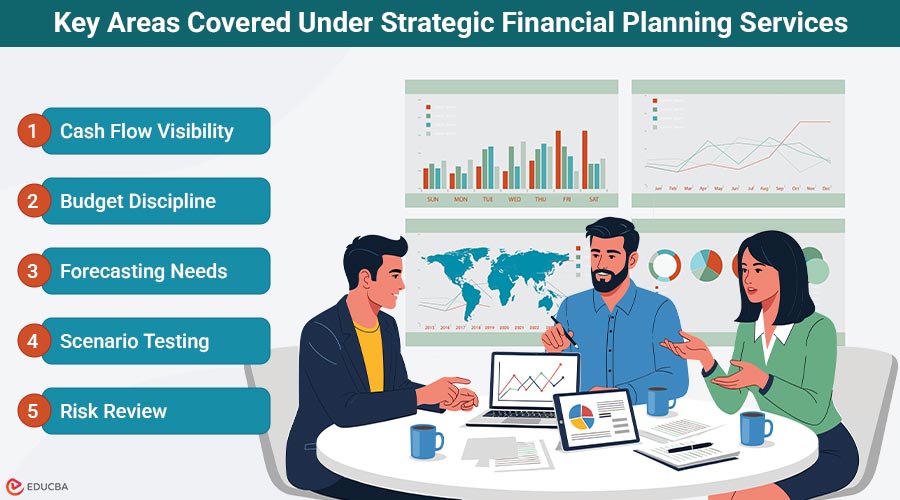
Key Areas Covered Under Strategic Financial Planning Services
The following sections highlight the core focus areas typically addressed through strategic financial planning services.
1. Cash Flow Visibility
Cash strain often builds long before a monthly report makes the pattern obvious. At that stage, strategic financial planning services help align pricing, payroll, vendor terms, tax obligations, and collection speed within a single practical framework. That fuller view shows where money stalls, which commitments tighten liquidity, and when pressure may build. Leaders can respond earlier, with fewer rushed decisions and better control over daily operating demands.
2. Budget Discipline
A useful budget does more than record planned spending. It tests whether hiring dates, supplier costs, marketing outlays, and overhead levels fit current revenue capacity. Management can see which expenses support the margin and which weaken results. Timing also matters. Purchases made during stronger cash periods usually create less strain than approvals made after balances begin to thin and payment deadlines move closer.
3. Forecasting Needs
Historical reporting explains what has already happened. Forecasting looks ahead and asks what is likely to come next. Sales cycles, payroll changes, contract renewals, seasonal swings, and project timing all affect future liquidity. A careful forecast shows when reserves may need support and when borrowing could rise. No model removes uncertainty. Good estimates simply give leadership a clearer window for preparing measured responses before strain becomes urgent.
4. Scenario Testing
Outcomes improve when leaders test multiple plans. Slower revenue, delayed receivables, higher material costs, or faster hiring can each alter cash needs in different ways. Scenario work compares expected, stronger, and stressed results before those shifts arrive. That process sharpens judgment. It also helps management identify thresholds that call for expense controls, revised timing, or a pause on commitments that may stretch working capital too far.
5. Risk Review
Financial risk usually develops through small patterns rather than one dramatic event. Margin erosion, customer concentration, aging invoices, inventory buildup, and rising interest expense can slowly weaken operating strength. A structured review brings those signals into focus. Early correction matters. Better collection practices, revised contract terms, and tighter stock management often protect profit more effectively than large repairs attempted after liquidity has already narrowed.
6. Capital Choices
Expansion raises hard questions about financing. Debt, retained earnings, outside investment, and phased spending each carry different costs, repayment demands, and ownership effects. Planning helps leaders compare those options against expected return and operating capacity. That comparison is useful before adding staff, opening a location, purchasing equipment, or funding product work. Capital decisions tend to shape flexibility for months, sometimes years, after the initial commitment.
7. Reporting Rhythm
A plan loses value if nobody revisits it. Regular reporting keeps assumptions, targets, and actual results in active discussion. Monthly reviews can compare budget lines, cash balances, forecast changes, and margin movement with current performance. Variances become useful signals rather than unpleasant surprises. Teams then have time to adjust collections, spending, or staffing while choices remain manageable and before shortfalls begin to affect broader operations.
8. Team Alignment
Financial planning works best when department leaders understand how their choices affect shared results. Pricing, purchasing, hiring, and sales activity all influence margin, liquidity, and operating capacity. Common measures help teams see those links more clearly. Better alignment reduces friction between functions. It also makes performance easier to explain to owners, lenders, board members, and senior managers who need a reliable picture of progress.
9. Measuring Progress
Too many metrics can blur rather than clarify performance. A shorter set usually works better. Revenue quality, gross margin, expense ratios, cash conversion, and forecast accuracy often provide a balanced picture. Tracking those indicators over time shows whether assumptions remain sound and whether targets still fit current conditions. Leaders can then revise plans with evidence rather than reacting to isolated figures or temporary shifts.
Final Thoughts
Strategic financial planning services provide businesses with a structured way to connect financial decisions with operational reality. It clarifies where cash may tighten, which investments deserve support, and when risk requires action. Better forecasts, steadier reporting, and stronger cross-team alignment improve decision quality over time. The goal is not perfect prediction. It is a clearer financial path, with fewer surprises and better use of resources as demands continue to change.
Recommended Articles
We hope this guide to strategic financial planning services helps you strengthen your financial decisions and business performance. Check out these recommended articles for more insights and strategies.


