


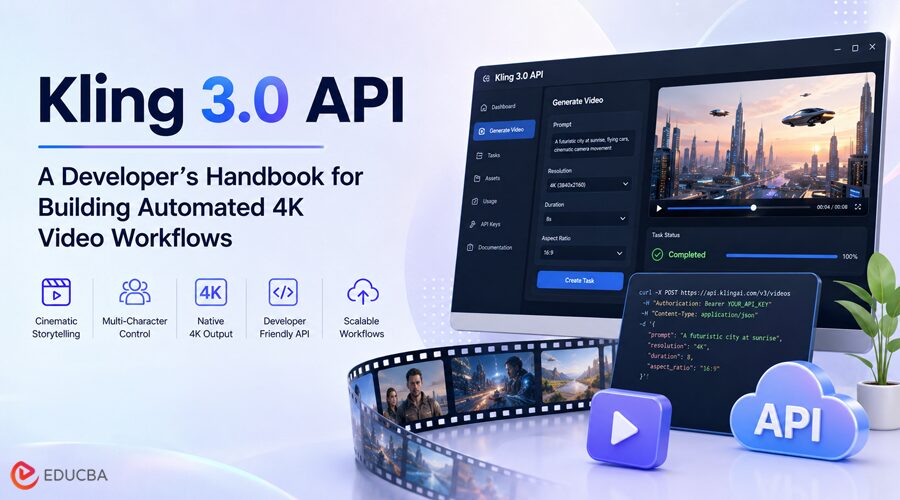
The transition from manual video editing to a programmable media infrastructure marks a significant milestone in software engineering. For technical teams, the challenge is no longer just about generating a single clip, but about architecting a system that can produce high-fidelity assets with minimal human intervention. The Kling 3.0 API provides the necessary framework to treat video synthesis as a scalable service. By moving production into an automated pipeline, organizations can ensure visual standards remain high while reducing operational friction, enabling a more agile approach to content distribution.
Technical Capabilities of the Kling AI 3.0 API
Building a reliable media pipeline requires an engine capable of processing complex visual logic with high temporal stability. The architecture behind the Kling AI 3.0 API utilizes a unified multimodal system designed to handle high-resolution rendering and intricate motion dynamics. This technical foundation is essential for developers looking to replace manual editing with programmable workflows using the Kling 3.0 API.
Achieving Intelligent Multi-Shot Cinematic Storytelling
Modern video assets often require more than a single static sequence; they demand a narrative flow that mimics professional cinematography. The Kling AI 3.0 API facilitates intelligent multi-shot storytelling by allowing developers to define complex camera movements and transitions through API parameters. This capability enables the programmatic creation of cinematic sequences such as panning, zooming, and tracking shots that maintain a logical progression. By automating storytelling, development teams can generate varied content that remains engaging and visually structured, moving beyond simple static outputs. The cinematic flexibility of the Kling 3.0 API makes it particularly valuable for media automation platforms and AI-powered production systems.
Realistic Image Output and Precise Text Rendering
A critical requirement for commercial-grade video is the accurate rendering of fine details and UI elements. The Kling AI 3.0 API supports native 4K resolution, ensuring visual assets remain sharp across all platforms. Beyond general clarity, the API excels in precise text rendering. Whether it is a brand name on a product, signage in a 3D environment, or specific instructions on a screen, the system maintains legibility and spatial accuracy. For developers building marketing tools or educational platforms, this level of realism is essential for maintaining professional standards and user trust.
Excellent Character and Scene Consistency
Maintaining a consistent visual identity is one of the most difficult hurdles in automated video production. The Kling V3.0 API addresses this through sophisticated subject reference logic. This feature allows developers to lock the physical characteristics of a product, character, or brand mascot across multiple generations. By ensuring that the primary subject and the environment remain consistent, the API prevents the identity drift often seen in automated media. This consistency is vital for serial content where the same character must appear in different settings without visual variations.
Advanced Multi-Character Dialogue and Interaction Control
The ability to manage complex social interactions is a defining feature of the latest API iteration. The Kling AI 3.0 API demonstrates enhanced performance in handling multi-character dialogue, particularly in scenarios involving three or more characters speaking simultaneously. This involves advanced synchronization of lip movements, facial expressions, and spatial positioning. For developers creating interactive media or automated narrative content, this provides the granular control needed to manage sophisticated interactions that were previously possible only through manual animation or expensive live-shot productions.
How to Integrate the Kling 3.0 API into Your Workflow?
Integrating a video generation engine into an existing stack requires a structured approach to ensure the system remains responsive. Because 4K video creation uses many resources, the integration must handle long tasks and large files.
Step 1: Authentication and Environment Configuration
The integration process begins with establishing secure communication with the API endpoints. Developers must obtain an API key from the portal and configure their environment variables to include the required authorization headers. It is recommended to use a secure secrets management system rather than hardcoding keys. Once authenticated, the initial setup involves defining the base URL and ensuring the network infrastructure can handle outbound POST requests and large-file inbound downloads that characterize Kling 3.0 API video workflows.
Step 2: Constructing Parameterized Generation Requests
After the environment is configured, the developer must design the logic for submitting generation tasks. This involves creating a JSON payload that specifies the resolution, frame rate, and specific cinematic prompts. In the Kling video 3.0 environment, developers can include subject reference images and define specific motion vectors. The request logic should be modular, allowing for different templates to be used depending on whether the output is for social media, internal training, or high-definition marketing.
Step 3: Implementing Asynchronous Polling and Callback Mechanisms
Since high-fidelity video generation is not instantaneous, the system must use an asynchronous pattern. Upon submitting a request, the Kling 3 api returns a task ID. Developers should implement a polling mechanism, or, preferably, a webhook listener, to monitor the task’s status. Once the status changes to “completed,” the system retrieves the signed video URL. This ensures the main application remains responsive while the heavy lifting of visual synthesis occurs in the background.
Technical Precautions and Optimization Strategies for Integration
Successfully deploying the Kling V3.0 API in a production environment requires attention to several engineering constraints. Optimizing these factors is key to achieving a stable and cost-effective media pipeline.
Managing Concurrency and API Rate Limits
When scaling content production, it is essential to manage the number of concurrent generation requests. Most enterprise environments implement a queueing system (such as Redis or RabbitMQ) to ensure that the application does not exceed the API’s rate limits. Developers should implement robust error-handling logic to handle “429 Too Many Requests” status codes, including exponential backoff. This prevents service interruptions during periods of high demand and ensures a steady throughput of generated assets using the Kling 3.0 API.
Input Validation and Prompt Optimization
The quality of the video output is directly related to the structure of the input prompts. Developers should implement a validation layer that checks prompts for clarity and structural consistency before sending them to the API. Standardizing how motion vectors and character descriptions are formatted can significantly improve the success rate of generation tasks. Using a structured prompt template helps maintain a high level of technical accuracy and reduces the likelihood of visual artifacts when working with the Kling 3.0 API.
Resource Allocation and Cost Oversight
Generating 4K video at scale incurs specific operational costs. Organizations should implement monitoring tools to track usage and expenditures in real time. By checking the cost per asset, teams can better use resources and focus on creating high-value content. This financial oversight is crucial for project managers who need to balance the high visual quality of the Kling AI API with sustainable business goals.
Final Thoughts
The move toward an API-driven video production model is a practical response to the increasing demand for high-quality digital assets. By leveraging programmable infrastructure such as the Kling 3.0 API, technical teams can bypass traditional bottlenecks in manual editing and post-production. The ability to control cinematic storytelling, keep subjects consistent, and manage complex multi-character scenes through code allows a level of scale that was not possible before.
For the developer, the success of this integration hinges on implementation details, from managing asynchronous callbacks to optimizing prompt structures. By standardizing these processes, organizations can maintain consistent, high-quality visual output while achieving the operational efficiency needed for a modern, visual-first digital strategy.
Recommended Articles
We hope this guide on the Kling 3.0 API helps you streamline automated 4K video production and build scalable AI-powered media workflows. Explore the recommended articles below for more insights on AI video generation, API integration, and workflow automation strategies.

