
What is Cross-Channel Marketing?
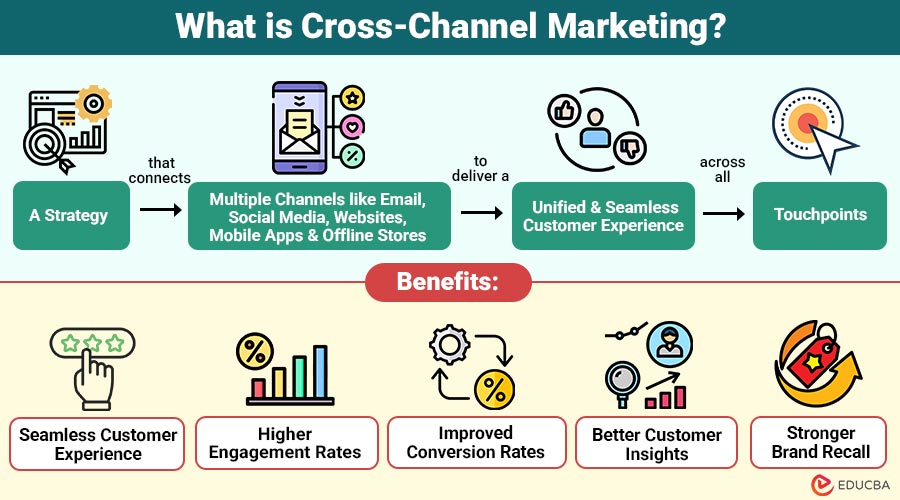
Cross-channel marketing is a strategy that connects multiple channels like email, social media, websites, mobile apps, and offline stores to deliver a unified and seamless customer experience across all touchpoints.
Instead of treating each channel separately, cross-channel marketing ensures that customer interactions on one platform influence and enhance experiences on another.
For example:
- A customer browses a product on website
- Later, they receive a personalized email about that product
- Then they see a retargeted ad on social media
- Finally gets a discount notification on mobile
All these channels work together to guide the customer toward purchase.
Table of Contents:
Key Takeaways:
- Cross-channel marketing integrates multiple platforms to consistently create seamless, unified customer experiences.
- Centralized customer data enables personalized messaging and higher engagement across all channels, effectively globally.
- Coordinated campaigns with automation to guide customers smoothly through journeys, improving conversions and retention rates
- AI-driven technologies enable hyper-personalized, real-time marketing across IoT, voice, and multiple-channel systems, driving growth.
How Does Cross-Channel Marketing Work?
Cross-channel marketing functions through a well-structured system that integrates data, automation, and customer insights.
1. Data Collection
Customer data is collected from multiple sources, such as:
- Website activity
- Social media engagement
- Email interactions
- Mobile app usage
- Purchase history (online and offline)
2. Data Integration
All collected data is centralized on platforms such as CRM systems or marketing automation tools. This ensures every department has access to unified customer information.
3. Customer Segmentation
Customers are grouped based on:
- Behavior patterns
- Interests
- Demographics
- Purchase history
This allows brands to send highly personalized messages.
4. Channel Coordination
Marketing messages are distributed across multiple channels in a connected sequence. Each channel supports the next step in the customer journey.
5. Performance Tracking
Marketers analyze engagement, conversions, and customer behavior to continuously optimize campaigns.
Difference Between Cross-Channel and Multi-Channel Marketing
Here are the key differences between cross-channel and multi-channel marketing to help clearly understand how both approaches work in practice.
| Feature | Cross-Channel Marketing | Multi-Channel Marketing |
| Approach | Integrated | Independent |
| Data Sharing | Shared across channels | Not shared |
| Customer Experience | Seamless | Fragmented |
| Personalization | High | Limited |
| Strategy Focus | Customer journey | Channel presence |
Benefits of Cross-Channel Marketing
Here are the key benefits that make cross-channel marketing highly effective for modern businesses:
1. Seamless Customer Experience
Customers receive consistent messaging across all platforms, ensuring smooth interaction, reducing confusion, and building stronger trust with the brand.
2. Higher Engagement Rates
Users are encouraged to engage with brand content more frequently and deeply when they receive timely, relevant, and personalized communications across channels.
3. Improved Conversion Rates
Connected marketing journeys guide customers smoothly through buying stages, reducing drop-offs and significantly increasing overall sales conversions.
4. Better Customer Insights
Integrated cross-channel data provides a deeper understanding of customer behavior, preferences, and patterns for smarter marketing decisions.
5. Stronger Brand Recall
Consistent messaging across multiple platforms reinforces brand identity, making it more recognizable, memorable, and trusted among audiences.
Challenges of Cross-Channel Marketing
While powerful, cross-channel marketing comes with its own set of challenges.
1. Data Integration Issues
Combining data from multiple platforms is complex, requiring significant effort to unify, clean, and synchronize customer information accurately across systems.
2. Technology Dependency
Relies heavily on advanced tools like CRM, automation platforms, and analytics systems to function efficiently and effectively.
3. High Implementation Cost
Setting up integrated marketing systems involves significant investment in technology, infrastructure, and skilled professionals, making it challenging for small businesses.
4. Data Privacy Concerns
Managing customer data across channels demands strict compliance with privacy regulations, ensuring secure handling and ethical use of information.
5. Coordination Complexity
Maintaining consistent messaging across all channels requires strong teamwork, clear communication, and alignment between marketing, sales, and tech teams.
Real-World Examples
Here are practical examples showing how brands use cross-channel marketing to create connected and seamless customer experiences:
1. E-Commerce Platforms
A customer:
- Browses a product online
- Receives an abandoned cart email
- Sees retargeted ads on Instagram
- Gets a discount notification via the app
- Completes purchase
This coordinated experience significantly increases conversion chances.
2. Retail Brands
A customer buys a product in-store and later
- Receives personalized SMS offers
- Gets email recommendations for related products
- Sees online ads based on purchase history
This seamlessly connects offline and online experiences.
3. Streaming Services
Platforms like Netflix or Spotify:
- Recommend content based on viewing history
- Send push notifications on mobile apps
- Share personalized emails with new releases
- Update homepage recommendations dynamically
This ensures consistent engagement across devices.
4. Banking and Financial Services
Banks use cross-channel marketing to:
- Notify users via SMS for transactions
- Send email statements
- Offer app-based financial insights
- Provide personalized investment recommendations
Strategies for Effective Cross-Channel Marketing
Here are the strategies businesses can use to successfully implement cross-channel marketing:
1. Use a Centralized CRM System
A strong CRM system unifies customer data from all channels, enabling better tracking, coordination, and personalized marketing execution across platforms.
2. Map the Customer Journey
Understanding how customers move across different touchpoints helps businesses design targeted campaigns that align with each stage of the buying journey.
3. Focus on Personalization
Tailor messages using customer behavior, preferences, and past interactions to create more relevant, engaging, and impactful marketing experiences.
4. Ensure Consistent Branding
Maintain uniform tone, design, and messaging across all channels to strengthen brand identity and build customer trust.
5. Automate Campaigns
Use marketing automation tools to trigger timely messages based on user actions, improving efficiency and ensuring real-time engagement.
6. Analyze and Optimize
Continuously monitor performance metrics, evaluate campaign effectiveness, and refine strategies to improve results and maximize ROI over time.
Future of Cross-Channel Marketing
The future is driven by advanced technologies such as:
1. Artificial Intelligence
AI will improve personalization and predictive marketing by analyzing customer behavior patterns, enabling smarter, data-driven marketing decisions across all channels.
2. Machine Learning
Machine learning algorithms will continuously learn from campaign data, automatically optimizing performance and improving marketing effectiveness across platforms.
3. Real-Time Marketing
Brands will engage customers instantly based on real-time actions and behavioral signals, delivering timely, highly relevant messages.
4. Voice and IoT Integration
Smart devices, voice assistants, and IoT systems will emerge as new marketing touchpoints, expanding customer interaction beyond traditional channels.
5. Hyper-Personalization
Advanced data analytics will enable highly personalized experiences, ensuring every customer receives unique, tailored content throughout their journey.
Final Thoughts
Cross-channel marketing is essential in today’s digital world, enabling seamless, personalized experiences across platforms. By integrating data, technology, and strategy, businesses connect multiple channels to improve engagement, build stronger customer relationships, and boost conversions. It turns fragmented communication into a unified journey that supports long-term business growth and success
Frequently Asked Questions (FAQs)
Q1. What tools are used in cross-channel marketing?
Answer: CRM systems, marketing automation platforms, analytics tools, and customer data platforms (CDPs).
Q2. Why is customer data important in cross-channel marketing?
Answer: Customer data helps businesses understand customer behavior, preferences, and purchase history, enabling personalized, relevant communication across channels.
Q3. Which industries benefit most from cross-channel marketing?
Answer: E-commerce, retail, banking, travel, healthcare, and entertainment industries benefit greatly due to their multiple customer touchpoints.
Q4. How do businesses measure success in cross-channel marketing?
Answer: Success is measured by KPIs such as conversion rate, customer engagement, retention rate, click-through rate, and ROI.
Recommended Articles
We hope that this EDUCBA information on “Cross-Channel Marketing” was beneficial to you. You can view EDUCBA’s recommended articles for more information.

