
Updated April 29, 2026
What is Data Democratization?
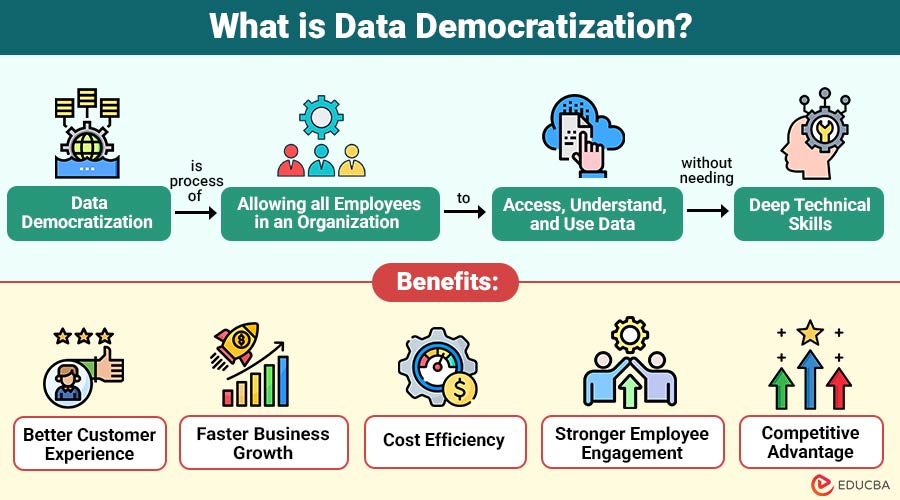
Data democratization is the process of allowing all employees in an organization to access, understand, and use data without needing deep technical skills. Instead of waiting for analyst reports, users can explore data directly through dashboards, tools, and visual reports.
Table of Contents:
Key Takeaways:
- Data democratization enables employees to access and use data without technical expertise.
- Broader data access significantly improves decision-making speed, accuracy, and overall business performance.
- Security governance and training are essential to prevent the misuse of democratized data effectively and safely.
- Organizations gain innovation, productivity, and competitive advantage through widespread data accessibility improved across the organization.
Why is Data Democratization Important?
Modern businesses depend heavily on data. Without access to data, decisions become slow, biased, or outdated. Data democratization is important because it:
1. Improves Decision-Making
As more people access data, decisions become fact-based, significantly improving the quality of overall organizational decision-making.
2. Increases Speed
Teams do not wait for analysts; they quickly retrieve insights and make faster, informed decisions independently.
3. Boosts Productivity
Employees spend less time requesting reports and more time focusing on actions and strategic business outcomes, and overall efficiency.
4. Encourages Innovation
When users freely explore datasets, they identify hidden patterns, insights, and creative opportunities for growth and improvement ideas.
5. Builds Transparency
Everyone works with the same information, reducing confusion and ensuring consistent understanding across all departments within organization-wide teams.
How Does Data Democratization Work?
Here are the key components that explain how data democratization works in organizations:
1. Data Storage Systems
Organizations store large volumes of data securely using cloud platforms and modern databases for easy, scalable, and reliable access.
2. Data Visualization Tools
Dashboards, charts, and visual tools simplify complex datasets, helping users quickly understand patterns, trends, and meaningful insights.
3. Self-Service Analytics
Employees use drag-and-drop analytics tools to explore, filter, and analyze data independently without needing coding or technical expertise.
4. Data Governance
Clear rules and policies ensure data is accurate, secure, compliant, and used responsibly across all teams within the organization.
5. Training and Education
Employees are trained to understand data concepts, interpret insights correctly, and make informed decisions using available data resources.
Key Features of Data Democratization
Here are the key features that make data democratization effective in organizations:
1. Accessibility
Data is available to all authorized users anytime, from any location, enabling easy, flexible access across the organization.
2. Simplicity
Complex datasets are transformed into easy-to-understand visuals, dashboards, and reports for better clarity and usability.
3. Security
Only authorized individuals are able to see or alter sensitive and private company information thanks to strict access controls.
4. Real-Time Access
Users can access continuously updated data instantly, helping them make timely and accurate decisions based on the latest information.
5. Collaboration
Teams across different departments can share insights and work together effectively using the same unified and consistent data sources.
Benefits of Data Democratization
Here are the major benefits organizations gain from data democratization:
1. Better Customer Experience
Companies analyze customer behavior and preferences to improve services, personalize offerings, and enhance overall satisfaction effectively.
2. Faster Business Growth
Quick access to insights enables faster decision-making, helping businesses respond rapidly to market changes and accelerate growth.
3. Cost Efficiency
Organizations reduce reliance on large analytics teams for routine reporting, lowering operational costs and improving resource utilization.
4. Stronger Employee Engagement
When workers can access and use data on their own for everyday tasks, they feel more empowered and motivated.
5. Competitive Advantage
Businesses that effectively leverage data develop smarter strategies, adapt quickly, and consistently stay ahead of competitors.
Challenges of Data Democratization
While data democratization is powerful, it also comes with challenges.
1. Data Security Risks
Wider access increases the risk of data breaches, misuse, unauthorized sharing, and potential compliance issues within organizations.
2. Data Misinterpretation
Without proper training, users may misunderstand data, leading to incorrect conclusions and poor business decisions or strategies.
3. Data Overload
Excessive information from multiple sources can overwhelm users, making it harder to identify relevant and actionable insights.
4. Poor Data Quality
Inaccurate, incomplete, or outdated data can mislead users and lead to flawed analysis and incorrect decision-making.
5. Resistance to Change
Many organizations face cultural and operational resistance when shifting from traditional centralized data systems to democratized approaches.
Real-World Examples of Data Democratization
Here are practical examples showing how different industries use data democratization:
1. E-commerce Companies
Online platforms enable marketing and sales teams to access customer behavior data directly, helping them optimize campaigns and improve conversions.
2. Banks and Financial Institutions
Employees use interactive dashboards to analyze transactions, detect fraud patterns, and enhance customer service efficiency.
3. Healthcare Industry
Doctors and hospital staff can quickly access patient records and medical data to support faster diagnosis and improve treatment decisions.
4. Retail Businesses
Store managers utilize real-time sales and inventory data to adjust stock levels, manage pricing, and improve overall store performance.
Tools Used in Data Democratization
Many modern tools help organizations achieve data democratization:
1. BI Tools
Business intelligence tools convert raw organizational data into interactive dashboards, reports, and visual insights for better decision-making.
2. Cloud Platforms
Cloud platforms securely store, manage, and share large datasets across teams, ensuring accessibility, scalability, and collaboration within organizations.
3. Data Visualization Tools
Data visualization tools transform complex datasets into simple charts, graphs, and visuals, helping users quickly understand patterns and trends.
4. AI and Machine Learning
Smarter automated business decisions are made possible by artificial intelligence and machine learning, which analyze massive databases, find patterns, and produce forecasts.
Difference Between Data Democratization and Traditional Data Systems
The table highlights the key differences between the two approaches in a simple comparison format.
| Feature | Data Democratization | Traditional Data Systems |
| Access | Open to many users | Limited to experts |
| Speed | Real-time access | Slow report generation |
| Usability | Simple and user-friendly | Complex and technical |
| Decision Making | Decentralized | Centralized |
| Innovation | High | Limited |
Final Thoughts
Data democratization enables organizations to make data accessible, understandable, and usable for everyone. It empowers employees, improves decision-making, and drives innovation. By reducing dependency on experts, businesses achieve faster growth, better efficiency, and stronger competitiveness. Ultimately, organizations that effectively democratize data will succeed in the evolving digital economy.
Frequently Asked Questions (FAQs)
Q1. How does data democratization improve decision-making?
Answer: It allows employees to access real-time data directly, helping them make quicker and more accurate decisions without relying on analysts.
Q2. Can data democratization affect data security?
Answer: Yes, if not properly managed. That’s why strong governance, access control, and security policies are essential.
Q3. Does data democratization require technical skills?
Answer: No, modern tools are designed to be user-friendly so non-technical users can easily explore and understand data.
Q4. Who can use data in a democratized system?
Answer: Any authorized employee, regardless of technical background, can access and use data through dashboards and self-service tools.
Recommended Articles
We hope that this EDUCBA information on “Data Democratization” was beneficial to you. You can view EDUCBA’s recommended articles for more information.


