
What is Swing Trading?
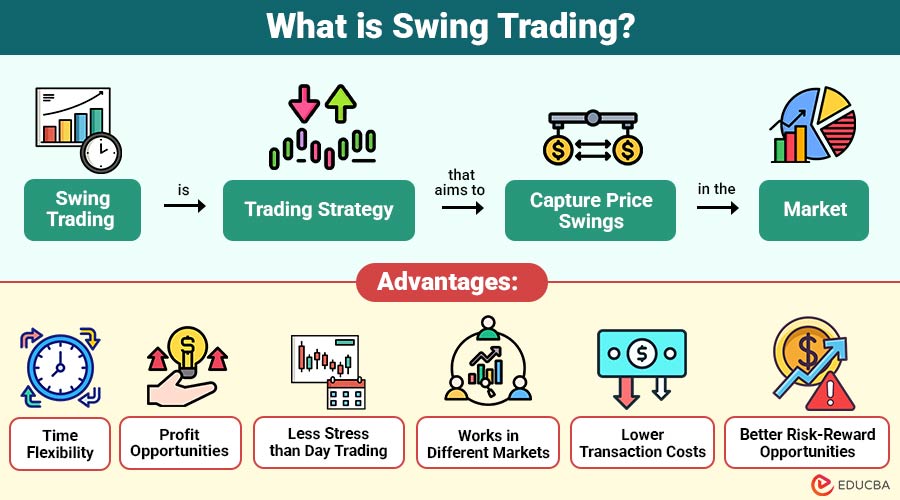
Swing trading is trading strategy that aims to capture price “swings” in the market. These swings are short-term upward or downward movements in asset prices. Traders analyze price trends and enter positions when they expect a price move, holding the trade until the momentum slows or reverses.
Key Characteristics:
- Trade duration: A few days to a few weeks
- Focus: Short-term trends
- Tools: Technical analysis, charts, indicators
- Goal: Profit from price fluctuations
Table of Contents:
- Meaning
- Working
- Strategies
- Key Indicators
- Advantages
- Disadvantages
- Tools
- Steps to Start Swing Trading
- Real-World Example
- Common Mistakes
- Who Should use Swing Trading?
Key Takeaways:
- Swing trading focuses on capturing short-term price movements through analysis and disciplined execution.
- It offers flexibility, requiring less monitoring than fast-paced day trading strategies overall.
- Successful swing trading depends on strong risk management strategies and emotional discipline consistently applied.
- Traders use indicators, trends, and patterns to identify entry and exit points to maximize profit opportunities.
How Does Swing Trading Work?
Here is a step-by-step breakdown of how swing trading works in real market conditions:
1. Identifying a Trend
Before making judgments, traders examine price charts and indicators to ascertain whether the market is heading sideways, upward, or downward.
2. Finding Entry Points
Traders enter positions when technical signals, patterns, or indicators suggest the price is likely to move in the predicted direction.
3. Holding the Position
The trade is maintained for several days or weeks, allowing the price to move and capture potential profits from market swings.
4. Exiting the Trade
Traders close positions when targets are reached or reversal signals appear, effectively securing profits or minimizing losses.
Swing Trading Strategies
Here are some popular swing trading strategies used by traders to take advantage of market price movements:
1. Trend Trading
This strategy follows the overall market direction, buying during uptrends and selling during downtrends, to capture consistent price movements.
2. Breakout Trading
Traders enter when prices break key support or resistance levels, aiming to capture strong momentum moves with quick decisions and proper timing.
3. Reversal Trading
This approach identifies potential trend changes, allowing traders to enter early, but it carries a higher risk and requires strong technical analysis skills.
4. Pullback Trading
Traders enter during temporary dips in an existing trend, making it relatively safer and widely preferred by beginners seeking controlled risk opportunities.
Key Indicators Used in Swing Trading
Swing traders depend on technical indicators to make decisions.
1. Moving Averages
Moving averages help identify trend direction by smoothing price data, using SMAs and EMAs to gauge momentum and potential entry or exit points.
2. Relative Strength Index
RSI measures momentum to indicate overbought above 70 and oversold below 30, helping traders identify possible reversals and better entry timing.
3. Moving Average Convergence Divergence
MACD indicates trend momentum and potential reversals by comparing moving averages, helping traders spot buy and sell signals via crossovers and divergences.
4. Support and Resistance Levels
To help traders successfully identify entry, exit, and reversal points in markets, support serves as a price floor and resistance as a price ceiling.
Advantages of Swing Trading
Here are some advantages that make swing trading a popular choice among traders:
1. Time Flexibility
Swing trading requires less constant monitoring, allowing traders to analyze charts at convenient times while managing trades alongside work or other commitments.
2. Profit Opportunities
Frequent market price swings create multiple trading opportunities, enabling traders to capture gains from short-term movements across different assets and market conditions.
3. Less Stress than Day Trading
Since trades are not executed continuously, traders experience less pressure, allowing more thoughtful decisions and reducing emotional stress compared to fast-paced trading
4. Works in Different Markets
Swing trading is versatile and can be applied to stocks, forex, cryptocurrencies, and commodities, providing flexibility to trade across various financial markets effectively.
5. Lower Transaction Costs
Compared to day trading, fewer trades are executed, which helps reduce brokerage fees and transaction costs, improving overall profitability for traders over time.
6. Better Risk-Reward Opportunities
Swing trading allows traders to target larger price movements, often achieving favorable risk-reward ratios, helping maximize potential returns while effectively controlling potential losses.
Disadvantages of Swing Trading
Here are some disadvantages associated with swing trading:
1. Overnight Risk
Holding positions overnight exposes traders to unexpected news, earnings announcements, or global events that can cause sudden price gaps and losses.
2. Market Volatility
The risk of losses might be increased by stop-loss orders or poor trading conditions caused by rapid, erratic price swings in the market.
3. Requires Technical Knowledge
Swing trading demands a strong understanding of charts, indicators, patterns, and analysis techniques, which can be challenging for beginners without experience.
4. Emotional Discipline Needed
Emotions such as fear and greed must be controlled by traders because rash decisions can lead to subpar trade execution, increased risk, and monetary losses.
5. Time Commitment for Analysis
Although less active than day trading, swing trading still requires regular market analysis, monitoring positions, and updating strategies to stay effective.
6. Transaction Costs
Regular stock purchases and sales might result in increased taxes and brokerage costs, which over time, may lower total profits.
Tools Required for Swing Trading
Here are essential tools that help traders analyze the market, execute trades, and manage risks effectively:
1. Trading Platform
A reliable platform enables traders to buy and sell assets efficiently, execute orders quickly, and manage trades effectively.
2. Charting Software
To make well-informed trading decisions, charting software helps traders analyze price patterns, trends, and historical data.
3. Technical Indicators
Technical indicators improve overall decision-making and accuracy by helping traders identify trends, momentum, and entry and exit points.
4. News Sources
News sources provide updates on economic events, company announcements, and global developments that can significantly impact market movements.
5. Risk Management Tools
Risk management tools like stop-loss and position sizing help control losses, protect capital, and ensure consistent, disciplined trading strategies.
6. Stock Screeners
Stock screeners filter stocks based on criteria such as price, volume, and trends, helping traders quickly find suitable swing trading opportunities.
Steps to Start Swing Trading
Here are the essential steps beginners can follow to start swing trading effectively and confidently:
1. Learn the Basics
Understand market trends, indicators, and trading strategies to build a strong foundation before starting swing trading in financial markets.
2. Choose a Market
Select a market like stocks, forex, or cryptocurrency based on your interest, knowledge, risk tolerance, and available capital.
3. Create a Trading Plan
For consistent outcomes, create a trading plan with entry and exit guidelines, a risk management plan, and specific profit goals.
4. Practice with Demo Account
Use a demo account to test strategies, gain experience, and understand market behavior without risking real money initially.
5. Start Small
Begin trading with small investments to minimize risk, build confidence gradually, and improve strategies through real market experience over time.
Real-World Example of Swing Trading
Here is a simple example to understand how swing trading works in a practical scenario:
Imagine a stock is trading at ₹500 and is trending upward.
- Entry: ₹510 (after confirmation of trend)
- Target: ₹560
- Stop-loss: ₹490
The trader holds the position for a week and exits at ₹560, making a profit of ₹50 per share.
Common Mistakes to Avoid
Here are some mistakes traders should avoid to improve consistency and reduce risks in swing trading:
1. Overtrading
Taking too many trades increases transaction costs, reduces focus, and often leads to unnecessary losses due to impulsive decision-making.
2. Ignoring Stop-Loss
Ignoring stop-loss orders can result in significant unexpected losses, as trades remain open during adverse market movements without any protection.
3. Emotional Trading
A higher risk of trading losses, poor judgment, and inconsistent methods is frequently the result of making judgments driven by fear or greed.
4. Lack of Strategy
Trading without a clear plan reduces consistency, increases risk, and makes it difficult to achieve long-term success in financial markets.
5. Chasing the Market
Entering trades after significant price moves often leads to poor entry points, increases risk, and significantly reduces potential profit opportunities.
6. Lack of Patience
Exiting trades too early or entering too quickly can limit profits and increase losses, reducing the overall effectiveness of trading strategies.
Who Should Use Swing Trading?
Here are the types of individuals for whom swing trading can be a suitable and effective approach:
1. Beginners who Want Moderate Involvement
Swing trading suits beginners seeking moderate involvement, allowing them to learn the markets gradually without constant monitoring or the pressure of high-frequency trading.
2. Working Professionals
Working professionals benefit from swing trading as it requires less time daily, enabling them to manage trades alongside full-time jobs.
3. Traders Looking for Short-term Profits
Swing trading is ideal for traders aiming for short-term profits by efficiently capturing price swings over days or weeks.
4. Individuals Comfortable with Technical Analysis
Charts, indicators, and patterns can be used by those comfortable with technical analysis to identify trading opportunities and improve the precision of their decisions.
Final Thoughts
Swing trading is a balanced strategy that helps traders profit from short-term market movements without the pressure of constant monitoring. With proper knowledge, discipline, and risk management, it offers consistent opportunities. Suitable for both beginners and experienced traders, it provides flexibility while enabling effective participation in financial markets.
Frequently Asked Questions (FAQs)
Q1. Is swing trading good for beginners?
Answer: Yes, it is suitable for beginners as it requires less time than day trading and offers manageable risk.
Q2. How much capital is needed?
Answer: You can start with a small amount, but ₹10,000–₹50,000 is a practical starting range.
Q3. Is swing trading risky?
Answer: It carries a moderate risk, especially due to overnight price changes.
Recommended Articles
We hope that this EDUCBA information on “Swing Trading” was beneficial to you. You can view EDUCBA’s recommended articles for more information.

