
What is an Ex Gratia Payment?
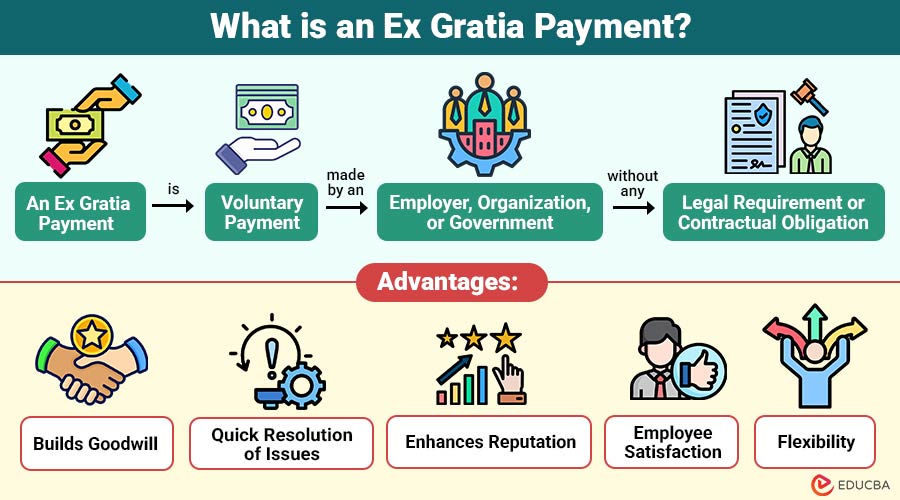
An ex gratia payment is voluntary payment made by an employer, organization, or government without any legal requirement or contractual obligation. It is typically offered as a gesture of goodwill, sympathy, or fairness in situations where compensation is not legally enforceable.
Table of Contents:
- Meaning
- Key Characteristics
- When is an Ex Gratia Payment Used?
- Components
- Difference
- Advantages
- Limitations
- Real-World Example
- Best Practices
Key Takeaways:
- Ex gratia payments are voluntary goodwill gestures made without legal obligation or admission of liability.
- Used in layoffs, disasters, and disputes to provide financial support based on the employer’s discretion, principally humanitarian.
- Payments do not imply liability and require clear documentation for transparency and consistency purposes.
- Enhances goodwill and reputation but lacks standardization and may create tax or financial burden issues.
Key Characteristics of Ex Gratia Payments
Here are the main characteristics that explain how ex gratia payments work in practice:
1. Voluntary Nature
Ex gratia payments are voluntary, meaning the payer has no legal or contractual obligation to provide compensation in any circumstances.
2. No Admission of Liability
When making such payments, the payer clearly states no fault or legal responsibility is accepted, avoiding any admission of liability.
3. Based on Goodwill
These payments are motivated by goodwill, compassion, or ethical considerations, helping maintain positive relationships and reputation without a formal obligation involved.
4. One-Time Payment
Ex gratia payments are usually one-time payments, not recurring, ensuring no ongoing financial commitment or future liability for the payer.
5. Flexible Amount
There is no fixed rule for determining the amount, as it varies based on circumstances, financial capacity, and payer discretion.
When is an Ex Gratia Payment Used?
It is used in various scenarios where legal obligations may not exist, but moral or practical reasons justify compensation.
1. Employee Compensation
Employers may offer such payments during layoffs or early retirement or as goodwill bonuses beyond contractual and statutory obligations.
2. Workplace Accidents
Organizations may provide financial support to employees or families after workplace injuries or deaths, even when no strict legal liability exists.
3. Disaster Relief
Governments provide financial assistance to victims of natural disasters, accidents, or emergencies to offer immediate relief and humanitarian support.
4. Legal Dispute Settlements
Companies may use such payments to resolve disputes quickly without admitting liability, avoiding lengthy, costly legal battles and preserving relationships.
5. Insurance Claims
Insurance companies may grant goodwill compensation when claims do not fully meet policy terms, helping maintain customer trust.
Components of an Ex Gratia Payment
While there is no standardized format, it typically include:
1. Recipient Details
Includes the full name and identification of the beneficiary receiving the payment, ensuring clarity and proper documentation of the intended recipient.
2. Reason for Payment
Provides a clear explanation describing why the ex gratia payment is being made, outlining circumstances, events, or situations justifying compensation.
3. Amount Paid
Specifies the total ex gratia amount being provided, ensuring transparency and mutual understanding between payer and recipient regarding financial compensation value.
4. Payment Terms
Describes whether the payment will be made as a lump sum or in installments, including timelines, methods, and any applicable conditions.
5. Disclaimer Clause
Includes a statement clarifying that the payment is voluntary and does not imply admission of legal liability or responsibility by the payer.
Difference Between Ex Gratia Payment, Bonus and Compensation
The table below shows the key differences between ex gratia payment, bonus, and compensation:
| Basis | Ex Gratia Payment | Bonus | Compensation |
| Nature | Voluntary | May be contractual/statutory | Usually, a legal obligation |
| Legal Requirement | No | Sometimes required by law | Yes |
| Purpose | Goodwill gesture | Reward for performance | Cover loss or damage |
| Frequency | One-time | Periodic | As needed |
| Liability | No admission of fault | Not applicable | Based on liability |
Advantages of Ex Gratia Payments
Below are the advantages in organizations and real-life situations:
1. Builds Goodwill
Strengthen relationships with employees, customers, and stakeholders by demonstrating empathy, care, and willingness to support beyond obligations.
2. Quick Resolution of Issues
They enable organizations to resolve conflicts or disputes efficiently, avoiding lengthy legal procedures, saving time and costs, and preserving professional relationships.
3. Enhances Reputation
Providing voluntary financial support improves an organization’s public image, portraying it as ethical, responsible, and committed to social and corporate values.
4. Employee Satisfaction
Employees feel appreciated and valued when employers offer support beyond legal requirements, boosting morale, loyalty, motivation, and overall workplace satisfaction levels.
5. Flexibility
Organizations have flexibility in setting payment amounts and conditions, allowing them to adapt compensation to unique situations and financial capabilities.
Limitations of Ex Gratia Payments
Below are the key limitations associated with practice:
1. No Legal Obligation
Cannot be legally enforced, meaning recipients have no right to demand or claim them under any law.
2. Lack of Standardization
There are no fixed rules or formulas for determining payment amounts, often resulting in inconsistency across similar cases or situations.
3. Potential Misinterpretation
Recipients may mistakenly assume the payment indicates an admission of guilt, even though it is intended as a voluntary payment without acknowledgment of liability.
4. Tax Implications
Depending on jurisdiction and circumstances, it may be subject to taxation, creating additional financial and compliance considerations.
5. Financial Burden
If made frequently or in large amounts, it can place significant strain on an organization’s financial resources and budgeting.
Real-World Example
Below is a simple real-world example to help you understand how ex gratia payment is applied in practice.
A company undergoing layoffs pays employees all statutory dues and, in addition, gives one extra month’s salary as an ex gratia payment to support them during the transition.
Best Practices for Employers
Below are the recommended best practices:
1. Define Clear Purpose
Clearly define the purpose of the ex gratia payment before disbursement to ensure transparency and consistency, and to avoid misunderstandings among recipients.
2. Maintain Proper Documentation
Document all terms and conditions in writing, including eligibility, amount, timing, and approval process to ensure accountability and organizational clarity.
3. Include No Liability Clause
Include a clear no liability clause stating payment is voluntary, without legal obligation, ensuring the organization avoids misinterpretation or disputes later.
4. Ensure Fairness and Consistency
Ensure fairness and consistency across similar cases by applying uniform criteria, avoiding bias, and maintaining trust among employees and stakeholders.
5. Consider Tax Implications
Before disbursing, take tax implications into account, seek expert advice if necessary, and make sure all relevant rules and regulations are followed.
Final Thoughts
Ex gratia payments help bridge legal obligations and ethical responsibility, reflecting an organization’s fairness, compassion, and goodwill. Though not mandatory, they are used in employment, disaster relief, and dispute resolution to strengthen relationships and build trust. Understanding their concept, benefits, and limitations helps employers and individuals apply them effectively and responsibly in real situations.
Frequently Asked Questions (FAQs)
Q1. Can employees demand ex gratia payment?
Answer: No, employees cannot legally demand it unless it is part of a formal agreement.
Q2. Is an ex gratia payment taxable?
Answer: It may be taxable depending on the nature of the payment and applicable laws.
Q3. Can ex gratia payments be recurring?
Answer: Typically, they are one-time payments, though exceptions may exist.
Q4. Do all employees receive ex gratia payments during layoffs?
Answer: Not necessarily. It depends on company policy, financial situation, and management discretion.
Recommended Articles
We hope that this EDUCBA information on “Ex Gratia Payment” was beneficial to you. You can view EDUCBA’s recommended articles for more information.

