
What are Email Marketing Campaigns?
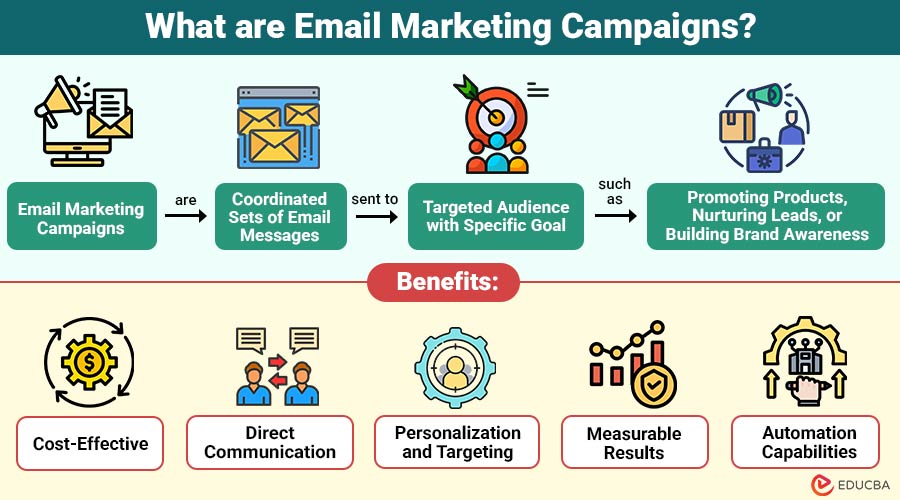
Email marketing campaigns are coordinated sets of email messages sent to targeted audience with a specific goal, such as promoting products, nurturing leads, or building brand awareness. These campaigns are designed strategically, often automated, and tailored to audience behavior, preferences, and lifecycle stage.
Table of Contents:
- Meaning
- Objectives
- Types
- Key Components
- Steps to Create Successful Email Marketing Campaign
- Key Metrics
- Benefits
- Challenges
- Real-World Examples
Key Takeaways:
- Email marketing campaigns rely on personalization, segmentation, automation, and data-driven strategies for success.
- Success depends on audience understanding, engaging content, and ongoing performance tracking and optimization.
- Email campaigns improve engagement, drive conversions, and build long-term customer relationships effectively overall.
- Email marketing is a cost-effective and scalable channel for efficiently reaching targeted audiences globally.
Objectives of Email Marketing Campaigns
Businesses use email marketing campaigns to achieve various marketing goals. Some of the most common objectives include:
1. Lead Generation
The goal of lead generation is to attract prospective clients through focused email marketing, entice them to provide contact details and subscribe to newsletters, and convert interest into qualified, useful leads.
2. Customer Retention
Customer retention aims to build long-term relationships by sending personalized emails, updates, and offers that keep existing customers satisfied, loyal, and likely to continue purchasing from the business.
3. Sales Promotion
Sales promotion focuses on driving immediate revenue by offering discounts, limited-time offers, product launches, and exclusive deals via email, motivating recipients to make quick purchasing decisions.
4. Brand Awareness
Brand awareness aims to keep the business top of mind by delivering valuable content, updates, and messages that reinforce identity, increase recognition, and build trust among target audiences.
5. Customer Engagement
Customer engagement focuses on encouraging interaction by sharing content, newsletters, surveys, and updates that prompt customers to respond, click, or participate, strengthening the connection with the brand over time.
Types of Email Marketing Campaigns
Below are main types of email marketing campaigns with examples for better understanding:
1. Promotional Emails
Promotional emails are designed to increase sales by highlighting products, services, or special deals. They usually consist of alluring discounts, time-limited deals, and strong calls to action that motivate recipients to buy right away.
2. Newsletter Campaigns
Newsletter campaigns regularly send emails that share company updates, blog posts, industry insights, and useful content. They help maintain ongoing communication, build trust, and consistently keep subscribers informed and engaged with the brand.
3. Welcome Emails
New clients or subscribers receive welcome emails as soon as they sign up. They introduce the brand, set expectations, and create a strong first impression while encouraging users to explore products or services further.
4. Transactional Emails
Transactional emails are automatically triggered by user actions, such as order confirmations, invoices, shipping updates, or password resets. These emails provide essential information while also offering opportunities to reinforce branding and promote additional products.
5. Re-Engagement Emails
Re-engagement emails target inactive subscribers who have not interacted recently. These campaigns aim to revive interest by offering incentives, personalized content, or reminders, encouraging users to reconnect with the brand.
6. Drip Campaigns
Drip campaigns are automated email sequences sent over a specific period. They nurture leads by delivering relevant content at each stage of the customer journey and guiding prospects toward conversion through consistent, strategic communication.
Day 3: Discover how our solution can help you.
Day 7: Get a special offer to start your journey with us.”
Key Components of an Effective Email Campaign
Here are the key components of an effective email campaign that help improve engagement and conversions:
1. Target Audience Segmentation
Target audience segmentation involves dividing subscribers by demographics, behavior, or preferences, enabling businesses to send relevant, personalized emails that improve engagement, increase conversions, and build stronger relationships with customers.
2. Compelling Subject Line
A compelling subject line captures attention and encourages recipients to open the email. It should be clear, engaging, relevant, and create curiosity while reflecting the value of the message inside.
3. Personalization
Personalization involves tailoring emails using recipient names, preferences, or past interactions. This strategy raises the possibility of conversions and consumer satisfaction while also making messaging more relevant, enhancing engagement, and fostering trust.
4. Valuable Content
Valuable content focuses on delivering useful information, solutions, or offers that address audience needs. It keeps readers interested, builds credibility, and encourages them to engage further with the brand. A well-structured message also needs a strong and thoughtful conclusion to leave a clear impression and guide the reader, which is why understanding how to end an email is essential.
5. Clear Call-to-Action
Recipients are guided to the next action, such clicking a link or completing a purchase, via a clear call-to-action. It should be direct, visible, and persuasive to drive desired actions effectively.
6. Mobile Optimization
Mobile optimization ensures emails display properly on smartphones and tablets. It includes responsive design, readable text, and fast loading, providing a seamless experience for users who access emails on mobile devices.
Steps to Create Successful Email Marketing Campaign
Here are the step-by-step processes to create a successful email marketing campaign effectively:
1. Define Campaign Goals
Define clear campaign goals such as increasing sales, generating leads, boosting engagement, or improving customer retention through targeted email marketing efforts.
2. Build and Divide Your Email List
Collect email addresses using sign-up forms and segment subscribers based on demographics, behavior, or preferences for targeted messaging.
3. Design the Email
Design visually appealing emails with clean layouts, consistent branding, and easy navigation to enhance readability and user experience.
4. Write Engaging Content
Create concise, persuasive content that focuses on benefits, addresses audience needs, and effectively encourages readers to take the desired actions.
5. Test and Optimize
Perform A/B testing on subject lines, email content, and CTAs to identify high-performing elements and improve overall campaign effectiveness.
6. Schedule and Send
Choose optimal sending times and frequency based on audience behavior to maximize open rates, engagement, and overall campaign performance.
7. Analyze Performance
Watch key data like open rates, click-through rates, and conversions to determine success and identify areas for improvement.
Key Metrics to Measure Campaign Performance
Here are key metrics used to measure and evaluate performance of an email marketing campaign effectively:
1. Open Rate
Open rate is the percentage of recipients who open an email, showing how effective the subject line and sender reputation are in capturing audience attention.
2. Click-Through Rate
The click-through rate, which measures the proportion of users who click on links in emails, indicates how engaging and relevant the content and calls to action are.
3. Conversion Rate
Conversion rate represents the percentage of recipients who complete a desired action, such as making a purchase or signing up, after clicking the email.
4. Bounce Rate
Bounce rate is the percentage of emails that fail to reach recipients’ inboxes, either due to invalid addresses or temporary delivery issues.
5. Unsubscribe Rate
The unsubscribe rate, which measures both audience satisfaction and the content’s relevance, is the proportion of users who decide not to receive future emails.
Benefits of Email Marketing Campaigns
Here are the benefits of email marketing campaigns that help businesses grow, engage customers, and improve overall marketing performance effectively:
1. Cost-Effective
Email marketing is highly cost-effective, requiring minimal investment compared to traditional marketing channels while delivering strong ROI and long-term customer value.
2. Direct Communication
With complete control over delivery and content, it allows businesses to engage directly with their audience’s inbox without the need for middlemen, guaranteeing that messages reach customers efficiently and promptly.
3. Personalization and Targeting
Advanced customisation and audience targeting based on behavior, interests, and demographics are made possible by email campaigns, which improve customer satisfaction, increase engagement rates, and boost conversion rates.
4. Measurable Results
Businesses may keep an eye on detailed metrics like open rates, click-through rates, and conversions in order to evaluate efficacy and make data-driven decisions for future campaigns.
5. Automation Capabilities
Businesses can save time and ensure timely, consistent, and pertinent contact with subscribers by using automation solutions to schedule and send emails automatically based on user actions or deadlines.
Challenges in Email Marketing Campaigns
Here are some of the key challenges faced in email marketing campaigns:
1. Deliverability Issues
Email deliverability issues occur when messages fail to reach the inbox and land in spam or junk folders due to poor authentication, weak sender reputation, or improper email formatting.
2. Subscriber Fatigue
Subscriber fatigue occurs when users receive too many emails, leading to annoyance, reduced engagement, higher unsubscribe rates, and a decline in overall campaign effectiveness and audience interest.
3. Content Relevance
Content relevance is a challenge when emails do not match subscribers’ needs or interests, leading to lower engagement, decreased trust, and weakening of the brand’s overall relationship with customers.
4. Compliance Regulations
Compliance regulations require businesses to comply with laws such as GDPR and CAN-SPAM, ensuring proper consent, data protection, and unsubscribe options to avoid legal penalties and maintain customer trust.
Real-World Examples
Here are some practical examples of how email marketing campaigns are used across different industries:
1. E-Commerce Campaign
An e-commerce store sends targeted promotional emails featuring discounts, seasonal offers, and personalized product recommendations based on user browsing and purchase history, which helps increase conversions and overall sales.
2. SaaS Campaign
A SaaS company uses automated drip email campaigns to guide new users through product features, tutorials, and benefits, improving the onboarding experience, user understanding, and long-term customer retention.
3. Educational Campaign
An online learning platform sends regular newsletters containing course updates, new learning materials, and valuable educational content, helping to keep students engaged and motivated throughout their learning journey.
Final Thoughts
Email marketing campaigns remain a vital component of digital marketing strategies. Businesses can develop extremely successful campaigns that boost engagement, foster connections, and boost income by fusing personalization, automation, and data-driven insights. Success depends on understanding the audience, delivering value, and continuously optimizing campaigns based on performance metrics.
Frequently Asked Questions (FAQs)
Q1. What makes an email marketing campaign successful?
Answer: A successful email campaign requires clear goals, targeted audience, personalization, engaging content, and performance optimization.
Q2. How often should businesses send marketing emails?
Answer: Email frequency depends on audience preference, but consistency without overwhelming subscribers is essential.
Q3. What is the best time to send marketing emails?
Answer: The best time varies, but testing different schedules helps identify optimal engagement periods.
Q4. How can email open rates be improved?
Answer: Using compelling subject lines, personalization, and proper segmentation can effectively increase open rates.
Recommended Articles
We hope that this EDUCBA information on “Email Marketing Campaigns” was beneficial to you. You can view EDUCBA’s recommended articles for more information.

