


Many students reach a point where their writing feels “almost there” but not quite strong enough. The ideas are fine, yet something in the structure, tone, or clarity holds the work back. It is not always obvious what to fix or where to start.
This guide breaks that gap into clear steps. We will show practical tips to help you improve academic writing, write stronger essays, and achieve better academic results. Moreover, since AI is now part of almost every student’s workflow, we cover how to use it wisely and avoid AI detection at the same time.
Build a Clear Foundation to Improve Academic Writing
The most common reason academic writing falls flat is that the writer did not know what they were arguing before they started typing. A vague starting point produces vague paragraphs.
Before writing a single sentence, pin down your main idea, not a topic, but an argument. “Climate change” is a topic. “Carbon pricing is more effective than emissions caps for reducing industrial pollution” is an argument.
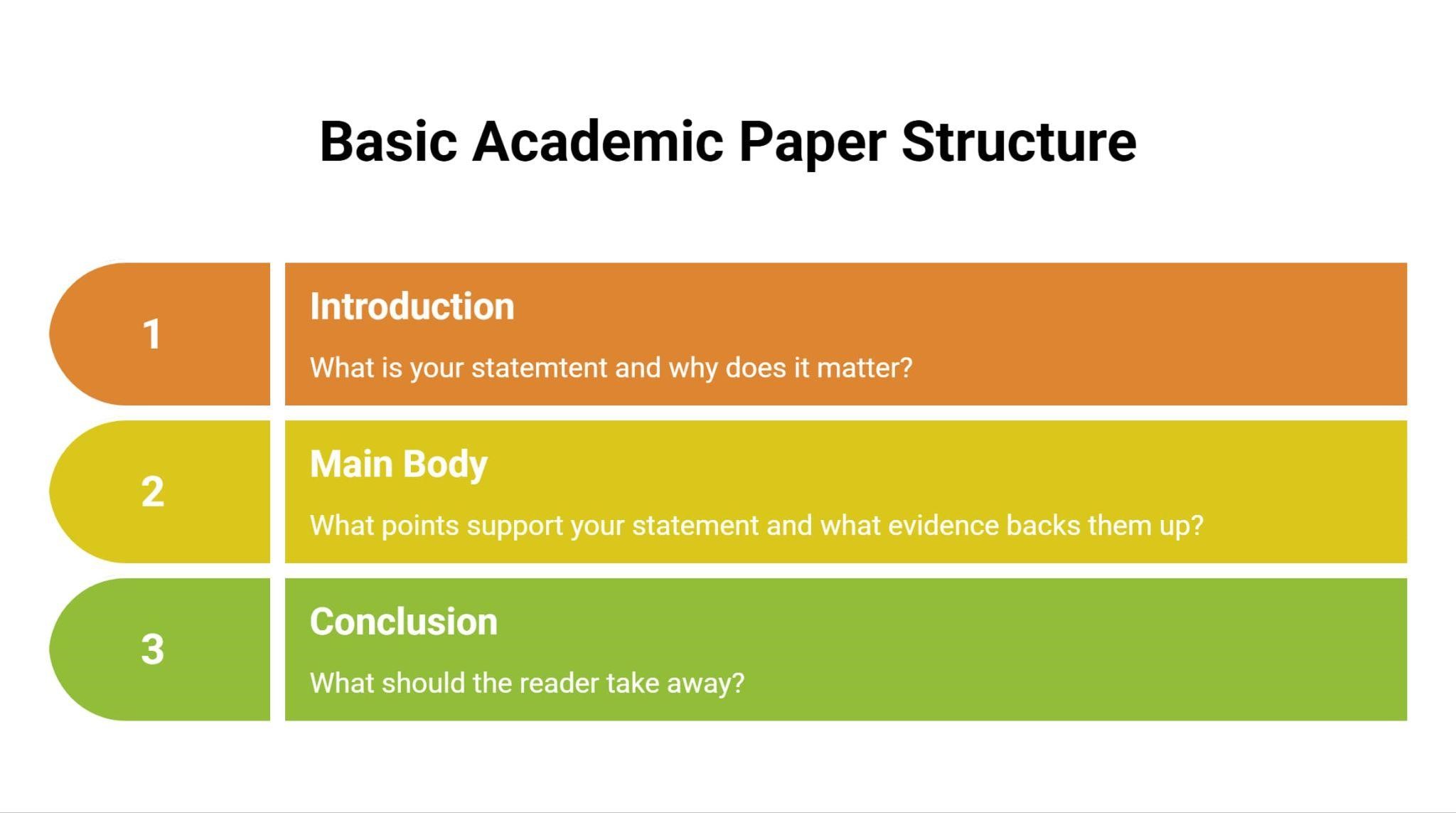
Sketch a basic outline from there. Most academic papers follow the same structure:
One technique worth building into your process is reverse outlining. After drafting, write one sentence per paragraph summarizing what it actually says. If it matches your intention, great. If not, that paragraph needs work. It catches logical gaps faster than rereading the whole thing and helps you improve academic writing structure quickly.
Use Direct Language
There is a persistent myth that complicated language signals intelligence. In reality, it signals effort spent on vocabulary rather than on thought. The writers who consistently impress are the clearest ones, not the most elaborate.
When a sentence feels heavy, it usually means it tries to do too much. Break it down. Say one thing at a time. Keep words close to what they describe. The result reads smoother and feels more natural.
Here is a simple example:
| Overcomplicated | Clear |
| The findings of this investigation demonstrate a statistically significant correlation between the variables under examination. | The findings show a significant correlation between the two variables. |
The meaning stays the same, but the second version is easier to read and process. When you make your text sound human and direct, readers trust it more. Simple writing exposes your argument, and if your argument is good, that is exactly what you want.
Write in Active Voice and Keep Sentences Dynamic
Active voice makes academic writing clearer. It shows who acts, making the sentence feel more direct and easier to follow. Compare:
| Passive voice | Active voice |
| The sources were analyzed by the author to support the argument. | The author analyzed the sources to support the argument. |
The second version is simply stronger.
That said, passive voice is not always wrong. It can work when the doer is unknown, unimportant, or obvious from context. Still, if too many sentences use the same passive pattern, the text feels flat.
Sentence rhythm matters too. Long sentences tire the reader, and short ones feel choppy on their own. Good academic writing mixes both short and long sentences to create emphasis and gives the reader room to absorb the point. If you use AI tools, pay extra attention to this rhythm. Varying sentence length is one of the easiest ways to improve the quality of academic writing and make the text feel more human.
Improve Flow by Fixing Structure and Paragraph Logic
A well-structured paragraph makes one point, supports it, and connects to what follows. Trying to fit three ideas into a single paragraph means none of them land with full force.
Here is a simple rule: one paragraph, one idea. Keep each section focused, then move to the next idea step by step.
Transitions are what create flow. Phrases like “as a result,” “in contrast,” and “for example” show the reader how ideas relate to each other. Without them, arguments can feel abrupt, even if each point is valid.
If your draft still feels disjointed after editing individual sentences, try changing the order of paragraphs. Sometimes the issue is not the writing itself, but the sequence. You will often find that two buried near the end actually belong at the top, a small change that can improve academic writing flow.
Avoid Repetition, Fluff, and Empty Phrases
Repetition is usually unintentional; it happens when a writer is still working out what they mean, and the same idea appears twice in different words. Fluff is different: it is content that sounds meaningful but carries no information. “This is a very important topic in today’s society” could be cut from almost any essay without loss.
When editing, ask yourself: if I remove this sentence, does the paragraph lose anything? If the answer is no, cut it. Concise writing feels stronger because every sentence earns its place.
It also helps you write human-like text to avoid AI detection, which is worth keeping in mind since many higher education institutions now actively screen for it. Drafts often pad arguments with filler to reach a word count, and cutting that padding makes writing feel authored rather than produced and improves academic writing effectiveness.
Strengthen Arguments With Evidence and a Clear Purpose
Every major claim needs something to back it up, whether it is a citation, data, or a concrete example. Unsupported claims are the quickest way to lose a reader’s credibility.
Be explicit about why your argument matters. In this example, the second version signals awareness of the field and positions your work within it:
| Weaker | Stronger |
| This study investigates student motivation in remote learning. | This study investigates why student motivation declines in remote learning environments. Current research measures outcomes but rarely examines the underlying causes. |
If you use a literature review, use it actively. Rather than listing what others have said, show where sources agree, where they differ, and where your argument fits into that conversation.
How you handle sources matters too. Proper paraphrasing means reading a source, setting it aside, then writing the idea in your own voice before citing the original. For dense or technical material, tools focused on rewriting text so it reads like a human can make this easier. Used carefully, they support a humanizing essay-writing approach while maintaining academic integrity. The thinking stays yours.
Use AI Tools Carefully to Improve Academic Writing
Let us be real, many students now write with AI assistance. The numbers back that up: research on AI trends in education shows that 90% of college students already use it in some form.
AI works well as support, but if you rely on it to generate full sections without revision, the result often feels generic and easy to spot.
Integrate AI Into Your Workflow Responsibly
Treat AI as a drafting assistant, not a ghostwriter:
- Generate a rough draft or outline
- Edit it yourself to match your argument
- Refine the tone and structure.
This last step matters a lot. Generated text often follows predictable patterns: similar sentence lengths, repeated phrases, and slightly formal wording. That raises an obvious question: how to rewrite text to avoid AI detection?
You can do it manually by varying your sentence length, cutting filler transitions, and adding concrete details where the text feels vague. It takes time, but it works. Alternatively, you can speed up the process with a free AI essay humanizer tool.
Refine Your Draft With an AI-Generated Text Humanizer
Any top AI humanizer rewrites for rhythm, tone, and specificity. Several tools do this well. One of the best free AI humanizer options worth trying is Clever AI Humanizer. It is built to make AI-generated content sound more human by targeting the exact patterns that give drafts away. Basically, it is an AI-to-human text converter: you put in a draft, select a writing style, and get back text that reads like it was actually written by a person. Here is how it looks:
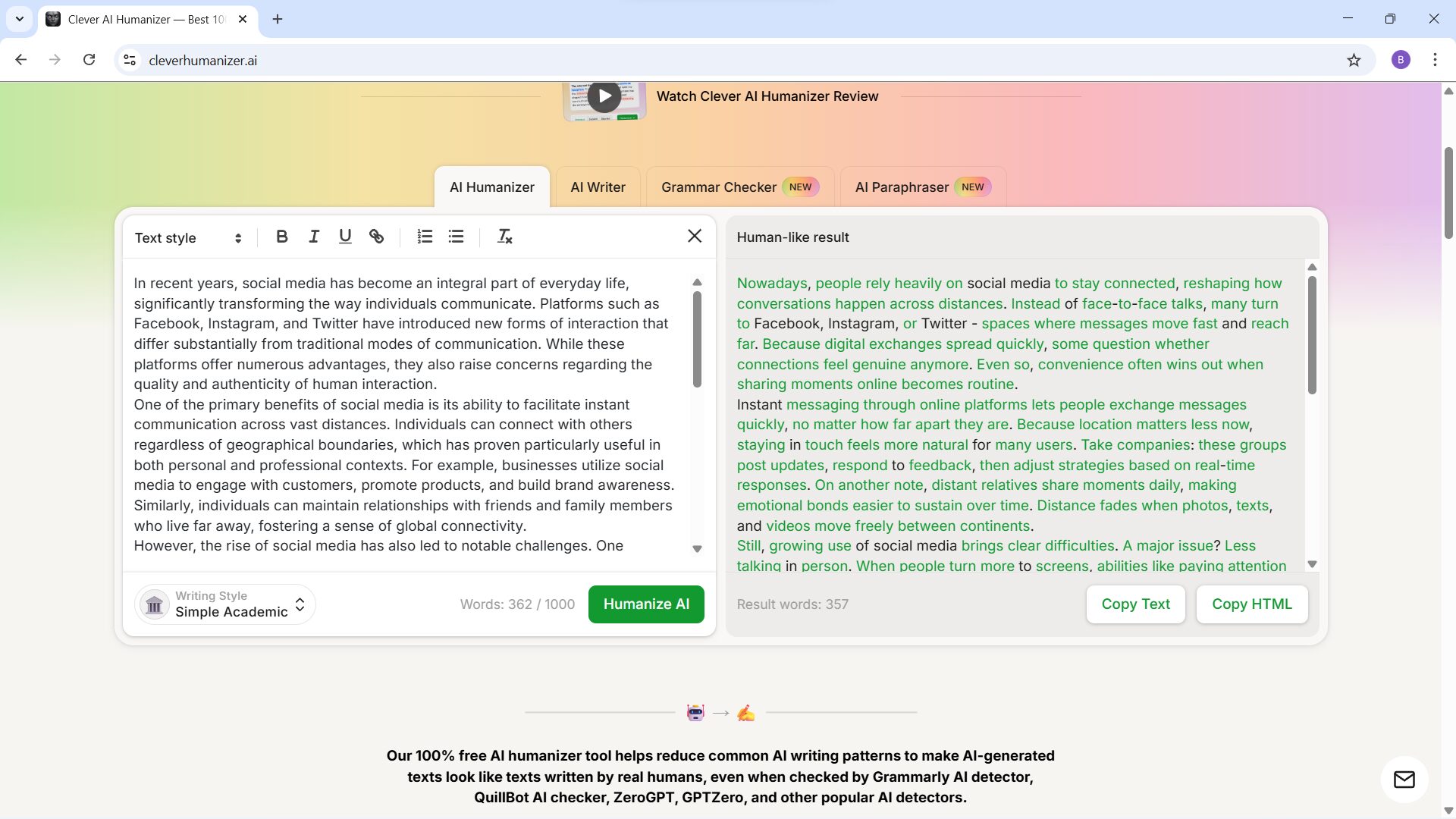
Used at the revision stage, a good AI essay humanizer helps you bypass AI detectors not by tricking them, but by producing writing that feels clearer and more natural while helping improve academic writing readability.
Edit Ruthlessly
Most students treat editing as proofreading, but it’s not. Editing is a separate stage where you question structure, logic, and word choices. The first draft’s only job is to exist. Once it does, the real work begins.
Work through your draft in layers:
- Structure: Is the argument in the right order?
- Paragraphs: Is each one focused on one idea?
- Sentences: Are they clear, direct, and varied?
Tone is worth paying attention to at this stage as well. Academic writing should be confident without being aggressive, and precise without being cold. Good editing is, in essence, a humanizer of essays; it takes raw material and shapes it into something that sounds considered and controlled. Give yourself a night between drafting and editing. Distance helps you read what is actually on the page and helps improve academic writing quality.
Check Grammar and Polish the Final Draft
It is easy to miss your own mistakes. You know what you meant to write, so your brain fills the gaps automatically. That is why a final check is always worth the time.
Focus on common issues:
- sentence fragments or overly long sentences
- incorrect verb forms
- punctuation that changes meaning
- awkward or unclear phrasing
Before submitting, read your paper aloud; if you stumble over a sentence, your reader will too. On top of that, it is worth running a specialized tool for common grammar mistakes correction that can help catch what the ear misses.
Build a Sustainable Writing Habit
Writing improves not by reading about writing, but by sitting down regularly and producing words on the page. Journaling, summarizing papers, or responding briefly to arguments you have read all build the habit. Read academic texts as a writer: notice how arguments are structured, how evidence is introduced, and how transitions work.
You do not need long sessions. An hour three times a week builds skills faster than a single all-nighter before the deadline and steadily improves academic writing skills.
Final Thoughts
Improving academic writing does not come from one trick. It comes from a set of habits that work together: clear structure, direct language, strong arguments, and careful editing. Each step builds on the previous one.
AI tools can support this process, especially when you need help with structure or phrasing. However, they work best when you retain control over the final result. In the end, the best AI humanizer is you. Your voice, your logic, and your decisions are what make the writing convincing.
If you focus on clarity and keep refining your drafts, you will notice progress. Moreover, that is what turns decent writing into strong academic work.
Recommended Articles
We hope this guide on how to improve academic writing helps you develop clearer arguments, stronger structure, and more effective essays for your academic work. Explore the recommended articles below for insights on writing skills, essay structuring techniques, and academic research best practices.


