


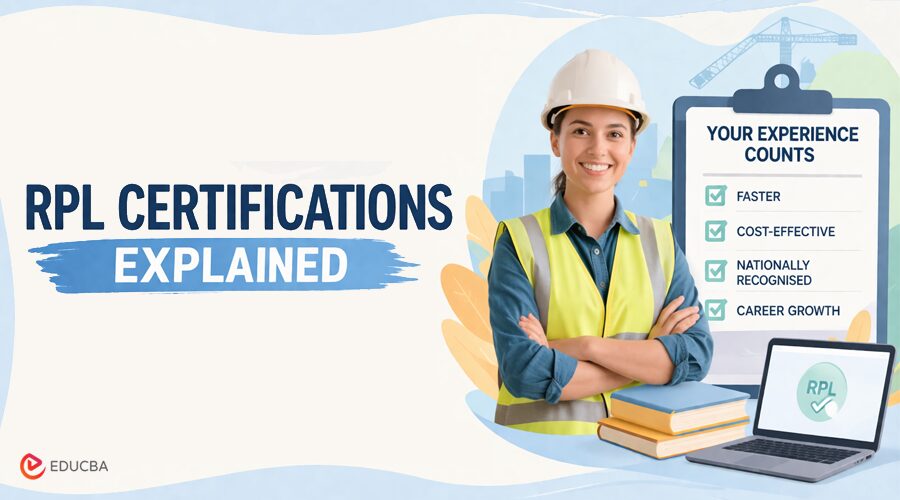
Introduction to Recognition of Prior Learning (RPL) Certifications
Have you ever wanted your work experience to count for more? With Recognition of Prior Learning (RPL), it can. RPL is a simple way to earn formal credit for skills gained outside the classroom while taking each student’s experiences into account. Instead of repeating what you already know, RPL assesses your experience so you can earn a nationally recognized qualification. It is a smart way to validate your skills and boost your career.
Key Highlights
- Recognition of Prior Learning (RPL) turns your work experience into a formal qualification.
- The RPL process involves a skills assessment to match your abilities against national standards.
- This pathway is often faster and more cost-effective than traditional study.
- You need to provide evidence of your prior learning, like work samples and references.
- A successful RPL assessment results in a nationally recognized formal qualification.
- It is a great option for experienced workers, tradespeople, and migrants in Australia.
Understanding RPL Certifications in Australia
RPL certifications are recognized in the Australian education system. They allow individuals to earn formal qualifications by having their work and life experience assessed by a qualified assessor from a Registered Training Organization (RTO), instead of completing a full course.
Assessors match your experience against the required competency units for a nationally recognized qualification. If you meet the standards, you receive the same credential as someone who completed traditional studies. This pathway helps experienced professionals gain the qualifications they deserve, supporting career advancement, licensing, or further education without repeating what they already know.
Key Benefits of Recognition of Prior Learning Certifications
Recognition of Prior Learning (RPL) offers major benefits, especially for busy professionals with years of work experience. It saves time and money by letting you bypass courses on skills you already have, making certification faster and more affordable.
RPL also formally recognizes various forms of evidence from your work experience, boosting your confidence and credibility. It can support career growth by meeting industry requirements, qualifying you for promotions, or helping you earn a higher salary.
Fast-Tracking Your Career with RPL
Imagine earning a formal qualification through recognition of prior formal learning without returning to the classroom. That is the advantage of Recognition of Prior Learning (RPL), a fast track for experienced professionals who have valuable skills but lack official credentials.
RPL converts your work experience into a nationally recognized certification, including units of competency, opening new opportunities almost immediately. It is far more efficient than traditional study, letting you advance your career with minimal disruption. A formal qualification makes you more competitive for:
- Promotions and leadership roles
- Higher-paying jobs
- Meeting industry and licensing requirements.
RPL gives you the recognition you deserve, strengthens your expertise, and positions you for long-term success by bridging the gap between practical skills and qualifications employers value.
Who Can Apply for RPL Certifications?
Anyone with substantial experience in a specific field can pursue RPL certification, especially those who learned on the job rather than through formal education. Experienced workers, tradespeople, supervisors, and managers who built their careers through practical skills may find RPL an ideal path to qualification. Highly qualified learners can also pursue RPL to gain formal recognition for their experience.
Your skills and knowledge must match the competency units of your chosen qualification to determine eligibility. RPL is also a great option for individual students, such as migrants with overseas training or experience seeking formal recognition in Australia. If you can demonstrate relevant and sufficient prior learning, you are likely eligible to apply.
Step-by-Step Recognition of Prior Learning Assessment Process
The Recognition of Prior Learning assessment process is a straightforward path to qualification. It starts with a preliminary check to align your experience with the desired qualifications, followed by the collection of evidence of your skills and knowledge within a robust evaluation framework.
You then submit this portfolio for formal review by an expert, who assesses it against industry standards. The process is transparent and supportive, providing clear guidance at every step.
Initial Self-Assessment and Skills Check
The first step in your prior learning assessment RPL journey is an initial self-assessment. This lets you reflect on your work experience and compare it to the qualification you want, often starting with a free skills check to discuss your goals.
This assessment helps determine if your prior learning meets the requirements and is a legitimate part of the vet sector, giving you a no-obligation way to check eligibility before committing. The assessor will typically ask you about:
- Your work history and job roles
- Key tasks and responsibilities
- Any formal or informal training.
This conversation clarifies your current skills and confirms if you are ready to pursue the qualification, setting you up for success.
Submitting Your Application and Finding the Right Provider
Once your eligibility is confirmed, the next step in the RPL process is to apply and start building your portfolio. Choosing the right provider ensures a smooth experience. They will guide you through the application and clearly outline what types of evidence you need.
Providers work with Registered Training Organizations (RTOs) that use different assessment tools to review your skills in line with the VET Quality Framework. Your provider supports you throughout, helping you meet requirements and coordinating with assessors to prevent delays.
After submitting your portfolio, an assessor from the partner RTO reviews your evidence against national qualification standards.
| Stage | Action |
| 1. Free Skills Check | Review your experience and goals to confirm eligibility. |
| 2. Portfolio Building | Collect evidence like résumés, work samples, and references. |
| 3. Formal Assessment | A qualified assessor reviews your evidence at a partner RTO. |
| 4. Qualification Issued | If successful, you receive a nationally recognized qualification. |
Documents and Evidence Required for RPL Applications
Proving your skills is the key to the Recognition of Prior Learning assessment. Gather documents that clearly demonstrate your experience and abilities. Your evidence must comply with the requirements of the training package and be authentic, valid, reliable, current, and sufficient. These are known as the “rules of evidence” in vocational education.
Strong, relevant documentation greatly improves your chances of success. Think of it as building a case for your competency by showing both what you have done and how well you have done it. A good RPL provider will guide you in identifying and compiling the right documents, taking into consideration the different requirements, to make the process straightforward.
Types of Proof You Need to Gather
For your RPL application, provide as much relevant evidence as possible to show your competence. Gather proof from your work experience, training, and job performance that clearly demonstrates your skills.
Your goal is to meet each unit’s competency standards. Evidence must directly relate to the qualification you are seeking and can include:
- Work references, resume, and job descriptions
- Photos, videos, or project reports
- Testimonials from clients, colleagues, or supervisors
- Training certificates, licenses, or transcripts.
If there are gaps in your portfolio, you may need to submit extra evidence or complete a practical demonstration to ensure a thorough assessment.
Qualifications Achievable Through RPL Certifications
RPL offers access to nationally recognized qualifications across industries such as construction, automotive, hospitality, and business. You can earn formal credentials from Certificate II up to a Graduate Diploma. Successful assessment may lead to a full qualification or a Statement of Attainment for specific units, demonstrating an individual’s competency.
Examples include a Certificate III in Carpentry, a Certificate IV in Building and Construction, a Diploma of Project Management, and qualifications related to aged care. Each qualification is part of a national training package and meets the same standards as traditional study. Skills Certified and its partner RTOs can help you gain qualifications in fields like engineering, commercial cookery, plumbing, and IT, based on your experience.
Costs and Timeframes for RPL Certifications
The RPL process stands out for its lower cost and shorter duration compared to traditional study. Costs depend on the qualification level and the specific unit of competency, typically ranging from Certificate II to Graduate Diploma, but are generally less than full course fees since you avoid tuition, textbooks, and lengthy classes.
Recognition of Prior Learning is also much faster; most people complete it sooner than standard courses, as it recognizes their existing skills. The timeframe depends on how quickly you provide evidence and on the assessment’s complexity, both of which must align with the principles of assessment.
| Factor | Details |
| Cost | Varies by qualification; usually lower than full course fees. |
| Timeframe | Based on evidence collection, often much shorter than a traditional study. |
| Payment | Flexible options may be available from providers. |
| Credit Transfer | Prior formal training can further reduce both time and cost. |
Final Thoughts
RPL certifications offer a valuable way to translate your existing skills and experience into recognized qualifications comparable to traditional qualifications. Understanding the RPL process, requirements, and benefits can help you fast-track your career and stand out in the job market. Whether you are changing fields or validating your experience, RPL opens doors to new opportunities and personal growth. Take the first step to enhance your qualifications. Reach out today for a free consultation on how RPL can work for you.
Frequently Asked Questions (FAQs)
Q1. Can I Use My Overseas Work Experience Towards RPL Certifications?
Answer: Yes, absolutely. Recognition of Prior Learning is an ideal pathway for migrants seeking to have their overseas work experience and previous training recognized in Australia. During the assessment process, you demonstrate your skills against Australian standards, helping you earn a formal qualification recognized by employers and licensing authorities.
Q2. What Happens if My Evidence is Not Accepted During RPL Assessment?
Answer: If your evidence does not fully meet the requirements during the RPL assessment, you will not necessarily fail. The qualified assessors will provide feedback and may request additional evidence or a practical demonstration to address any gaps. Qualified assessors support you throughout the assessment, giving you opportunities to prove your competency.
Q3. How Do RPL Certifications Impact My Future Career Opportunities?
Answer: Recognition of Prior Learning certifications can significantly boost your career development. A formal qualification or Statement of Attainment makes your skills official, enhancing your resume and making you eligible for promotions, new job roles, and higher pay. It provides the professional development credentials that many employers require to fill knowledge gaps for advancement.
Recommended Articles
We hope this guide on Recognition of Prior Learning (RPL) helps you understand how to turn your work experience into formal qualifications and advance your career. Explore the recommended articles below for insights on RPL assessments, vocational education, and skill recognition pathways in Australia.


