


What is Webinar Marketing?
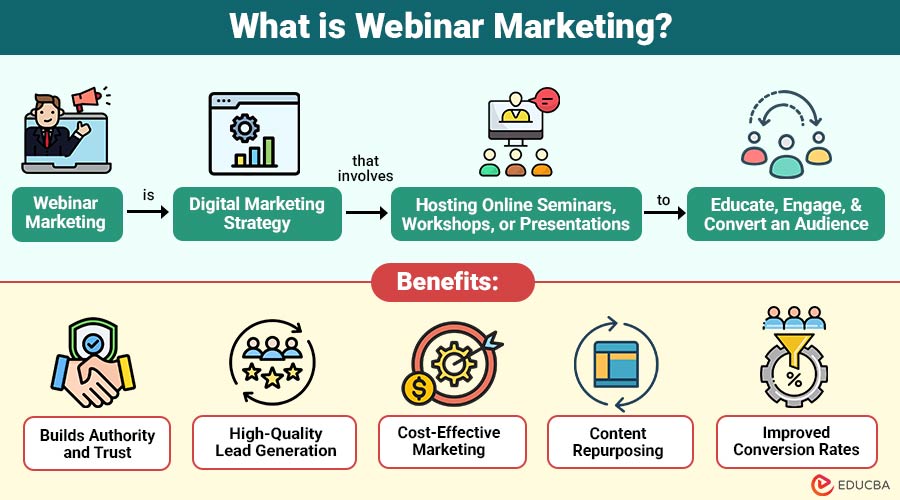
Webinar marketing is digital marketing strategy that involves hosting online seminars, workshops, or presentations to educate, engage, and convert an audience. These webinars are typically conducted through video conferencing platforms and can be live or pre-recorded.
Businesses use webinars to:
- Promote products or services
- Educate potential customers
- Build brand authority
- Generate and nurture leads
Table of Contents:
- Meaning
- Key Features
- Types
- Difference
- Benefits
- Strategy
- Tools
- Real-World Examples
- Challenges
- Best Practices
Key Takeaways:
- Webinar marketing enables businesses to educate audiences, build trust, and generate high-quality leads effectively and consistently.
- Personalized webinar content improves audience retention, relevance, and significantly increases conversion rates effectively.
- Webinars are cost-effective, scalable, and globally accessible, making them powerful tools for digital marketing strategies.
- Successful webinar marketing requires clear goals, engaging content, effective promotion, and consistent follow-up to drive conversions.
Key Features of Webinar Marketing
Here are the key features that make webinar marketing an effective and powerful digital strategy:
1. Live Interaction
Webinars allow real-time engagement between presenters and participants through chat, polls, and Q&A sessions, fostering meaningful communication.
2. Educational Content
They focus on delivering informative, value-based content, such as tutorials, demonstrations, and industry insights.
3. Lead Generation
Registration processes capture user information, such as email addresses, making webinars an effective tool for building lead databases.
4. Global Reach
Webinars eliminate geographical limitations, enabling businesses to connect with audiences worldwide.
5. On-Demand Access
Recorded webinars serve as evergreen content, allowing users to view them at their convenience.
Types of Webinar Marketing
Here are the main types of webinar marketing that businesses use to engage, educate, and convert audiences:
1. Educational Webinars
These webinars focus on teaching specific topics, providing valuable insights, building expertise, and establishing brand authority while effectively educating audiences.
2. Product Demonstration Webinars
These webinars showcase product features, benefits, and real-world applications, helping potential customers understand value and encouraging informed purchasing decisions.
3. Training and Workshops
These sessions deliver hands-on learning experiences, enhancing participant skills, offering practical knowledge, and improving professional development through interactive guidance and exercises.
4. Panel Discussions
Panel webinars feature multiple experts sharing diverse perspectives, encouraging discussions, boosting credibility, and providing audiences with comprehensive insights on important topics.
5. Lead Nurturing Webinars
These webinars target potential customers in the sales funnel, build relationships, address concerns, and guide them toward final purchasing decisions.
Difference Between Webinar Marketing and Traditional Marketing
Here is a comparison highlighting how webinar marketing differs from traditional marketing:
| Aspect | Webinar Marketing | Traditional Marketing |
| Interaction | High (live engagement) | Low (one-way communication) |
| Cost | Cost-effective | Often expensive |
| Reach | Global | Limited by geography |
| Engagement | Interactive | Passive |
| Measurement | Easy tracking | Difficult tracking |
Benefits of Webinar Marketing
Here are the key benefits that make webinar marketing a highly effective strategy for modern businesses:
1. Builds Authority and Trust
Sharing valuable insights through webinars helps businesses establish expertise, build audience confidence, and build long-term trust within their industry.
2. High-Quality Lead Generation
Webinars attract genuinely interested participants, resulting in high-quality leads who are more likely to engage, interact, and convert into potential customers.
3. Cost-Effective Marketing
Webinars reduce expenses related to venues, travel, and logistics, making them an affordable marketing strategy while still reaching large audiences effectively.
4. Content Repurposing
Recorded webinars can be transformed into blogs, videos, podcasts, or social media posts, maximizing content value and extending reach across multiple platforms.
5. Improved Conversion Rates
Engaged webinar attendees better understand offerings, increasing trust and interest, which ultimately leads to higher conversion rates and improved sales outcomes.
Webinar Marketing Strategy
Here is a step-by-step strategy to plan, execute, and optimize successful webinar marketing campaigns:
1. Define Objectives
Clearly define webinar goals such as lead generation, brand awareness, or customer education to ensure focused planning and measurable marketing outcomes.
2. Identify Target Audience
Understand audience demographics, interests, and challenges to create relevant content that effectively resonates and increases engagement and participation during webinars.
3. Choose the Right Topic
Select informative and relevant topics addressing audience pain points, ensuring content value, higher interest, and better attendance and engagement rates overall.
4. Select the Right Platform
Choose a reliable webinar platform offering interactive features, scalability, and analytics to ensure seamless delivery and improved audience engagement and performance tracking.
5. Promote the Webinar
Promote webinars through email campaigns, social media, and paid advertising to increase registrations, reach target audiences, and maximize attendance.
6. Create Engaging Content
Develop engaging content using storytelling, visuals, and actionable insights to capture attention, maintain interest, and deliver valuable learning experiences to attendees.
7. Conduct the Webinar
Execute the webinar smoothly with clear communication, a confident presentation, and interactive elements such as polls or Q&A to keep the audience actively engaged.
8. Follow-Up
Send follow-up emails with recordings, feedback requests, and personalized offers to nurture leads, strengthen relationships, and drive conversions after webinar completion.
Tools Used in Webinar Marketing
Some commonly used tools for hosting and managing webinars include:
1. Zoom
Zoom is a popular webinar platform offering video conferencing, screen sharing, recording, breakout rooms, and interactive engagement features for audiences.
2. Microsoft Teams
Microsoft Teams enables webinars with collaboration tools, live presentations, chat features, recording options, and seamless integration with Microsoft Office applications.
3. Google Meet
Google Meet provides simple webinar hosting with video conferencing, screen sharing, real-time captions, recording, and easy access through Google Workspace tools.
4. GoToWebinar
GoToWebinar is designed for professional webinars, offering registration management, analytics, audience engagement tools, automated emails, and scalable virtual event hosting.
5. Webex
Webex offers secure webinar hosting with video conferencing, screen sharing, real-time polling, recording, and advanced audience engagement and collaboration features.
Real-World Examples
Here are some practical examples of how webinar marketing is used across different industries:
1. SaaS Company
A SaaS company hosts webinars to showcase product features, educate users, and increase trial sign-ups, engagement, and customer onboarding success rates.
2. Educational Institution
An educational institution conducts webinars to introduce courses, engage prospective students, build interest, and increase enrollment through informative online sessions.
3. Digital Marketing Agency
A digital marketing agency organizes webinars on industry trends to attract clients, demonstrate expertise, and build credibility in competitive markets.
Challenges in Webinar Marketing
Here are some common challenges faced in webinar marketing that can impact overall effectiveness:
1. Low Attendance Rates
Despite high registration numbers, many attendees fail to join webinars due to scheduling conflicts, time constraints, or lack of commitment beforehand.
2. Technical Issues
Technical concerns that might interfere with webinars and negatively affect the user experience include bad internet connections, audio problems, and platform flaws.
3. Engagement Drop-Off
Maintaining audience engagement throughout the webinar proves difficult, as participants may become disinterested, distracted, or exit before the session concludes.
4. Content Overload
Providing excessive information during webinars can overwhelm participants, reduce understanding, and limit retention, ultimately decreasing the session’s effectiveness.
Best Practices for Webinar Marketing
Here are some best practices to ensure your webinar marketing efforts are effective and successful:
1. Keep It Concise and Focused
Deliver clear, valuable information within a limited time, avoiding unnecessary details to maintain audience attention, improve understanding, and ensure effective communication throughout.
2. Use Visual Aids
Incorporate slides, videos, and graphics to simplify complex ideas, enhance understanding, maintain interest, and create a visually engaging webinar experience.
3. Encourage Interaction
Engage participants by asking questions, conducting polls, and enabling discussions to boost involvement, improve learning, and create a more interactive experience.
4. Practice Before the Event
Rehearse content, test equipment, and check technical setup to ensure smooth delivery, minimize errors, and build presenter confidence before the live webinar.
5. Optimize Landing Pages
Design clear, compelling registration pages that highlight benefits and use strong calls to action to attract sign-ups and increase webinar attendance rates effectively.
6. Analyze Performance
Evaluate webinar metrics like attendance, engagement, and conversions to identify strengths, improve strategies, and optimize future webinar marketing campaigns for better results.
Final Thoughts
Webinar marketing is a powerful digital strategy that blends education, engagement, and promotion to connect with audiences effectively. It helps businesses generate quality leads, build authority, and boost conversions. With the right tools, planning, and execution, webinars enable brands to achieve marketing goals and stay competitive in today’s dynamic digital landscape.
Frequently Asked Questions (FAQs)
Q1. What is the main purpose of webinar marketing?
Answer: The primary purpose is to educate, engage, and convert audiences through interactive online events.
Q2. Are webinars suitable for small businesses?
Answer: Yes, webinars are cost-effective and scalable, making them ideal for businesses of all sizes.
Q3. How do you measure webinar success?
Answer: Success is measured using metrics like registrations, attendance rate, engagement, and conversions.
Q4. Can webinars be reused?
Answer: Yes, recorded webinars can be repurposed into various content formats for extended use.
Recommended Articles
We hope that this EDUCBA information on “Webinar Marketing” was beneficial to you. You can view EDUCBA’s recommended articles for more information.

