
What is Referral Marketing?
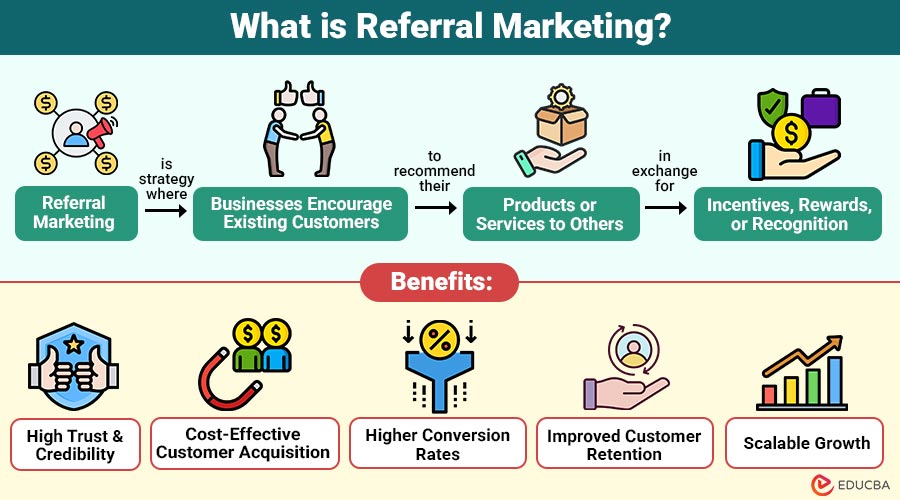
Referral marketing is strategy where businesses encourage existing customers to recommend their products or services to others in exchange for incentives, rewards, or recognition.
In simple terms, it is a structured version of word-of-mouth marketing in which companies actively encourage customers to bring in new customers.
The process typically involves three key participants:
- The Referrer – The existing customer who recommends the product.
- The Referred Customer – The new customer who receives the recommendation.
- The Business – The company that provides incentives or rewards for successful referrals.
Referral marketing programs often offer benefits such as discounts, cashback, reward points, or free products to encourage customers to participate.
Table of Contents:
Key Takeaways:
- Referral marketing uses satisfied customers to promote products, helping businesses gain trusted leads and reduce marketing costs.
- Simple referral programs with attractive rewards encourage more participation and create continuous customer growth for businesses over time.
- Referred customers usually convert faster, stay loyal longer, and provide higher value than customers from other marketing channels.
- Successful referral marketing requires clear rules, proper tracking, strong promotion, and well-planned incentives to remain cost-effective.
How Does Referral Marketing Work?
Referral marketing follows a straightforward process that encourages customers to share products with others.
1. Customer Experience
The process starts when a customer has a positive experience with a product or service, making them willing to recommend it.
2. Referral Invitation
Businesses invite customers to join referral programs through emails, mobile apps, websites, or loyalty programs, encouraging them to refer others.
3. Sharing the Referral
Customers share referral links, codes, or invitations with friends via social media, messaging apps, email, or personal recommendations.
4. New Customer Purchase
The referred person clicks the referral link, signs up, or makes a purchase, becoming a new customer through the recommendation process.
5. Reward Distribution
After a successful referral, both the existing and new customers receive rewards such as discounts, cashback, points, credits, or special offers.
6. Continuous Referral Cycle
New customers can also join the referral program, share referrals with others, and continue the cycle, helping the business grow continuously.
Types of Referral Marketing
Businesses can implement referral marketing in various ways depending on their goals and audience.
1. Direct Referral Programs
Customers receive a reward when they refer a friend who successfully registers, subscribes, or purchases a product from the business.
2. Incentivized Referral Programs
Rewards are given to both the current and referred customers, which promotes more involvement and increases user interest in referral programs.
3. Email Referral Marketing
Businesses send referral invitations via email campaigns, allowing customers to quickly and conveniently share referral links with friends online.
4. Social Media Referral Campaigns
Customers share referral links, codes, or posts on social media platforms to promote products and earn rewards for successful referrals.
5. Loyalty-Based Referral Programs
Referral marketing is combined with loyalty programs where customers earn points, rewards, or membership benefits for every successful referral they make.
Benefits of Referral Marketing
Here are the main benefits of referral marketing that help businesses grow faster, build trust, and acquire customers effectively.
1. High Trust and Credibility
People trust recommendations from friends and family more than advertisements, making referral marketing highly credible and influential.
2. Cost-Effective Customer Acquisition
Referral marketing reduces acquisition costs by rewarding customers only after successful referrals, rather than paying for advertisements.
3. Higher Conversion Rates
Referred customers often convert faster because recommendations from trusted people create confidence and reduce hesitation during purchasing decisions.
4. Improved Customer Retention
Customers participating in referral programs feel valued and connected to the brand, increasing loyalty and long-term engagement.
5. Scalable Growth
Referral programs create continuous growth as existing customers bring in new ones, expanding reach without heavy marketing investments.
Referral Marketing Strategies
Here are effective strategies businesses can use to make referral marketing programs successful and increase customer participation.
1. Offer Attractive Incentives
Providing valuable rewards such as discounts, gift cards, cash back, or free products motivates customers to refer others and participate actively in programs.
2. Make the Process Simple
Referral programs should be easy to use, allowing customers to share links, codes, or invitations quickly without complicated steps or confusion.
3. Reward Both Participants
Programs that reward both the referrer and the referred customer encourage higher participation, making the referral system more engaging and effective overall.
4. Use Social Sharing
Adding social media sharing options allows customers to easily promote referral links on platforms like Facebook, Instagram, WhatsApp, and Twitter.
5. Promote the Program
Businesses should actively promote referral programs through emails, website banners, mobile apps, and notifications to increase awareness and customer participation.
Examples of Successful Referral Marketing
Here are some well-known companies that used referral marketing successfully to grow their customer base and increase user engagement.
1. Dropbox
Dropbox offered free storage to users who referred friends, helping the platform grow quickly through simple, effective referral incentives.
2. Airbnb
Airbnb rewarded users with travel credits for inviting friends, encouraging more bookings, and increasing customer acquisition through trusted personal recommendations.
3. Uber
Uber allowed users to share referral codes, giving ride credits to both users after the referred person completed their first successful trip.
4. PayPal
PayPal offered cash rewards for referrals in the early stages, which helped the company grow rapidly by attracting millions of new users.
Challenges of Referral Marketing
Despite its advantages, referral marketing also has some challenges.
1. Low Participation Rates
Not all customers join referral programs, especially when rewards are small, unclear, or the referral process feels complicated to complete.
2. Fraudulent Referrals
Some users try to exploit referral systems by creating fake accounts or repeatedly referring others to earn rewards without genuine customer conversions.
3. Reward Costs
If rewards are too expensive or poorly planned, referral programs may increase marketing costs rather than reduce customer acquisition expenses.
4. Program Awareness
Customers may not participate in referral programs if businesses fail to promote them properly through emails, websites, apps, or advertisements.
5. Need for Monitoring and Control
Companies must create clear rules, track referrals carefully, and use monitoring tools to prevent misuse and maintain program effectiveness.
Difference Between Referral Marketing and Word-of-Mouth Marketing
Here are the main differences between referral marketing and word-of-mouth marketing
| Aspect | Referral Marketing | Word-of-Mouth Marketing |
| Structure | Organized program | Occurs naturally |
| Incentives | Often includes rewards | Usually no rewards |
| Tracking | Measurable and trackable | Difficult to measure |
| Control | Managed by the company | Driven by customers |
Final Thoughts
Referral marketing is powerful customer acquisition strategy in which satisfied customers recommend products or services to others, generating trusted, high-quality leads. It reduces marketing costs while improving conversions. With strong customer experience, attractive rewards, and simple sharing options, referral programs create continuous growth by turning loyal customers into brand promoters.
Frequently Asked Questions (FAQs)
Q1. Why is referral marketing effective?
Answer: It is effective because people trust recommendations from friends and family more than traditional advertisements.
Q2. What rewards are commonly used in referral programs?
Answer: Common rewards include discounts, cashback, loyalty points, gift cards, and free products.
Q3. How do businesses track referrals?
Answer: Companies use referral software, unique links, or referral codes to track and reward successful referrals.
Q4. What industries use referral marketing?
Answer: Referral marketing is widely used in industries such as e-commerce, fintech, travel, SaaS, and mobile applications.
Recommended Articles
We hope that this EDUCBA information on “Referral Marketing” was beneficial to you. You can view EDUCBA’s recommended articles for more information.

