


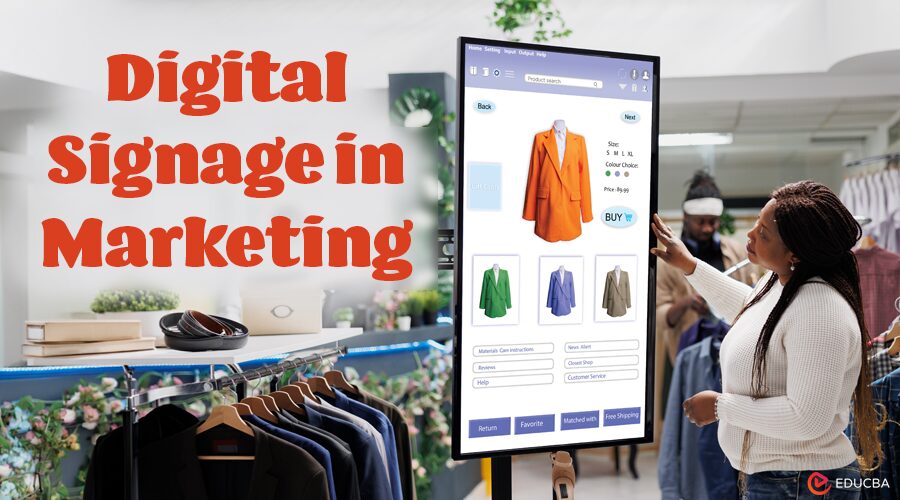
Introduction to Digital Signage in Marketing
Consumer attention has become increasingly fragmented across devices and platforms. Traditional static advertising, printed posters, laminated menus, and foam-board displays no longer deliver the engagement they once did. Digital Signage in Marketing addresses this directly, giving businesses a way to deliver dynamic, real-time content through networked screens that can respond to context, timing, and customer behavior.
From independent restaurants to multinational retailers, organizations are making the switch. This article breaks down what digital signage is, why businesses adopt it, how the software works, and what real-world deployment actually looks like.
What Digital Signage in Marketing is and What it is Not?
Digital signage is the use of digital screens to display content such as images, videos, animations, live data, and scheduled messages. A content management system (CMS) controls these displays, determining what appears on each screen, when it appears, and for how long it stays visible.
The technology stack has four core components: display hardware (commercial TVs, LED panels, interactive kiosks), media players that run content locally on each screen, the CMS platform for uploading and scheduling content remotely, and the network infrastructure that connects everything.
What distinguishes digital signage from simply putting a TV in a lobby is the management layer. A proper digital signage setup in marketing allows a single person to push content to hundreds of screens across multiple locations from a single dashboard, without ever physically touching a device.
Why Businesses Are Making the Switch?
The practical case for digital signage in marketing comes down to four things: attention, speed, cost, and control.
Dynamic content, motion, color transitions, and video capture significantly more attention than static images. This is not a preference; it is how visual processing works. Movement activates peripheral vision and draws the eye in ways a printed poster cannot, particularly in high-traffic environments where customers are moving quickly.
Speed is equally significant. Businesses can update promotions, pricing, and messaging in real time without reprinting anything. A restaurant can pull a sold-out dish from the menu board the moment stock runs out. A retailer can activate a flash sale across all locations simultaneously. That responsiveness is not possible with physical materials.
On cost, the economics take time to work out but consistently favor digital over print at scale. Once the hardware is in place, there are no recurring print or distribution costs. Content updates are free. Seasonal campaigns do not require new materials. For businesses running high volumes of printed signage, the breakeven point often arrives sooner than expected.
Control ties everything together. Cloud-based platforms enable centralized oversight of what appears across every screen in a network, ensuring brand consistency, compliance, and accurate messaging at all times.
Real-World Use Cases of Digital Signage in Marketing
Restaurants were among the earliest and most consistent adopters of digital signage in marketing. Digital menu boards let operators instantly update pricing, highlight high-margin or limited-time items, and remove sold-out options without manual intervention at the screen. For chains managing dozens or hundreds of locations, central control over menu content is not a luxury; it is an operational necessity. Some operators have reported measurable increases in average transaction value simply from repositioning item visibility on a digital board.
In retail, digital signage does more than display promotions. Entrance screens set the brand atmosphere. Wayfinding displays reduce friction for customers navigating large stores. Point-of-sale screens reinforce purchase decisions at the moment customers make them. The most effective retail deployments treat the store as a curated environment, using screens to shape the customer journey from entry to checkout.
Corporate offices use digital signage to share internal updates, such as performance dashboards, company announcements, event reminders, and cultural messages, on screens in common areas, reception areas, and hallways. Email and intranet updates require active employee engagement; screens in shared spaces create a passive channel that reaches people without demanding their attention.
In education, healthcare, and transport, digital signage in marketing and communication plays a more functional role, delivering accurate, timely information to audiences who need it. Departure boards, queue management systems, campus wayfinding, and emergency alert displays are all forms of digital signage that have become standard infrastructure rather than optional marketing tools.
How Digital Signage in Marketing Software Works?
The CMS is the operational center of any digital signage deployment. Modern platforms are cloud-based, which means content can be managed remotely from any device without requiring physical access to individual screens.
Core functionality includes content uploading and organization, playlist building, time-based scheduling, and screen grouping. More advanced platforms add audience analytics, conditional content rules (showing different content based on time of day, weather, or location), and integration with external data sources, such as inventory systems or social feeds.
PosterBooking and similar platforms reduce the technical barrier for smaller teams by allowing them to manage multi-screen deployments without dedicated IT support. This has been a significant driver of adoption among mid-sized businesses that previously found enterprise-grade systems too complex or too expensive.
What to Look for When Choosing a Platform?
Ease of use is the first filter. If updating a screen requires technical expertise or time-consuming coordination, the operational advantages of digital signage in marketing erode quickly. The best platforms let content managers build, schedule, and publish without friction, regardless of their technical background.
Device compatibility determines how flexible your hardware choices are. Platforms that support a wide range of displays, including consumer-grade Android TVs and streaming sticks alongside commercial screens, reduce hardware costs and avoid vendor lock-in. Treat proprietary hardware requirements as a red flag during the evaluation stage.
Scheduling and automation are essential for any deployment beyond a single screen. Time-based content rules, breakfast promotions that expire at noon, weekend-only messaging, and seasonal campaigns that activate and deactivate automatically remove the manual overhead that would otherwise make dynamic content impractical to maintain.
Pricing structure deserves scrutiny. Some platforms advertise low entry costs but apply per-screen fees that scale aggressively. Understanding the total cost at your intended deployment size, not just the starting price, is critical before committing to a platform.
Challenges of Implementing Digital Signage in Marketing
Digital signage is not without complications, and overstating the ease of implementation would be a disservice to anyone planning a deployment.
Initial hardware costs can be significant, particularly at scale. Commercial displays, media players, mounting hardware, and installation represent real capital expenditure that businesses accustomed to low-cost print runs may not anticipate. Businesses generally benefit from favorable long-term economics, but they must plan for the upfront investment.
Businesses most often underestimate the challenge of content. A screen left displaying the same image for months defeats the purpose of having a dynamic display. Effective digital signage requires ongoing creative resources, a content strategy, not just a hardware purchase. Businesses that treat screens as a one-time setup quickly find their return on investment stalls.
Cloud-based systems depend on stable internet connectivity. In locations with inconsistent connection quality, content delivery can fail at critical moments. Contingency planning, through offline caching or local fallback content, should be factored into the deployment design from the start.
Hardware also requires ongoing maintenance. Screens and media players need periodic monitoring to ensure consistent performance, and a reactive approach to failures can result in blank or incorrect displays at high-visibility moments.
The Future of Digital Signage in Marketing
The next phase of digital signage in marketing focuses on integrating data and automation to deliver smarter, more responsive content experiences. Screens that adapt in real time based on footfall patterns, weather conditions, inventory levels, or external events are already in use at the higher end of the market. As AI-driven content generation tools become more widely accessible, this kind of contextual responsiveness will become available to mid-market deployments.
The convergence of digital signage with broader marketing technology is also accelerating. Screens increasingly draw on the same data sources as email campaigns, paid media, and CRM systems, enabling coordinated customer experiences that span channels rather than treating each touchpoint in isolation.
For businesses that have not yet engaged seriously with digital signage in marketing, the technology is no longer experimental. Businesses now have mature infrastructure, established content playbooks, and a wide range of accessible digital signage platforms to choose from. What remains is the decision on where and how to deploy, along with an honest assessment of the operational investment required to make it work properly.
Recommended Articles
We hope this guide helps you understand how businesses use dynamic displays to improve customer engagement and communication. Explore the recommended articles below for insights on digital marketing tools, in-store technology, and modern customer experience strategies.


