


Updated April 29, 2026
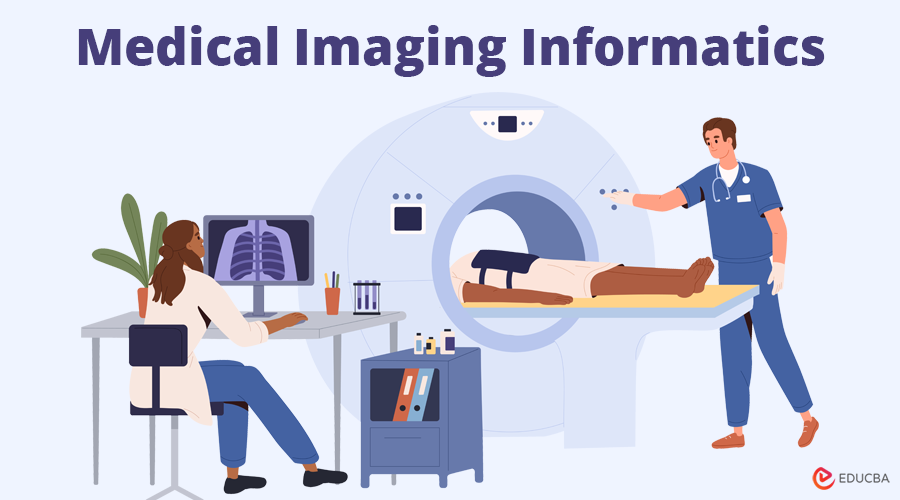
What is Medical Imaging Informatics?
Every day, hospitals generate thousands of medical images, creating a massive flow of diagnostic data that must be stored, organized, and accessed quickly. Without the right systems and expertise, managing this information can become inefficient, potentially delaying patient care. Medical imaging informatics addresses this challenge by integrating healthcare, information technology, and data management to efficiently and securely handle medical images.
Career Pathways And Background In Medicine
A number of individuals working as imaging informatics specialists gain hands-on experience with medical imaging providers before transitioning into IT positions. Many imaging professionals (e.g., radiologic technologists, sonographers, and MRI specialists) have gained extensive experience in understanding imaging workflow processes before pursuing a career in imaging informatics.
An individual exploring a long-term career opportunity as an MRI Technologist may begin their career by reviewing an extensive MRI career path in California, thereby gaining significant clinical experience in scan acquisition, patient interactions, and imaging protocols. Having a level of clinical knowledge provides a strong foundation for designing and managing the implementation of imaging information systems.
After gaining clinical experience, continuing education courses in health informatics, databases, programming, and interoperability are available to expand their knowledge of the healthcare industry, including imaging workflow design, data analytics, and information system integration. Universities, professional societies, and various technology websites offer these courses.
Understanding Medical Imaging Informatics
The medical imaging informatics field encompasses the management of digital systems used to capture medical images (e.g., radiographs, MRIs). It is the intersection of healthcare and technology, where the combination of information technology and clinical knowledge enables the successful capture, storage, transfer, and interpretation of medical imaging data. Prior to the digital revolution, radiology departments relied solely on analog film-based records maintained via manual systems (e.g., filing cabinets).
However, with the development of digital imaging systems, radiology departments now operate through systems managed by medical imaging informatics professionals, enabling clinical users to retrieve patient scans instantaneously, work collaboratively from remote locations, and incorporate the results of their imaging studies into the larger electronic record for a patient (i.e., EMR).
In addition, professionals in medical imaging informatics assist with promoting quality improvement initiatives, applying data analysis processes, and implementing artificial intelligence applications to support the interpretation of medical images. Professionals in the medical imaging informatics field coordinate clinical workflows and IT systems to ensure that medical imaging data serves as a permanent resource for clinical decision-making after diagnosis, treatment planning, and research.
Core Imaging Systems
Contemporary imaging departments utilize multiple interrelated systems to manage imaging workflows. Radiologists and physicians access all digital images produced within a department through the Picture Archiving and Communication System (PACS), which stores these images and allows retrieval from workstations across the hospital or remotely. PACS stores digital images, eliminating the need for physical film and giving clinicians quick access to historical images.
Another critical element in the imaging process is the Radiology Information System (RIS), which tracks administrative and operational functions required for delivering imaging services. RIS helps track patient schedules, exam orders, reports, and billing.
Many healthcare organizations are also implementing Vendor Neutral Archives (VNA). VNAs store imaging data in standardized formats, allowing hospitals to remain flexible with their choice of software products and migrate systems and/or implement new technologies, while continuing to access archived imaging data.
Important Standards
Medical Imaging standards (or data standards) support interoperability by providing a common framework of widely adopted data standards. DICOM defines the format, storage, and transmission of medical images, enabling different viewing systems to interpret images from scanners made by various manufacturers.
HL7 provides a messaging standard for healthcare applications to communicate with each other, including the sending and receiving of imaging orders and/or reports, thereby allowing various applications to share patient information. More recently, modern developments in interoperability have adopted FHIR as a standard, leveraging web-based technologies (e.g., APIs) to enable faster data sharing between health care entities. FHIR, and/if so, plays an increasing role in enabling interoperability between medical imaging data, electronic health record systems, and patient-facing applications.
Privacy, Security, And Regulatory Compliance
Medical Imaging Information contains sensitive patient health data; therefore, it is extremely important for the security of a healthcare organization’s imaging system and for compliance with regulations governing the protection of patient data. Healthcare organizations must implement strict controls on how individuals access medical imaging systems, including authentication, encryption of data communications, and detailed logs of every instance of system access, to ensure that data is not improperly accessed or misused.
Informatics professionals work closely with the cybersecurity team to identify vulnerabilities in the organization’s imaging system and take proactive steps to safeguard the imaging infrastructure against cyberattacks, including breaches and ransomware.
Researchers use medical imaging in research initiatives, such as educational applications of AI and clinical trials. To train AI models using medical imaging studies, researchers must remove patient identifiers to protect confidentiality while preserving valuable clinical information for research.
The Future Of Imaging Informatics
As the fields of digital health, artificial intelligence, and cloud computing continue to advance, so too do the ways we use imaging informatics in healthcare. Imaging data is becoming increasingly integrated with genomic data, electronic health records, and predictive analytics tools to improve precision medicine.
As the healthcare system becomes increasingly connected, the need for imaging informatics professionals is vital to ensuring these intricate data systems are accurate, secure, and efficient. These systems enable physicians to focus on providing quality patient care while, in the background, advanced systems manage the flow of imaging data.
Medical imaging informatics is the technology that supports 21st-century radiology, integrating the clinical and information science components of imaging data to transform how imaging data supports diagnosis, treatment, and discovery.
Recommended Articles
We hope this guide on Medical Imaging Informatics helps you understand how imaging data drives better patient care and workflow efficiency. Explore the recommended articles below for insights on imaging systems, AI applications, and healthcare data management.


