
What is Workforce Analytics?
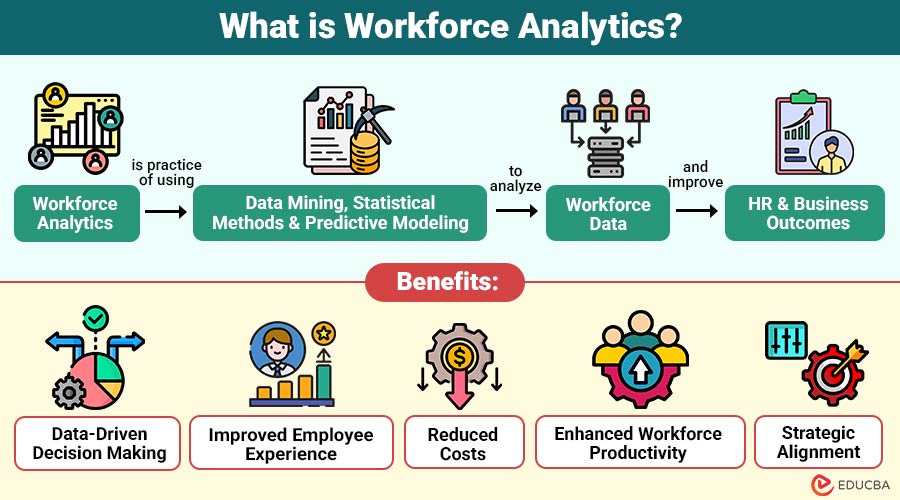
Workforce analytics is practice of using data mining, statistical methods, and predictive modeling to analyze workforce data and improve HR and business outcomes. It goes beyond traditional HR reporting by identifying patterns, forecasting future workforce needs, and recommending data-backed actions.
Table of Contents:
Key Takeaways:
- Workforce analytics transforms HR data into strategic insights that improve planning, performance, retention, and business outcomes.
- By leveraging predictive and prescriptive analytics, organizations proactively address talent risks and future workforce needs.
- Effective workforce analytics depends on high-quality data, skilled analysis, and alignment between HR and business strategy.
- Workforce analytics enables continuous measurement and optimization of HR initiatives for measurable business impact.
Objectives of Workforce Analytics
The primary objectives of workforce analytics include:
1. Workforce Planning
Workforce analytics helps predict future talent needs, ensuring the right employees are available at the right time.
2. Performance Improvement
It analyzes performance data to identify strengths, weaknesses, and areas for improvement, enabling targeted performance management strategies.
3. Attrition Reduction
By identifying attrition drivers early, organizations can implement retention strategies and reduce the costs of frequent hiring.
4. Skill Gap Analysis
Highlights existing and future skill gaps, helping organizations design effective training and upskilling programs.
5. Strategic Decisions
Data-driven workforce insights support leadership in making informed, objective decisions aligned with business goals.
6. Employee Engagement
Analytics evaluates engagement levels and feedback, enabling organizations to improve workplace culture and overall employee satisfaction.
Types of Workforce Analytics
Workforce analytics can be categorized into four main types based on analytical maturity:
1. Descriptive Workforce Analytics
Descriptive workforce analytics examines historical employee data to summarize past trends, reporting metrics like headcount, attrition, absenteeism, and time-to-hire for informed operational understanding decisions today.
2. Diagnostic Workforce Analytics
Diagnostic workforce analytics investigates reasons behind workforce outcomes by analyzing relationships, patterns, and root causes, helping organizations understand why issues like attrition or performance occurred.
3. Predictive Workforce Analytics
Predictive workforce analytics uses statistical techniques and machine learning models to forecast workforce behaviors, enabling organizations to anticipate risks such as turnover and staffing demands.
4. Prescriptive Workforce Analytics
Prescriptive workforce analytics goes beyond prediction by recommending optimal actions and interventions, helping leaders choose strategies that improve retention, performance, and workforce outcomes effectively sustainably.
Key Workforce Analytics Metrics
Some commonly tracked workforce analytics metrics include:
1. Employee Turnover Rate
Calculates the proportion of workers who leave a company over time, which aids in evaluating workforce stability and retention efficacy.
2. Time-to-hire and Cost-per-hire
Evaluates recruitment efficiency by tracking hiring duration and total expenses involved in attracting and onboarding new employees.
3. Employee Productivity Metrics
Analyze output, performance, and efficiency levels to determine how effectively employees contribute to organizational goals.
4. Absenteeism Rate
Tracks employee absence frequency to identify attendance issues, workforce health trends, and potential engagement problems.
5. Employee Engagement Score
Measures employee satisfaction, motivation, and commitment levels using surveys and feedback data.
6. Training Effectiveness and ROI
Assesses how training programs improve performance while measuring returns against training investments and learning outcomes.
7. Workforce Diversity and Inclusion Metrics
Evaluate representation, equity, and inclusion across workforce demographics to support fair and inclusive workplace practices.
8. Succession Readiness Index
Measures the strength of the leadership pipeline by assessing internal candidates’ readiness to fill critical roles when vacancies arise.
Workforce Analytics Process
A structured workforce analytics process typically includes the following steps:
1. Data Collection
Data is gathered from HR systems, including HRMS, payroll systems, performance management tools, learning platforms, and employee surveys.
2. Data Cleaning and Integration
Collected data is cleaned, standardized, and integrated from multiple sources to ensure accuracy and consistency.
3. Data Analysis
Statistical methods, dashboards, and analytical models help identify patterns, trends, and correlations.
4. Insight Generation
The system transforms analyzed data into meaningful, actionable insights that support informed HR and business decisions.
5. Decision-Making and Action
Insights are used to design workforce strategies, policies, and interventions that improve organizational outcomes.
Tools Used in Workforce Analytics
Here are the key tools commonly used to collect, analyze, visualize, and interpret employee data effectively.
1. Human Resource Management Systems
HRMS tools centrally store and manage employee data, including payroll, attendance, performance, and workforce records.
2. Business Intelligence Tools
BI tools analyze workforce data, generate reports, and provide insights through dashboards for informed decision-making.
3. Data Visualization Platforms
Visualization platforms present complex workforce data through charts and graphs, enabling easier interpretation and easier sharing of insights.
4. Predictive Analytics and AI Tools
AI tools forecast workforce trends, predict attrition risks, and support proactive, data-driven workforce planning.
5. Employee Survey and Feedback Platforms
Survey tools collect employee feedback and engagement data to measure satisfaction, experience, and organizational culture.
Use Cases of Workforce Analytics
Workforce analytics is widely applied across HR and business functions.
1. Talent Acquisition Optimization
Analytics helps improve hiring efficiency by analyzing candidate sources, hiring timelines, and recruitment costs.
2. Employee Retention and Attrition Management
By identifying factors contributing to employee turnover, organizations can design targeted retention strategies.
3. Workforce Planning and Forecasting
Using predictive analytics, businesses can forecast personnel needs based on market trends and company expansion.
4. Performance Management
Helps identify high performers, performance gaps, and productivity trends across teams.
5. Learning and Development Effectiveness
Analytics evaluates training outcomes, skill development, and return on learning investments.
6. Diversity, Equity, and Inclusion
Organizations use analytics to monitor diversity metrics, pay equity, and inclusion initiatives.
Benefits of Workforce Analytics
Implementing workforce analytics offers several business and HR benefits.
1. Data-Driven Decision Making
Enables evidence-based HR decisions, reducing reliance on assumptions and improving accuracy, consistency, and business outcomes.
2. Improved Employee Experience
Analytics reveals the drivers of engagement and satisfaction, helping organizations design better workplace policies and employee-centric initiatives.
3. Reduced Costs
Optimized hiring processes, lower attrition rates, and higher productivity collectively reduce operational and workforce-related costs.
4. Enhanced Workforce Productivity
Identifies productivity gaps and performance barriers, enabling targeted interventions to improve employee efficiency.
5. Strategic Alignment
Analytics ensures HR strategies align with business goals, supporting long-term organizational growth and competitive advantage.
Challenges in Workforce Analytics
Despite its benefits, it presents certain challenges:
1. Data Quality and Integration Issues
Inconsistent, incomplete, or siloed data across systems reduces accuracy and limits meaningful workforce analytics insights.
2. Lack of Analytical Skills in HR Teams
Many HR professionals lack advanced analytics skills, making it difficult to interpret data and derive actionable insights.
3. Privacy and Data Security Concerns
Handling sensitive employee data requires strong governance, compliance, and security measures to prevent misuse or breaches.
4. Resistance to Data-driven Culture
Organizational resistance and reliance on intuition can hinder the adoption of analytics-driven workforce decision-making approaches.
5. Difficulty in Translating Insights into Action
Organizations struggle to convert analytical findings into practical strategies, policies, and measurable workforce improvements.
Real-World Example
A multinational organization used workforce analytics to analyze employee attrition patterns across regions. By identifying key drivers such as workload imbalance and limited growth opportunities, the company implemented targeted career development programs, resulting in a 20%+ reduction in attrition within a year.
Final Thoughts
Workforce analytics has evolved from a reporting function into a strategic capability that empowers organizations to make smarter workforce decisions. Businesses may improve employee satisfaction, optimize people management, and achieve sustainable growth by utilizing data, analytics, and technology. As competition for skilled talent intensifies, organizations that invest in workforce analytics gain a significant competitive advantage.
Frequently Asked Questions (FAQs)
Q1. Is workforce analytics only for large organizations?
Answer: No, businesses of all sizes can benefit from workforce analytics using scalable tools and data-driven approaches.
Q2. What skills are required for workforce analytics?
Answer: Key skills include data analysis, statistical knowledge, HR domain expertise, and business acumen.
Q3. Can workforce analytics predict employee attrition?
Answer: Yes, predictive models can identify employees at risk of leaving based on historical patterns.
Q4. What data sources are commonly used in workforce analytics?
Answer: Workforce analytics uses data from HRMS and payroll systems, performance tools, LMS platforms, employee surveys, attendance records, and external labor market sources to generate actionable workforce insights.
Recommended Articles
We hope that this EDUCBA information on “Workforce Analytics” was beneficial to you. You can view EDUCBA’s recommended articles for more information.

