


Everything You Need to Know About Small Clothing Manufacturing Companies
What could be more exciting than launching a new clothing line? You have the vision, the designs, and the ambition. However, turning those ideas into high-quality garments can feel overwhelming especially when large factories demand massive order quantities that most startups simply can not afford. This is where small clothing manufacturing companies become a game-changer. Built specifically to support emerging and growing brands, these manufacturers offer flexibility, collaboration, and lower risk. This article walks you through the benefits, challenges, and exact steps to finding the right small-scale manufacturing partner for your brand.
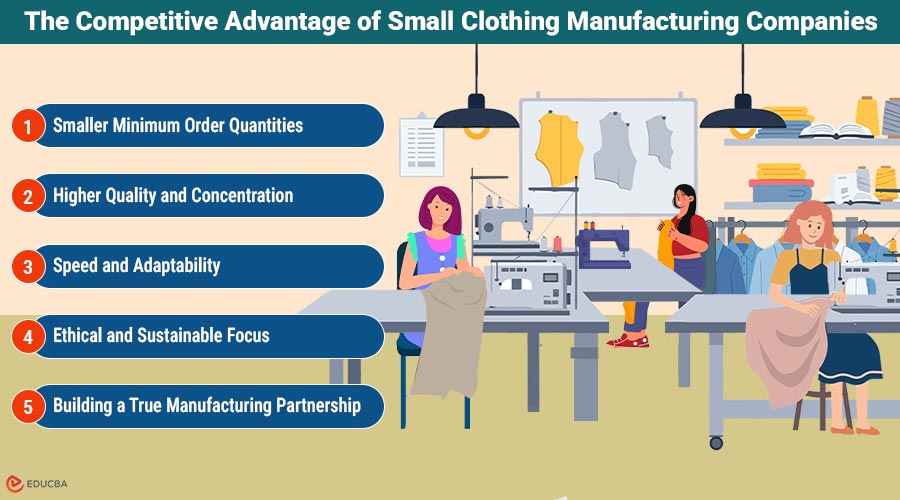
The Competitive Advantage of Small Clothing Manufacturing Companies
Choosing the right production partner is one of the most important decisions you will make. Small-scale clothing manufacturers are the most effective way to help startups and growing brands succeed.
1. Smaller Minimum Order Quantities (MOQs)
MOQ is the abbreviation for minimum order quantity. This is the minimum quantity of product a factory will manufacture in a single batch for an order. Generally, big factories need at least thousands of units. The cost of that is a big risk for any new brand. Small clothing manufacturing companies have much lower MOQs. For example, they usually make between 50 and 500 units of a type. Hence, you can test new styles without the fear of producing a mountain of unsold clothing. Thus, you save on the costs and contribute to waste reduction.
2. Higher Quality and Concentration
When factories are making fewer products, they can concentrate more on the quality. Your garments will be given the attention they need. As a result, there will be perfect threading, neat details, and a much higher-quality finished product. You can have a direct conversation with the people behind your clothes. This open discourse helps you prevent mistakes and lets you produce your design exactly as you envisioned.
3. Speed and Adaptability
The fashion industry is a fast-paced environment. Small-scale production helps keep you on track. You can efficiently start a trend by rolling out a new design. If you decide to make adjustments, it is easier to do so with a smaller size. Generally, it is faster; therefore, your product will be available on the market sooner.
4. Ethical and Sustainable Focus
Small-scale production is inherently more sustainable. By creating only what you need, you eliminate waste. Many very small factories also prioritize ethics and use eco-friendly materials in their manufacturing processes. Such practices align with the new values of customers who care about the making of their clothing. Great partners for sustainability are the small-batch work uniform manufacturers whose manufacturing practices guide you.
5. Building a True Manufacturing Partnership
A relationship with a small producer is not just a business deal but a real partnership. They care about your success, for your growth also means theirs. For instance, Chenglin Clothing usually acts as an actual partner. They provide guidelines and support as you build your brand.
Where to Find Small Clothing Manufacturing Companies?
Finding the right factory is a cornerstone of success. It calls for time and careful reflection. Partners build the strongest relationships when both sides align from the start. There are many places where you can make good partners. It is a good idea to explore several options to find the best fit for your brand’s needs.
- Online Directories: Websites like Maker’s Row and Sewport connect designers with factories. They are the best platforms for finding local manufacturers.
- Trade Shows: Events, whether online or in-person, are the best way to meet producers face to face.
- Networking: Seek referrals from fashion groups or other designers. A referral from a trusted person is worth its weight in gold.
- Google Searches: Choose the right terms. You can use ‘low moq cut and sew usa’, ‘sustainable apparel producer’, or ‘small batch activewear factory’ to identify specialists.
Key Questions to Ask Before Choosing a Manufacturer
Once you have identified the potential partners, you need to interview them. Below are the necessary questions that should guide your exchange.
Q1. What is Your Specialty?
Answer: Your factory should have experience with your product type, whether it is t-shirts, denim, or swimwear.
Q2. Can I See Your Work?
Answer: Ask for samples of past projects. This lets you check their quality and skill with your own hands.
Q3. What are Your MOQs and Prices?
Answer: Get all costs upfront. Ask about the per-unit price, sampling fees, and any other charges.
Q4. What is Your Lead Time?
Answer: Understand their full timeline, from when you approve the sample to when the final order is delivered.
Q5. How Do You Handle Communication?
Answer: A good partner will have a clear process and assign a main contact for all questions.
Q6. Can You Provide References?
Answer: Speaking with other brands they have worked with gives you honest insight into their reliability and quality.
Q7. What is Your Policy on Errors?
Answer: Mistakes can happen. A trustworthy factory will have a clear plan to fix any errors at its own cost.
Preparing for Production: The Importance of a Tech Pack
Before a factory can make your clothes, they need a detailed plan. This plan is called a tech pack. It is one of the most important documents in clothing production.
What is a Tech Pack?
A tech pack acts as a detailed blueprint for your garment. It is a document that contains every single detail and instruction needed to make your product correctly. It is the universal language between you and your producer. A great tech pack removes guesswork, prevents costly mistakes, and makes sure you get exactly what you designed.
Key Parts of a Tech Pack
A professional tech pack should include several key parts. Working with professional small clothing manufacturing companies requires this level of detail to bring your vision to life.
- Technical Flats: These are simple, black-and-white drawings of your garment. They show the front, back, and side views with all the seam details.
- Bill of Materials (BOM): A list of everything needed to make the garment. It includes fabric, thread, zippers, buttons, and labels.
- Graded Spec Sheet: This sheet lists the exact measurements for every size you plan to produce (e.g., small, medium, large).
- Construction Details: Written instructions for building the garment. It includes topics such as stitch types, seam finishes, and attaching pockets or collars.
- Colorway & Artwork Info: This section specifies the exact colors (using Pantone codes) and gives details on the placement and size of any prints or embroidery.
The Reality Check: Potential Challenges
While there are many benefits, it is important to know the potential challenges of working with small factories. Knowing these ahead of time helps you plan.
1. Higher Per-Unit Costs
Making things in small batches often costs more per item. This is because the factory has setup costs for each new style. They also cannot buy materials in bulk at discounted prices. Think of this higher price as an investment in quality, flexibility, and lower overall risk.
2. Limited Capacity for Growth
A small producer is a great way to start. But they may not be able to handle a sudden, huge increase in your orders. It is important to talk about your growth plans with them. A good partner will be honest about what they can handle.
3. Finding the Right Fit Takes Time
The search for the perfect partner can take time. Do not get discouraged. It is better to spend extra time finding the right factory than to rush into a bad partnership. The checking process is your best tool for success.
Final Thoughts
Choosing to work with small clothing manufacturing companies is a smart decision that can define your brand’s future. They are not just suppliers. They are key partners who provide the flexibility, quality, and support that new brands need to thrive. The journey from a design sketch to a finished collection is complex. But it does not have to be overwhelming. By focusing on a strong partnership and clear communication, you can build a successful and sustainable fashion brand. The right partner is out there. Use this guide to start your search with confidence.
Frequently Asked Questions (FAQs)
Here are answers to some of the most common questions about working with small-scale apparel producers.
Q1. What is a Realistic Budget for a Small Production Run?
Answer: This varies a lot. It depends on how complex your design is, the fabric you choose, and the factory’s location. For a new brand, plan for sampling costs. These can be $100 to $500 per style. A small production run of 50 units could cost anywhere from a few thousand dollars to up. Always get a detailed quote.
Q2. Should I Opt for a Domestic Manufacturer or Work with an Overseas One?
Answer: Domestic (in your own country) usually means faster shipping, easier communication, and more control over quality. It can also cost more. Overseas factories may offer lower prices but may also involve language barriers, longer shipping times, and more complex logistics. The right choice depends on what your brand values most: cost, speed, or quality.
Q3. Do I Need a Full Tech Pack to Get a Quote?
Answer: You can often get an early price estimate with detailed drawings, fabric ideas, and the number of units you want. However, a factory can not give you a final, locked-in price until they see a complete tech pack. The final price depends on the final details.
Q4. How Can I Protect My Designs?
Answer: Good factories operate with honesty. However, it is smart to protect your creative work. Have a potential partner sign a Non-Disclosure Agreement (NDA) before sharing your detailed tech packs. This is a standard business practice.
Q5. What is “Cut and Sew” vs. “Private Label”?
Answer: “Cut and sew” is the method most small clothing manufacturers use. They create your unique product from raw fabric, based on your custom design. “Private label” is when you take a generic, pre-made garment that a factory already produces and simply add your brand’s label. As you can see in lists of top producers like the 9 Best Clothing Manufacturers for Startups | TRUiC, many specialize in one or the other.
Recommended Articles
We hope this guide on small clothing manufacturing companies helps you find the right production partner. Check out these recommended articles for more tips and strategies to grow your fashion brand.

