
Introduction
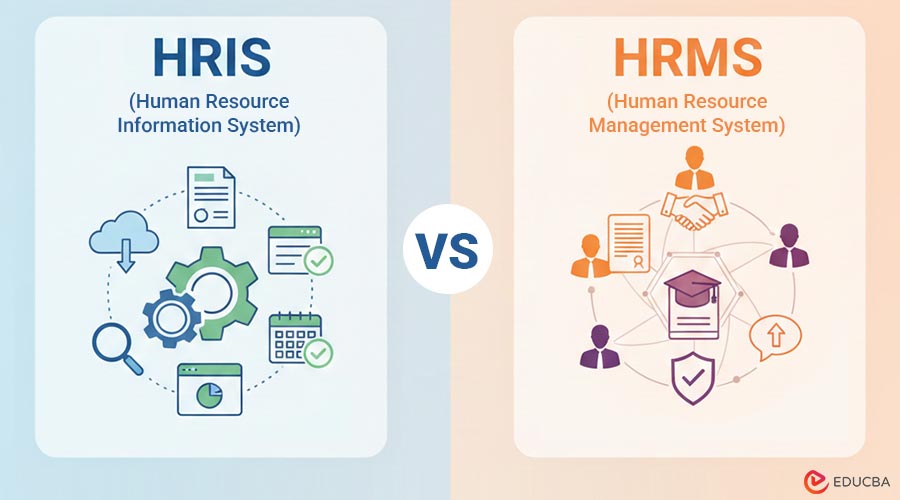
Human Resource (HR) management has evolved substantially with technology. Organizations no longer rely on manual spreadsheets or paper files to store employee data. Instead, software solutions streamline processes such as payroll, attendance, benefits management, and employee records. When evaluating HRIS vs HRMS, organizations often look for tools that can improve efficiency and reduce administrative workload.
Two prominent types of HR software are HRIS and HRMS. While both aim to improve HR efficiency, their scope, functionalities, and strategic applications differ. Selecting the right system can optimize HR operations, improve compliance, and enhance employee experience.
Table of Contents:
- Introduction
- What is HRIS?
- What is HRMS?
- Key Differences
- Advantages and Disadvanatges
- Use Cases
- Real-World Examples
What is HRIS?
Human Resource Information System (HRIS) is software application designed to store and manage employee data and HR-related information. HRIS primarily focuses on data management, record keeping, and compliance. It acts as a central repository for all employee information, including personal details, job history, benefits, attendance, and payroll data.
Key Features:
- Employee Database Management: Stores employee personal and professional information in a secure, centralized system.
- Payroll Management: Automates payroll calculation and ensures compliance with tax and statutory regulations.
- Attendance & Leave Tracking: Tracks employee attendance, leave balances, and time-off requests.
- Compliance Management: Helps organizations comply with labor laws and maintain audit-ready records.
What is HRMS?
Human Resource Management System (HRMS) is more comprehensive software solution that includes all the features of an HRIS but goes beyond basic HR record management. HRMS combines HR functions with operational processes to support strategic HR management, workforce optimization, and employee engagement.
Key Features:
- All HRIS Functions: Includes payroll, employee records, compliance, and reporting.
- Talent Management: Supports recruitment, onboarding, performance management, and succession planning.
- Learning & Development: Manages employee training programs, certifications, and skill development.
- Employee Self-Service: Allows employees to access and update personal information, submit leave requests, and track performance.
Key Differences Between HRIS and HRMS
The following table summarizes the primary differences between HRIS and HRMS:
| Feature | HRIS | HRMS |
| Definition | Software for storing and managing employee information | Software that manages employee information and automates HR processes |
| Primary Purpose | Data storage and reporting | Data management and HR process automation |
| Functionality | Core HR functions like attendance, personal info, and leave | Extended HR functions, including payroll, performance, and recruitment |
| Complexity | Less complex, primarily focused on records | More complex, integrates multiple HR modules |
| Best Suited For | Small to medium businesses with limited HR processes | Medium to large businesses with complex HR workflows |
| Cost | Generally lower | Higher due to advanced features |
Use Cases of HRIS and HRMS
Here are some common use cases for HRIS and HRMS, highlighting how these systems support HR functions:
Use Cases of HRIS:
- Employee Record Keeping: Centralizes employee personal, job, and employment history data for accurate, secure, and consistent record management.
- Compliance Management: Helps organizations follow labor laws by maintaining audit-ready records, policies, and regulatory compliance documentation.
- Attendance & Leave Tracking: Tracks employee working hours, absences, and leave balances accurately to improve workforce transparency and planning.
- HR Analytics & Reporting: Provides actionable insights through reports on workforce trends, turnover, attendance, and other key HR metrics.
Use Cases of HRMS:
- Employee Record Keeping: Centralizes employee personal, job, and employment history data for accurate, secure, and consistent record management.
- Compliance Management: Maintains audit-ready records, procedures, and regulatory documents to assist enterprises in adhering to labor laws.
- Attendance & Leave Tracking: Tracks employee working hours, absences, and leave balances accurately to improve workforce transparency and planning.
- HR Analytics & Reporting: Provides actionable insights through reports on workforce trends, turnover, attendance, and other key HR metrics.
Advantages and Disadvantages of HRIS vs HRMS
Here is a detailed look at the advantages and disadvantages of HRIS and HRMS, helping organizations make informed choices:
Advantages of HRIS:
- Cost-Effective: Reduces software, infrastructure, and administrative expenses, making it suitable for small organizations.
- Easy to Implement: Allows quick deployment of basic HR functions without heavy customization or technical expertise.
- Simplifies Administrative Tasks: Centralizes employee records, minimizing paperwork, duplication, and manual data handling.
- Improves Data Accuracy and Compliance: Ensures consistent records, controlled access, and better adherence to compliance requirements.
Disadvantages of HRIS:
- Limited Strategic Value: Focuses mainly on administrative tasks rather than long-term workforce planning and strategy.
- Lacks Advanced Talent Management: Does not support performance management, learning, succession planning, or employee development.
- Minimal Automation Capabilities: Many HR processes remain manual, increasing effort, processing time, and the risk of errors.
- Low Scalability for Growing Organizations: Struggles to support complex workflows, integrations, and expanding workforce requirements.
Advantages of HRMS:
- End-to-End HR Coverage: Manages recruitment, payroll, performance, learning, and workforce operations in one system.
- Supports Employee Growth and Engagement: Offers tools for performance tracking, training, feedback, and development planning.
- Data-driven Decision-Making: Uses analytics, dashboards, and reports to deliver actionable workforce insights.
- Scalable and Future-Ready: Adapts to organizational growth with advanced integrations, customization, and global support.
Disadvantages of HRMS:
- Higher Implementation Cost: Requires significant investment for licensing, customization, infrastructure, and consulting services.
- Complex System Setup: Demands detailed planning, configuration, integrations, testing, and technical expertise.
- Training and Change Management Required: Users need ongoing training to ensure adoption, efficiency, and effective system utilization.
- Ongoing Maintenance Overhead: Regular updates, security patches, compliance changes, and system optimization increase operational effort.
Real-World Examples
Here are some practical examples of HRIS and HRMS in action:
1. HRIS
BambooHR is a popular HRIS platform used by small and medium-sized enterprises. It focuses on employee data management, leave tracking, and reporting.
2. HRMS
Workday is a comprehensive HRMS solution used by large corporations. It manages payroll, recruitment, performance, training, and workforce planning in one platform.
Final Thoughts
Understanding the differences between HRIS vs HRMS is crucial for optimizing HR operations. HRIS suits organizations focused on employee data management and basic reporting, while HRMS provides end-to-end automation, covering payroll, recruitment, and performance management. Evaluate your organization’s needs, size, and budget to choose the right system.
Frequently Asked Questions (FAQs)
Q1. Can HRIS and HRMS be used interchangeably?
Answer: No, while HRIS focuses on data storage and HR reporting, HRMS integrates these functions with automated processes for payroll, recruitment, and performance management.
Q2. Which is better for small businesses?
Answer: HRIS is usually more suitable for small businesses due to its simpler setup and lower cost.
Q3. Can HRMS replace HRIS?
Answer: Yes, HRMS includes all HRIS functionalities and extends them with additional automation and process management.
Q4. Are cloud-based HRIS and HRMS different?
Answer: Both can be cloud-based. The distinction lies in functionality: HRMS offers more integrated and automated HR processes than a cloud-based HRIS.
Recommended Articles
We hope that this EDUCBA information on “HRIS vs HRMS” was beneficial to you. You can view EDUCBA’s recommended articles for more information.


