


Understanding CPR for an Unresponsive Choking Adult
Choking emergencies can escalate rapidly, especially when an adult becomes unresponsive. Knowing the correct response in these situations is critical, as improper action can delay oxygen delivery and worsen outcomes. Many people ask how CPR differs in an unresponsive adult choking victim, and the answer lies in understanding how airway obstruction changes the standard approach to cardiopulmonary resuscitation (CPR).
Why Choking Requires a Different Response?
In a typical cardiac arrest scenario, CPR focuses on restoring circulation and oxygen delivery through chest compressions and rescue breaths. However, when an adult is unresponsive due to choking, the primary issue is a blocked airway. The obstruction prevents oxygen from reaching the lungs, even when you perform compressions correctly.
This distinction is crucial for healthcare professionals, caregivers, and members of the public. Recognizing that choking is the root cause guides responders toward techniques that prioritize clearing the airway while still maintaining circulation.
What Happens When an Adult Becomes Unresponsive While Choking?
A choking adult may initially exhibit signs such as throat-clutching, inability to speak, or ineffective coughing. If the obstruction is not relieved and oxygen deprivation continues, the person can lose consciousness. At this stage, the emergency response shifts.
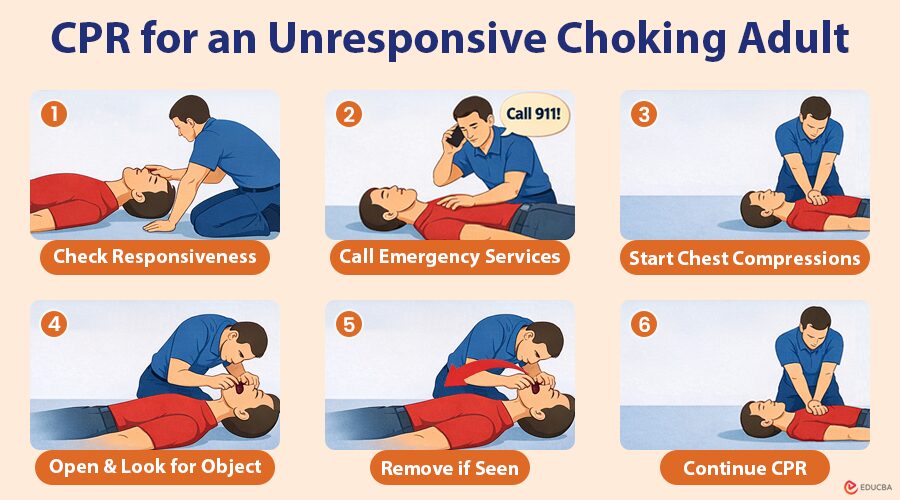
When the adult becomes unresponsive, the rescuer stops performing abdominal thrusts. Instead, the rescuer must carefully lower the person to the ground, activate emergency medical services, and begin CPR for an unresponsive choking adult with modifications specific to choking-related cardiac arrest.
Key Differences in CPR for Unresponsive Choking Adult
The most important difference in CPR for an unresponsive choking adult is the emphasis on airway inspection and obstruction removal. Chest compressions circulate blood and can also help dislodge the object blocking the airway.
After each set of compressions, the rescuer should open the airway and look for a visible object in the mouth. Carefully remove the object if you can see it. Avoid blind finger sweeps, because they may push the object further down the airway.
Rescue breaths are attempted only after ensuring the airway is as clear as possible. If breaths do not go in, the rescuer immediately resumes compressions and continues the cycle until the airway is cleared or emergency responders arrive.
How does this differ from Standard CPR?
In standard adult CPR for cardiac arrest without choking, the airway is typically open, allowing rescue breaths to be delivered more effectively. The rescuer focuses on high-quality chest compressions and regular ventilation without the added step of checking for an obstruction.
In cases of choking-related unresponsiveness, ventilation may initially be ineffective due to the obstruction. This is why airway checks become a critical part of the CPR for an unresponsive choking adult sequence. The goal is not only to support circulation but also to relieve the obstruction preventing oxygen flow.
Who Should Learn CPR for an Unresponsive Choking Adult?
Understanding CPR for an unresponsive choking adult is essential for a wide range of people:
- Healthcare professionals: Handle airway emergencies in clinical or community settings.
- Childcare and education workers: Supervise groups and respond quickly to emergencies.
- Fitness and wellness professionals: Act during sudden medical incidents in gyms, studios, or recreational environments.
- Parents, caregivers, and the general public: Respond promptly to choking emergencies at home or in public spaces.
Proper training ensures that responders act confidently and correctly, reducing hesitation during high-stress moments.
The Importance of Proper CPR Education
CPR guidelines address different emergency scenarios, but many people misunderstand choking-related cardiac arrest. Without proper education, well-intentioned responders may apply incorrect techniques, delaying effective care.
Quality CPR and first aid training emphasizes scenario-based learning, helping individuals recognize when modifications are required. This type of education improves decision-making and reinforces the importance of following evidence-based protocols.
Building Confidence Through Knowledge and Practice
Emergencies are unpredictable, and confidence comes from preparation. Understanding CPR for an unresponsive choking adult empowers individuals to respond appropriately when seconds matter. Training that covers both standard CPR and choking-specific modifications ensures responders are ready for a wide range of situations.
As more Canadians seek flexible ways to build lifesaving skills, online education continues to play an important role in expanding access to accurate, up-to-date training.
Final Thoughts
Knowing how to respond to an unresponsive adult choking victim can save lives. The key lies in recognizing airway obstruction, adapting CPR techniques, and acting quickly and confidently. For those looking to strengthen their understanding of CPR for an unresponsive choking adult, BLS, and first aid through accessible, Canada-focused education, Simple CPR offers comprehensive online training designed to support real-world readiness and informed emergency response.
Recommended Articles
We hope this guide to CPR for unresponsive choking adults helps you understand how to respond quickly, clear airways effectively, and improve emergency outcomes. Explore these recommended articles for expert insights, practical techniques, and the latest trends in first aid, CPR training, and lifesaving skills.

