
What is Lifecycle Marketing?
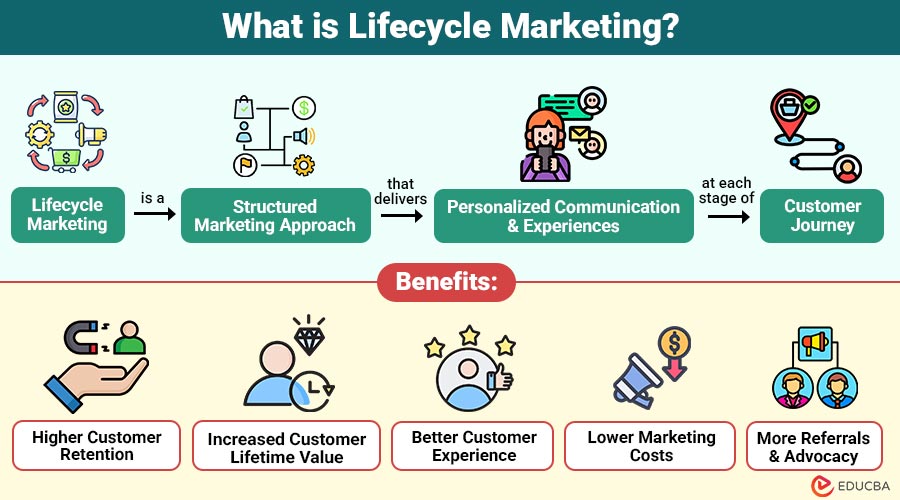
Lifecycle marketing is a structured marketing approach that delivers personalized communication and experiences at each stage of the customer journey. It focuses on understanding customer needs across touchpoints and using targeted messaging to drive conversions, retention, and loyalty.
Instead of using one-size-fits-all messaging, lifecycle marketing tailors campaigns based on customer behavior, preferences, engagement history, and stage in the funnel. This ensures that every interaction feels relevant and timely.
Table of Contents:
- Meaning
- Key Objectives
- Why Lifecycle Marketing Matters?
- Stages
- Strategy
- Benefits
- Challenges
- Examples
Key Takeaways:
- Lifecycle marketing delivers personalized, timely experiences that effectively guide customers from awareness to loyalty.
- Data-driven segmentation and automation improve engagement, retention, and customer lifetime value across channels.
- Aligning messaging with lifecycle stages reduces marketing waste and increases conversion and revenue growth.
- Continuous measurement and optimization ensure lifecycle strategies remain relevant, scalable, and customer-centric long term.
Key Objectives of Lifecycle Marketing
Here are the key objectives of lifecycle marketing that guide customer engagement from acquisition to long-term loyalty:
1. Improve Acquisition Efficiency
Optimize marketing efforts to attract qualified prospects faster while reducing acquisition costs and resource waste overall.
2. Accelerate Onboarding and Adoption
Simplify onboarding experiences to help customers quickly understand value, use features effectively, and adopt products faster.
3. Increase Engagement and Satisfaction
Increase meaningful interactions across touchpoints to keep customers engaged, satisfied, and emotionally connected over long term.
4. Reduce Churn and Improve Retention
Identify at-risk customers early and deliver timely interventions that consistently drive loyalty and retention growth.
5. Increase Customer Lifetime Value
Maximize revenue from each customer through upselling, cross-selling, retention strategies, and long-term engagement initiatives.
Why Lifecycle Marketing Matters?
Here are the key reasons why lifecycle marketing is essential for delivering meaningful, efficient, and revenue-driven customer experiences.
1. Deliver Timely and Relevant Experiences
Align messages with each customer’s journey stage to increase relevance, engagement, and response rates.
2. Reduce Marketing Waste
Target the right customers at the right time to minimize unnecessary spending and ineffective campaigns.
3. Drive Revenue Growth
Retained, loyal customers purchase more frequently, increase lifetime value, and refer new customers.
4. Create a Unified Customer Experience
Integrate email, SMS, push, web, and ads for consistent cross-channel customer experiences.
Customer Lifecycle Stages
While models vary across industries, the standard customer lifecycle includes these stages:
1. Awareness
The stage where potential customers first discover a brand, product, or solution through marketing exposure.
- Goal: Capture attention and spark curiosity.
- Strategies: Content marketing, SEO, social ads, and educational videos.
2. Engagement
The stage at which customers actively interact with content, explore information, and begin to build initial trust.
- Goal: Build trust and interest.
- Strategies: Newsletters, lead magnets, product demos, and remarketing ads.
3. Consideration
Customers research options, weigh advantages, and determine which solution best suits their needs at this point.
- Goal: Influence decision-making with value propositions.
- Strategies: Case studies, personalized offers, product comparisons.
4. Conversion
The stage where customers complete a purchase, subscription, or desired action, becoming paying customers.
- Goal: Make the purchase process seamless.
- Strategies: Onboarding emails, discount codes, checkout optimization.
5. Onboarding
The stage where customers learn product usage, experience value quickly, and gain confidence using solutions.
- Goal: Ensure quick adoption and satisfaction.
- Strategies: Tutorials, welcome series, step-by-step guides.
6. Retention
The stage at which customers remain active, satisfied, and loyal, and maintain long-term relationships with the brand.
- Goal: Maintain interest and prevent churn.
- Strategies: Loyalty programs, personalized recommendations, proactive engagement.
Lifecycle Marketing Strategy
A successful lifecycle marketing strategy requires alignment between data, channels, customer insights, and automation. Here is a step-by-step framework:
1. Map the Customer Journey
Identify all customer touchpoints—from discovery to post-purchase.
Document their behaviors, needs, barriers, and decision triggers at each stage.
2. Segment Your Audience
Create segments using:
- Demographics
- Behavior (browsing, purchase history)
- Engagement (email opens, app activity)
- Lifecycle stage
- Psychographics
Segmentation enables accurate targeting and messaging personalization.
3. Personalize Messaging & Content
Craft unique messages for each lifecycle stage:
- Awareness → educational content
- Consideration → product benefits
- Conversion → discounts, social proof
- Retention → loyalty offers
- Advocacy → referral incentives
Personalization boosts engagement by up to 60%.
4. Select the Right Channels
Common lifecycle marketing channels include:
- Email marketing
- SMS and WhatsApp
- Push notifications
- Social media
- In-app messages
- Paid ads
- Web personalization
Choose channels based on customer behavior and platform usage.
5. Automate Customer Journeys
Automation tools help trigger personalized workflows, such as:
- Welcome series
- Abandoned cart reminders
- Re-engagement sequences
- Upsell/cross-sell recommendations
- Renewal reminders
Marketing automation ensures consistent, timely communication without manual effort.
6. Measure & Optimize
Track KPIs such as:
- Conversion rate
- Retention rate
- Customer lifetime value (CLV)
- Churn rate
- Engagement metrics
- Revenue per user
Use insights to refine messaging, targeting, and journey flow.
Benefits of Lifecycle Marketing
Here are the key benefits that show how lifecycle marketing drives retention, revenue, and long-term customer relationships.
1. Higher Customer Retention
Personalized, timely interactions keep customers engaged, reducing churn and encouraging consistent long-term brand relationships.
2. Increased Customer Lifetime Value
Relevant lifecycle campaigns motivate repeat purchases, upsells, and long-term loyalty across every customer touchpoint.
3. Better Customer Experience
Context-aware communication delivers meaningful value, strengthening trust, satisfaction, and emotional connections with the brand.
4. Lower Marketing Costs
Precise targeting minimizes wasted ad spend by focusing efforts on high-intent, high-value customer segments.
5. More Referrals & Advocacy
Positive lifecycle experiences inspire loyal customers to recommend the brand through reviews, referrals, and word-of-mouth.
Challenges in Implementing Lifecycle Marketing
Here are the key challenges organizations face when executing lifecycle marketing effectively across channels and customer touchpoints.
1. Data Silos
Fragmented customer data across systems limits unified insights, significantly reducing overall personalization accuracy and campaign effectiveness.
2. Complex Customer Journeys
Nonlinear, multi-channel customer journeys complicate mapping stages, requiring flexible, dynamic workflows and continuous optimization across channels.
3. Resource Limitations
Limited budgets, skills, and time hinder the development of scalable automation, analytics, and content for successful lifecycle execution.
4. Over-Personalization Risks
Excessive personalization can feel intrusive, erode trust, cause discomfort, and negatively affect customer perception of the brand.
Lifecycle Marketing Examples
Here are some real-world examples of lifecycle marketing:
1. E-Commerce Platform
Sends abandoned cart reminders, product recommendations, loyalty points notifications, and win-back offers.
2. SaaS Company
Uses onboarding guides, feature adoption emails, renewal reminders, and churn prediction workflows.
3. Banking & Fintech
Sends personalized investment suggestions, transaction alerts, and rewards-based account engagement.
4. Fitness & Wellness Apps
Send habit reminders, weekly progress reports, and achievement badges.
Final Thoughts
Lifecycle marketing is no longer optional—it is a necessity for brands aiming to build long-lasting relationships and sustainable growth. By understanding customer needs at every stage and delivering personalized experiences, businesses can boost engagement, retention, and advocacy. With the right data, strategy, and automation tools, lifecycle marketing becomes a powerful engine that drives long-term profitability.
Frequently Asked Questions (FAQs)
Q1. Why is lifecycle marketing important?
Answer: It improves retention, boosts CLV, reduces churn, and enhances customer experience.
Q2. What tools are used for lifecycle marketing?
Answer: HubSpot, Salesforce, Klaviyo, Braze, MoEngage, Mailchimp, CleverTap, and Zoho CRM.
Q3. What is the difference between lifecycle marketing and customer journey?
Answer: Lifecycle marketing focuses on engagement strategy, while the customer journey maps the phases a customer experiences.
Q4. Can lifecycle marketing apply to all industries?
Answer: Yes—it benefits SaaS, e-commerce, BFSI, healthcare, travel, education, and many more.
Recommended Articles
We hope that this EDUCBA information on “Lifecycle Marketing” was beneficial to you. You can view EDUCBA’s recommended articles for more information.

