
What is Hyperlocal Marketing?
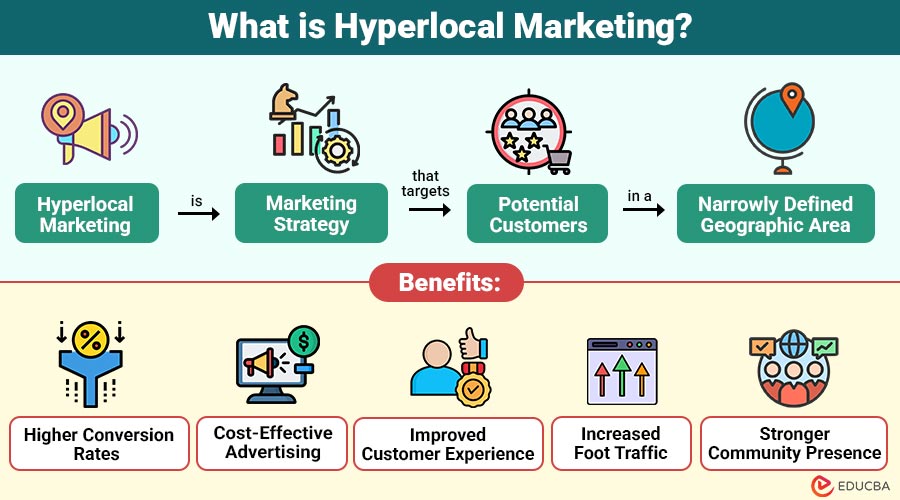
Hyperlocal marketing is marketing strategy that targets potential customers in a narrowly defined geographic area. Unlike traditional local marketing, which may cover an entire city or region, hyperlocal marketing zooms in on micro-locations such as residential blocks, shopping zones, or business districts.
The primary objective of hyperlocal marketing is to connect with nearby consumers actively searching for products or services in their immediate area. Small and medium-sized enterprises, retail establishments, eateries, service providers, and franchises benefit greatly from this strategy.
Table of Contents:
Key Takeaways:
- Hyperlocal marketing focuses on micro-areas to reach nearby customers with immediate needs and intent.
- Location data and mobile-first technologies enable highly relevant, timely, and personalized local marketing messages.
- Businesses achieve higher conversions and lower costs by avoiding broad targeting and wasted advertising spend.
- Success depends on accurate data, localized content, privacy compliance, and the right mix of digital tools.
How Does Hyperlocal Marketing Work?
Hyperlocal marketing leverages location-based data and digital technologies to deliver relevant content. It typically works through the following mechanisms:
1. Geolocation and GPS Data from Smartphones
Brands use smartphone GPS and geolocation data to target users with offers relevant to nearby locations.
2. IP-based Location Tracking
IP address tracking helps identify approximate user locations, enabling region-specific ads and localized digital experiences online.
3. Search Intent Signals (“near me” queries)
Search intent signals, such as near-me queries, reveal immediate local needs and drive timely visibility for businesses.
4. Mobile Apps and Push Notifications
Mobile apps send push notifications based on proximity, promotions, and user behavior to increase engagement locally.
5. Local Listings and Maps
Local listings and map platforms help businesses appear in local search, directions, reviews, and discovery results.
Key Components of Hyperlocal Marketing
Below are the key components that collectively enable effective, location-focused customer engagement strategies.
1. Location-Based Targeting
Location-based targeting is the foundation of hyperlocal marketing. Businesses use GPS, Wi-Fi, or mobile data to identify users within a specific radius.
2. Local Search Optimization
Optimizing for local and hyperlocal search terms ensures that businesses appear in relevant searches. Examples include keywords like “coffee shop near me” or “plumber in Andheri East.”
3. Personalized Messaging
Hyperlocal campaigns focus on personalized content such as local language, regional preferences, weather-based offers, or time-specific promotions.
4. Mobile-First Approach
Since most hyperlocal interactions happen on mobile devices, campaigns are designed primarily for smartphones.
Hyperlocal Marketing Strategies
The following strategies help businesses effectively reach and engage customers within specific micro-locations.
1. Google Business Profile Optimization
Optimizing a Google Business Profile with accurate address details, photos, reviews, and business hours helps improve visibility in local and hyperlocal search results.
2. Geofencing Campaigns
Geofencing allows businesses to set virtual boundaries around specific locations. When users enter these areas, they receive ads, notifications, or promotional messages.
3. Local Paid Advertising
Platforms like Google Ads and social media allow advertisers to run location-specific campaigns targeting users within a defined radius.
4. Local Social Media Marketing
Social media platforms enable hyperlocal targeting based on location, interests, and behavior. Community groups and local hashtags further enhance visibility.
5. Partnerships with Local Businesses
Collaborating with nearby businesses helps expand reach and build trust within the local community.
Benefits of Hyperlocal Marketing
Hyperlocal marketing offers measurable benefits by connecting businesses with nearby, high-intent customers.
1. Higher Conversion Rates
Since hyperlocal marketing targets users with immediate intent, conversion rates are often higher than those of broad campaigns.
2. Cost-Effective Advertising
Focusing on a small geographic area reduces ad spend and minimizes wasted impressions.
3. Improved Customer Experience
Personalized and location-relevant messaging enhances the overall customer experience.
4. Increased Foot Traffic
Hyperlocal promotions effectively drive walk-in customers to physical stores.
5. Stronger Community Presence
Consistent local engagement helps businesses build trust and brand loyalty within the community.
Challenges of Hyperlocal Marketing
While highly effective, hyperlocal marketing presents several operational and strategic challenges for businesses.
1. Data Privacy Concerns
Collecting and using location data requires strict compliance with privacy laws and clear user consent mechanisms.
2. Limited Audience Size
Hyperlocal targeting limits reach by focusing on small areas, making large-scale campaign expansion challenging for brands.
3. Technology Dependence
Successful hyperlocal campaigns depend heavily on accurate technology platforms, tools, data integration, and specialized expertise teams.
4. Content Localization Effort
Producing customized content for many micro-locations increases workload, time investment, and operational complexity significantly for marketers.
Tools Used in Hyperlocal Marketing
These tools support precise location targeting, audience insights, and personalized engagement for hyperlocal campaigns.
1. Google Business Profile
Google Business Profile helps businesses appear in local searches, maps, reviews, and nearby customer discovery results.
2. Google Ads
Google Ads enables precise, location-based paid campaigns that target nearby users with relevant promotions and deliver measurable results.
3. Facebook & Instagram Ads
Facebook and Instagram Ads support hyperlocal targeting based on demographics, interests, behaviors, and real-time location data.
4. Location Analytics Platforms
Location analytics platforms analyze movement patterns, foot traffic, and proximity to deliver audience insights for marketers.
5. CRM Systems
CRM systems integrated with location data personalize outreach, track interactions, and improve local customer engagement effectiveness.
Real-World Examples
The following examples illustrate how businesses apply hyperlocal marketing in practical, results-driven scenarios.
1. Retail Stores
Retail brands use hyperlocal ads to promote limited-time offers to nearby customers, increasing impulse purchases.
2. Restaurants and Cafes
Restaurants send lunchtime deals or happy-hour offers to nearby users.
3. Service Providers
Plumbers, electricians, and home service providers target neighborhoods with high demand.
4. Events and Promotions
Event organizers promote nearby events to residents within a specific radius to maximize attendance.
Hyperlocal Marketing vs Local Marketing
The table below highlights the key differences between hyperlocal and local marketing.
| Aspect | Hyperlocal Marketing | Local Marketing |
| Target Area | Very small (street, neighborhood) | City or region |
| Personalization | Highly personalized | Moderately personalized |
| Cost | Lower | Medium to high |
| Conversion Rate | High | Moderate |
Final Thoughts
Hyperlocal marketing enables businesses to connect with nearby customers in a highly pertinent and timely manner. By focusing on precise locations, personalized messaging, and mobile-first strategies, organizations can improve visibility, drive foot traffic, and achieve higher conversions. Hyperlocal marketing will continue to be an effective tactic for companies looking to establish solid local ties and long-term growth as technology advances.
Frequently Asked Questions (FAQs)
Q1. Is hyperlocal marketing suitable for small businesses?
Answer: Yes, it is highly effective for small businesses due to its low cost and high targeting accuracy.
Q2. Which industries benefit most from hyperlocal marketing?
Answer: Retail, food and beverage, healthcare, real estate, and local services benefit significantly.
Q3. How is hyperlocal marketing different from geotargeting?
Answer: Hyperlocal marketing is a more refined form of geotargeting focused on micro-locations.
Q4. Does hyperlocal marketing work for online businesses?
Answer: Yes, especially for online businesses offering location-specific services or deliveries.
Recommended Articles
We hope that this EDUCBA information on “Hyperlocal Marketing” was beneficial to you. You can view EDUCBA’s recommended articles for more information.

