


Introduction to Lead Generation for Small Businesses
Customers are the lifeblood of every business, but they rarely come on their own. They are people who may need, want, or be curious about what you offer. Initially, they are strangers but through lead generation for small businesses, you can turn them into potential customers who know about your company and are ready to engage. For small businesses, finding new leads can be the difference between unpredictable sales and a steady flow of new customers.
While it might sound complicated, a well-planned lead generation strategy can make attracting leads easier and more consistent. This guide provides a step-by-step tutorial on lead generation for small businesses, designed to be practical and easy for real business owners to follow.
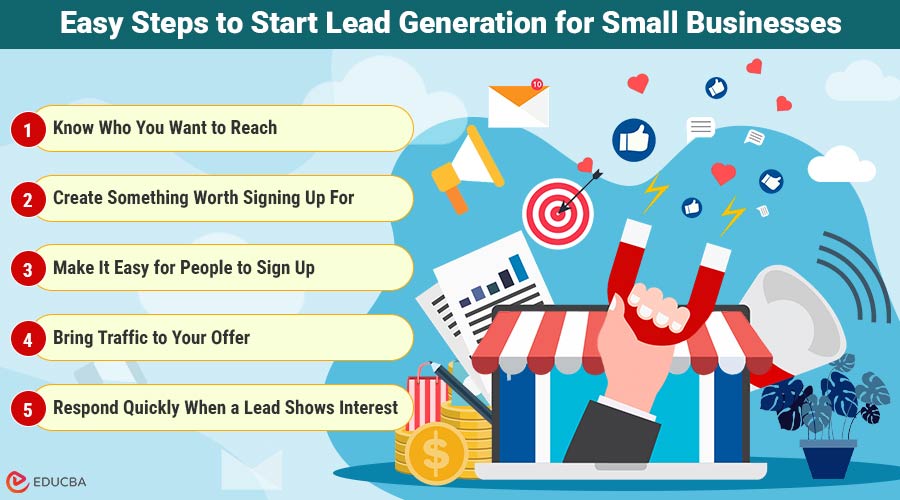
Easy Steps to Start Lead Generation for Small Businesses
This section outlines simple, actionable steps that help small businesses attract, capture, and convert leads effectively.
Step 1: Know Who You Want to Reach
Before running ads, writing emails, or creating offers, you need clarity about your ideal customer. When businesses try to appeal to everyone, they often end up connecting with no one. Lead generation becomes much easier when you understand whose problems you are solving. Think about what kind of person benefits most from your product or service.
What do they care about? What frustrates them? Where do they spend time online? The more specific you are, the easier it becomes to craft messages that speak to them. A well-defined audience provides direction for your marketing. Instead of guessing what people want, you communicate with purpose.
Step 2: Create Something Worth Signing Up For
People do not share their email or phone number without a reason. To turn visitors into leads, you need an offer that feels genuinely helpful. This could be a discount, a free consultation, a downloadable guide, a trial, or anything that addresses a small part of their problem. The key is relevance. If you run a fitness business, a free healthy meal plan makes sense. If you sell software, a trial or demo feels natural.
If you are a service provider, offering a quick diagnostic call or a checklist works well. A strong lead magnet gives potential customers a small win and builds trust before they spend anything.
Step 3: Make It Easy for People to Sign Up
Once you have a valuable offer, you need a simple way for people to claim it. This could be a landing page, a sign-up form, a QR code, or even a WhatsApp link. What matters most is simplicity. The message should be clear. Visitors should instantly understand what they are getting and how to get it. Avoid long paragraphs, confusing instructions, and multiple-choice options.
The fewer decisions a person has to make, the more likely they are to continue. A simple form and a clear promise outperform complicated sign-up flows every time.
Step 4: Bring Traffic to Your Offer
A great offer does not help if no one sees it. This is where promotion begins. Small businesses typically grow with a mix of organic content, paid ads, referrals, and local networking. Organic traffic comes from content you post on online social media updates, educational videos, search-optimized articles, or valuable community engagement. It takes time but builds trust and brand presence. Paid ads help you reach a targeted audience quickly, especially if you are short on time or want faster visibility. Platforms such as Google, Instagram, Facebook, LinkedIn, and YouTube can work well depending on your industry.
Referrals and partnerships may be the most underrated source of leads. Sometimes, working with complementary businesses or asking satisfied customers to recommend you can effortlessly generate high-quality prospects. Different channels work for different companies, such as those that operate an office or those that operate entirely remotely with virtual assistants. The important part is consistency.
Step 5: Respond Quickly When a Lead Shows Interest
One of the biggest reasons businesses lose leads is slow follow-up. When someone signs up or reaches out, they are most interested in that moment. Waiting hours or worse, days lowers the chance of conversion dramatically. Tools like SMSCountry enable small businesses to send instant OTPs, alerts, and automated responses as soon as a lead signs up, ensuring opportunities are not lost due to slow communication.
You can even set up a high-performing WhatsApp campaign to send instant welcome messages and follow-ups. Even automated follow-ups are better than no follow-up. Lead generation goes beyond collecting contact details it is about building meaningful relationships.
Step 6: Nurture People Who Are Not Ready Yet
Not everyone buys immediately. Some leads need proof, reassurance, reminders, or time. Instead of giving up, nurturing helps keep your business top of mind. That is where AI lead nurturing becomes especially valuable: automating timely follow-ups and delivering personalized content without manual effort. Sharing helpful information, success stories, behind-the-scenes content, case studies, or seasonal offers keeps leads engaged without putting pressure on them.
When they are finally ready to buy, they will remember the business that helped them, not the one that vanished after the first contact.
Step 7: Measure and Improve Over Time
Lead generation improves with observation. Once you start, pay attention to what is working and what is not. Maybe a social platform generates many leads, but another attracts higher-quality buyers. A shorter form converts more sign-ups. Your offer may need a more straightforward headline.
Using a lead management CRM helps track which channels, forms, and offers generate the best results, making it easier to analyze, refine, and optimize your lead generation system over time. Minor adjustments can dramatically improve results. Lead generation is an ongoing system that evolves as your business grows.
Why Many Small Businesses Struggle with Lead Generation?
The hardest thing is not having the chance to do something; it is that you cannot always count on things to remain the same. When sales are strong, many small businesses stop advertising and resume only when sales slow. This results in an unpredictable, ongoing stream of income. A consistent lead-generation technology ends that cycle. Trying to sell right away without building trust is another common problem.
People do not like feeling pushed, but they do want to feel seen, understood, and supported when making purchases. Good lead creation shows potential customers the value before expecting them to make a decision.
Final Thoughts
Lead generation for small businesses does not have to be complicated. You start by understanding your audience, providing useful content, making it simple to join, advertising consistently, responding quickly, sustaining interest, and improving over time. Generating leads the right way keeps your business alive. You do not just hope for customers; you create a steady stream of people who are already interested in what you have to give. If you do small things every day, you will get the best results.
Recommended Articles
We hope this guide on lead generation for small businesses helps you build a consistent flow of quality leads. Explore these recommended articles for more practical tips and strategies to grow your business.


