


Why Interactive Videos Are Becoming Essential for Modern Brands?
Video has become a primary format for explaining products, building brands, and training teams. However, audiences no longer accept a one-way flow of information. People now expect to click, respond, and choose what they want to see next, rather than just watching from start to finish. For modern organizations, this shift is significant. It influences campaign planning, storytelling, and performance measurement. Marketing managers, agency teams, content strategists, brand leaders, social media specialists, creative professionals, startups, and L&D departments all face similar pressures: they need content that holds attention and drives action, without overwhelming internal teams. In this context, interactive videos are becoming a practical way to meet changing expectations while staying within realistic timelines and budgets.
How Consumer Behavior is Changing Toward Active Content Participation?
Audiences today spend most of their digital time in interfaces that respond immediately: they filter search results, customise dashboards, and make choices in real time. When those same people watch brand content, they carry this habit with them. They want to control the pace, skip what they already know, and request more detail only when needed. A static, linear video often feels slow compared with the rest of their digital experience.
This shift is visible in everyday behavior. Viewers are willing to explore an interactive YouTube video that lets them select a topic or chapter, rather than watch a single, uninterrupted timeline. Buyers evaluating a product want quick access to pricing, feature breakdowns, and implementation details. Learners want to confirm whether they have understood a concept before moving on. In each of these cases, participation is not about entertainment alone; it is a simple expectation of how digital content should work.
Teams can use an interactive video platform such as Mindstamp to add questions, branching, buttons, hotspots, calls to action, and viewer-level analytics to existing videos without rebuilding their content workflow.
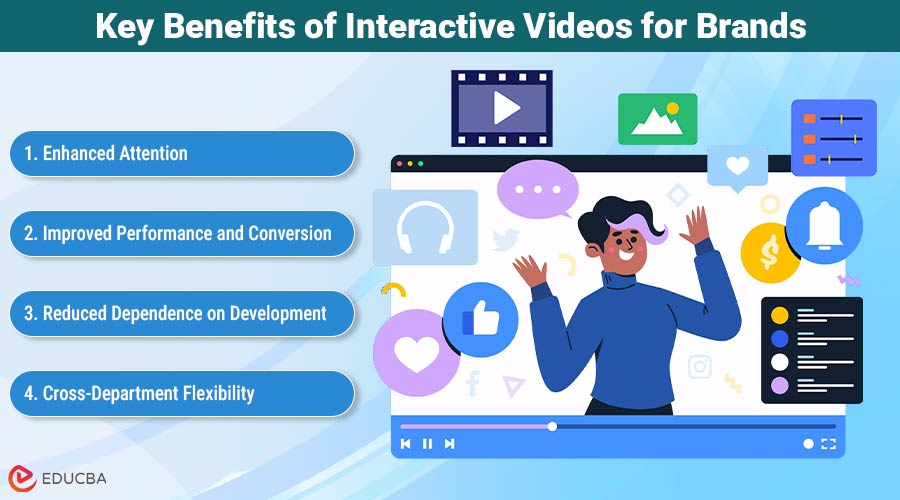
Key Benefits of Interactive Videos for Brands
Interactive videos offer several clear advantages for brands:
- Enhanced Attention: When viewers receive prompts to choose, answer, or react at specific moments, their focus naturally increases. Instead of passively consuming content, they remain engaged and present throughout the video. Well-structured interactive videos help people stay attentive to the message without forcing them to consume information that is not relevant to their needs.
- Improved Performance and Conversion: Interactive videos can shorten the path from interest to action. For example, potential customers can move from a high-level overview to a deeper feature explanation, compare plans, and even request a demo directly from the video player. This is especially important for paid campaigns and nurture sequences, where each additional page load increases the risk of losing a viewer.
- Reduced Dependence on Development: Modern interactive video software allows teams to design engaging video journeys without writing code. This reduces reliance on development resources and accelerates experimentation, making it easier to test different approaches quickly.
- Cross-Department Flexibility: The same interactive video content can be repurposed across departments. Product marketing teams can use core footage to address different verticals, social media teams can create short versions for various channels, and L&D teams can adapt content for employee onboarding or customer education.
Once a repeatable process is in place, interactive videos can serve multiple objectives while maintaining consistent design and analytics standards.
How Interactive Videos Strengthen Brand Storytelling?
Storytelling remains central to how brands stand out, but viewers gain more control over how that story unfolds. Rather than creating a single, long narrative that everyone feels obliged to read, teams can establish a primary path and then provide optional off-ramps for those who want more proof, context, or technical details. This ensures that different audiences get what they need from it without breaking the overall narrative.
A lot of creative teams begin by asking how to make a video interactive without breaking the emotional rhythm of the narrative. A useful technique for this is to look for natural breaks in the script where a listener might interrupt with a prompt to ask a question during an actual conversation. At such times, the video can simply offer the option to continue if you wish, go deeper into an example, or learn how another customer solved a similar problem.
Analytics That Go Beyond Views
Traditional video metrics, such as total views and average watch time, give only a partial picture of performance. They show how many people arrived and how long they stayed, but they do not explain what those people cared about most. Interactive formats add a different layer of information: which segments viewers choose, which explanations they repeat, and which actions they are willing to take during the experience itself.
When teams study this data carefully, they can adjust their content based on real behavior instead of guesswork. For example, if a large proportion of viewers select a specific chapter first, that topic might deserve more prominence in other campaigns. If a particular question consistently causes people to drop off, the wording or placement may need to change. Some organizations think of this as a form of ongoing video interaction guidance, where the content and the audience gradually teach each other what is most useful.
Challenges and Best Practices for Brands Getting Started
Transitioning from static videos to interactive videos can feel complex at first. Here are the key challenges and recommended best practices:
Key Challenges
- Complexity of Transition: Switching from static to interactive formats may feel overwhelming, especially for teams unfamiliar with branching content or decision points.
- Design Inconsistency: Buttons, overlays, and question prompts can become confusing if not standardized, particularly across different devices.
- Stakeholder Buy-In: Without visible results, it can be hard to convince stakeholders of the value of interactive videos.
- Operational Management: Scripts, branches, and assets can become difficult to document and maintain, risking delays in content calendars.
Best Practices
- Start with a Clear Objective: Focus on a single goal, such as addressing common objections in a sales process, and add only a few simple decision points.
- Maintain Design Consistency: Define a basic interaction style early and reuse it across projects instead of redesigning each experience from scratch.
- Run a Simple Pilot: Small-scale interactive videos can demonstrate value to stakeholders without large budgets or long timelines. Once stakeholders see engagement and conversions, support grows naturally.
- Plan Operationally: Clearly document scripts, branches, and assets to streamline production and avoid delays.
- Assign Clear Ownership and Processes: Use shared templates and a realistic approval workflow to prevent bottlenecks. Over time, interactive videos can become a recurring channel instead of a one-off project with special rules.
How Dadan Helps Teams Create Interactive Video Experiences?
Dadan is a comprehensive platform that helps marketing and learning teams create interactive videos within existing production workflows. Key features include:
- Unified Video Creation: Capture your screen, edit online, add interactive elements, and share with a single click. Instead of juggling separate tools for quizzes, polls, and calls to action, teams can build everything in one place and track how viewers engage with the content. This unified approach simplifies performance comparison across campaigns.
- AI-Powered Interactions for L&D: For learning and development or education teams, Dadan allows quizzes, polls, and feedback questions to be embedded directly into lesson or lecture content. Instructors can include short checks for understanding after key segments and prompt reflection with open-ended questions.
- Efficient Interactive Video Maker: The system can automatically generate draft questions from the material, making it easier for organizations to scale training and interactive video content without increasing headcount.
- Marketing Campaign Optimization: Marketing teams can use the platform to enhance video-led campaigns. Clear text overlays can highlight core features, benefits, or pricing. The platform also generates CTAs, quizzes, polls, and feedback interactions using AI, guiding viewers toward measurable outcomes while remaining aligned with brand guidelines.
- Faster Production with Transcript Video Editor: Dadan’s Transcript Editor lets teams edit videos as easily as a document. Long-form content can be converted into short-form videos using AI, significantly speeding up production.
- Lead Generation Capabilities: Teams can turn videos into lead magnets by adding forms directly to the video. Submissions can trigger workflows instantly, and integrations with 25+ tools or webhooks enable immediate capture and follow-up.
With Dadan, teams can efficiently create interactive videos that engage viewers, deliver measurable results, and streamline production across marketing and L&D initiatives.
The Future of Interactive Video Experiences
As audiences become accustomed to more responsive content, expectations will continue to rise. Viewers will look for videos that adapt to their level of knowledge and their current stage in the decision process, rather than presenting the same material to everyone. Over time, your own interactive video examples will evolve into a library that captures what truly works for your specific customers, industries, and regions. Technical capabilities are expanding at the same time. As infrastructure improves, formats such as interactive live video streaming will become more common in product launches, virtual events, and internal town halls.
Participants will be able to answer questions, select topics, and influence the flow of the session without leaving the stream. Teams that invest now in clear measurement, thoughtful structure, and responsible use of AI will be better prepared for these richer formats. The practical question for most organisations is how to create an interactive video without adding unnecessary complexity. The answer lies in setting precise goals, choosing a compact set of interactions, and learning from each release. With every iteration, the content becomes more aligned with what viewers actually do, which, in turn, makes subsequent planning and production more efficient.
Final Thoughts
Interactive videos are moving from experimental projects to everyday tools for modern brands. They allow marketing managers, agencies, and in-house teams to design content that responds to the viewer, gathers useful data, and leads to concrete actions, while still respecting time and attention. When planned carefully, these experiences support both brand storytelling and business results across awareness, evaluation, and education. For organisations at the beginning of this journey, it is not necessary to transform every asset at once. A focused pilot, a small set of interactions, and a clear measurement plan are usually enough to demonstrate value.
Recommended Articles
We hope this guide on interactive videos helps you engage your audience effectively. Check out these recommended articles for more tips and strategies to enhance your content.


