


How to Quickly Find Reliable Car Maintenance Information?
Finding clear and reliable car maintenance information has become harder than ever. With thousands of blogs, forums, social media posts, and short-form videos offering different advice, most drivers do not know which to trust. A single search for something simple like “engine makes noise at idle” can show more than a million results, many of them outdated, incomplete, or misleading. This guide explains how to quickly find accurate, up-to-date car maintenance information in 2025, using verified resources, simple frameworks, and smart research techniques that anyone can apply.
Key Takeaways
- Use trusted automotive databases and repair manuals before searching social media or forums.
- Cross-check information from at least two reliable sources to avoid outdated or incorrect advice.
- Use resource hubs like a trusted, curated link directory to access verified websites quickly.
- Keep a personal maintenance log, checklists, and digital bookmarks to reduce search time for recurring issues.
- Learn how to identify red flags in unreliable car advice to prevent expensive mistakes.
Why is Finding Car Maintenance Information harder?
In 2025, drivers faced three main challenges:
1. Information overload: Car-related content has increased dramatically. According to 2024 web indexing reports, automotive queries grew by more than 35% year over year. However, most of these posts are unverified personal opinions.
2. Outdated websites: Many car repair blogs and hobby websites remain outdated, with no updates for years. Their advice may no longer apply to newer vehicles with advanced electronics.
3. Mixed-quality user-generated content: Social media and forums sometimes offer useful insights, but they also include inaccurate shortcuts, exaggerated fixes, and unsafe recommendations.
Because of this, the best approach is to rely on verified sources first, then supplement with community answers when needed.
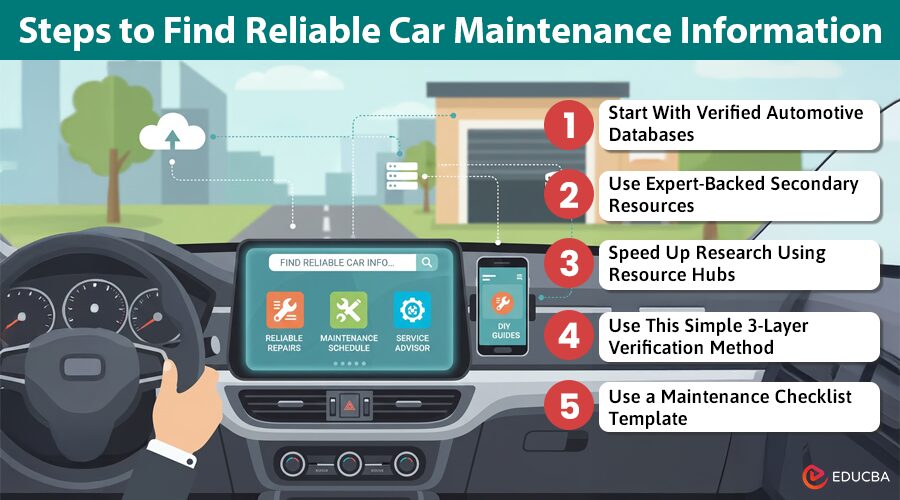
5 Smart Steps to Find Reliable Car Maintenance Information
Follow these five practical steps to quickly access accurate, verified, and up-to-date car maintenance information without wasting time on unreliable sources.
Step 1: Start With Verified Automotive Databases
Before scanning random blogs or YouTube videos, begin with established data-driven sources. These platforms provide specifications, known issues, and service intervals.
Reliable Primary Sources
| Source Type | What It Provides | Why It Matters |
| Manufacturer’s Service Manuals | Official repair steps, torque specs, diagnostics | 100% accurate for your vehicle model |
| OEM Websites | Recall information, software updates | Ensures safety and compliance |
| NHTSA Database | Safety reports, defect complaints | Identifies common issues quickly |
| Automotive Diagnostic Tools (OBD-II) | Error codes and freeze-frame data | Prevents guesswork |
A driver experiencing intermittent stalling on a 2018 Hyundai Sonata found conflicting advice online. Using the manufacturer’s TSB (Technical Service Bulletin), he found an ECU update that instantly solved the issue something random forum posts would never reveal.
Step 2: Use Expert-Backed Secondary Resources
Secondary resources help you interpret your issue in simple language.
The Most Useful Secondary Sources:
- Professional mechanic blogs
- Educational automotive YouTube channels (with certified mechanics)
- Car maintenance apps
- Community-supported Q&A websites
- Automotive troubleshooting guides
When selecting these sources, prioritize:
- Content backed by real technicians
- Posts updated within the last 12–18 months
- Articles with photos, diagrams, or part numbers
- Step-by-step instructions
- Clear disclaimers for safety
Step 3: Speed Up Research Using Resource Hubs
Instead of repeatedly searching Google, one of the smartest methods is to use centralized resource collections. A well-organized resource hub such as a trusted curated link directory helps you access multiple verified sites quickly. These directories typically include:
- Official manufacturer resources
- Diagnostic tools
- Parts lookup sites
- Recall databases
- Community Q&A forums
- Guides for routine maintenance
This eliminates the need to open dozens of unrelated websites and reduces the chance of reading low-quality information.
Step 4: Use This Simple 3-Layer Verification Method
Avoid guessing. Use the following quick filter whenever you find car advice:
1. Technical Accuracy Check
- Does the article reference real TSBs, diagnostic codes, or OEM information?
- Are the steps consistent with known procedures?
2. Practical Feasibility Check
- Can the steps reasonably be done by a car owner?
- Are special tools required?
3. Safety Check
- Do the instructions warn about injury, fire, or electrical risks?
- Are the torque values and specifications provided?
If any of these three checks fail → discard the source.
Step 5: Use a Maintenance Checklist Template
Below is a simple checklist to help drivers quickly understand what to check before searching online:
| Maintenance Area | What to Check | Notes |
| Engine | Oil level, oil color, idle vibration | Look for leaks or a burning smell |
| Battery | Voltage, corrosion | Low voltage causes many false errors |
| Tires | Pressure, wear marks | Check monthly for safety |
| Fluids | Coolant, brake fluid, and power steering | Keep within the recommended range |
| Electronics | Warning lights, OBD-II codes | Use a scanner before researching |
This checklist reduces unnecessary guesswork and prevents misdiagnosis.
Real-Life Case: Finding the Right Information Saves Money
In late 2024, a driver noticed an unusual grinding noise during slow turns. Forums suggested everything from CV joints to wheel bearings, with repair cost estimates ranging from $200 to $900.
Using the verification method in this guide:
- Step 1: Checked the manufacturer database
- Step 2: Reviewed a certified mechanic’s inspection video
- Step 3: Used a curated directory to cross-reference repair guides
The actual issue?
A worn dust shield rubbing against the rotor a zero-cost fix. This demonstrates the value of using reliable sources rather than relying solely on user opinions.
Tips for Faster, More Accurate Car Information Searches
- Bookmark essential automotive resources.
- Always check vehicle-specific TSBs.
- Use at least two independent, trusted sources.
- Keep a digital log of recurring issues.
- Avoid short-form “quick hack” videos that skip critical details.
- Save time by using resource hubs and curated link directories.
With these strategies, any driver beginner or expert can quickly, safely, and accurately find high-quality car maintenance information in 2025.
Final Thoughts
Finding reliable car maintenance information does not have to be overwhelming. By starting with verified automotive databases, using expert-backed resources, and applying a simple verification method, drivers can avoid misinformation and costly mistakes. Resource hubs, checklists, and OBD-II tools help you identify issues faster and ensure you are working with accurate data.
With so much mixed-quality content online, relying on trusted, updated, and vehicle-specific sources is essential. By bookmarking dependable websites, cross-checking information, and keeping a personal maintenance log, anyone can make smarter decisions and maintain their vehicle with confidence and safety.
Recommended Articles
We hope this guide to reliable car maintenance information helps you find accurate, practical solutions for your vehicle. Check out these recommended articles for more resources like this.

