


What is Full-Funnel Marketing?
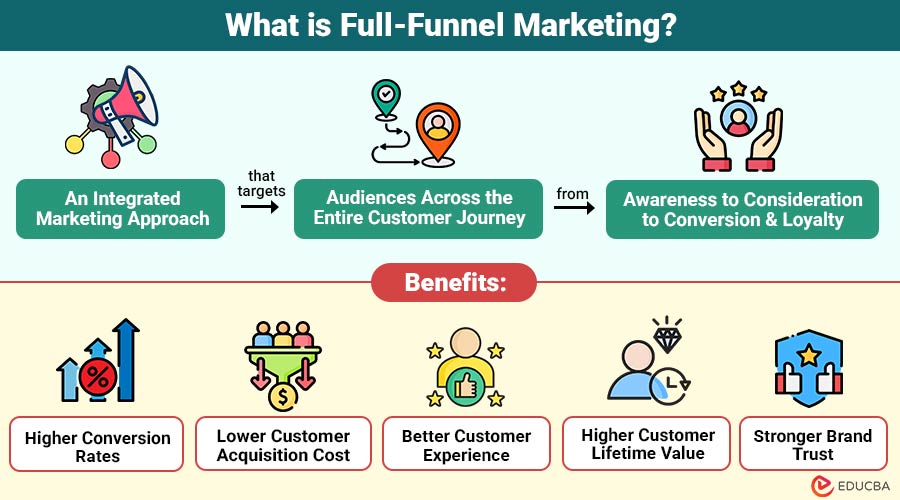
Full-Funnel marketing is an integrated marketing approach that targets audiences across the entire customer journey—from awareness (TOFU) to consideration (MOFU) to conversion (BOFU) and loyalty (post-purchase). It aligns messaging, channels, and content to guide prospects smoothly from discovery to becoming repeat customers.
Table of Contents:
- Meaning
- Why Full-Funnel Marketing Matters?
- Stages
- Key Components
- How to Create a Full-Funnel Marketing Strategy?
- Benefits
- Real-World Examples
- Use Cases
- Challenges
Key Takeaways:
- Full-funnel marketing ensures seamless customer movement by delivering stage-specific value and personalized multi-channel experiences.
- It strengthens brand presence by aligning creative storytelling with audience needs across different decision-making moments.
- Coordinated messaging across channels increases engagement, improves credibility, and supports long-term growth of customer relationships.
- A structured funnel helps businesses maximize efficiency, reduce wasted spending, and improve overall marketing ROI.
Why Full-Funnel Marketing Matters?
Here are the key reasons that make full-funnel marketing essential for modern businesses:
1. Research Before Buying
Modern buyers compare options, read reviews, and thoroughly analyze value before making a purchase decision.
2. High Competition
Every industry faces intense competition, pushing brands to differentiate sharply to capture customer attention.
3. One-Dimensional Fails
Using only ads or only content fails because audiences expect diverse, engaging, multi-channel brand communication today.
4. Need Personalization
Audiences want tailored messages, relevant recommendations, and individualized experiences throughout their entire buying journey.
5. Build Trust
Successful brands nurture credibility, transparency, and genuine relationships instead of solely promoting products to customers.
Stages of Full-Funnel Marketing
Here are the four key stages that guide customers from first awareness to long-term loyalty:
1. TOFU – Awareness
Top-of-funnel marketing focuses on capturing attention, building broad brand visibility, and introducing new audiences to problems your offering can solve.
2. MOFU – Consideration
Middle-of-funnel marketing nurtures prospects by educating them, building trust, and helping them evaluate solutions through valuable content and informative brand interactions.
3. BOFU – Conversion
Bottom-of-funnel marketing focuses on removing buying barriers, offering proof, and motivating prospects to make confident purchase decisions through persuasive actions.
4. Post-Purchase – Loyalty & Advocacy
Post-purchase marketing strengthens customer relationships, increases satisfaction, and encourages repeat purchases and referrals through personalized engagement and loyalty initiatives.
Key Components of Full-Funnel Marketing Strategy
Here are the key components that make a full-funnel marketing approach effective:
1. Clear Customer Journey Mapping
Understanding customer movement from awareness to purchase helps design targeted experiences and improve overall marketing effectiveness.
2. Integrated Channel Approach
Using channels such as SEO, social media, email, paid ads, influencers, and retargeting ensures a cohesive marketing reach.
3. Consistent and Personalized Messaging
Adapting messaging for each funnel stage delivers relevant, targeted communication that resonates and supports customer progression.
4. Strong Creative and Educational Content
Content should attract attention, educate audiences, build trust, and guide prospects confidently toward conversion-ready decision-making stages.
5. Data-Driven Optimization
Measuring KPIs like CPC, CTR, CAC, ROAS, and CLV helps improve performance and refine marketing strategies.
How to Create a Full-Funnel Marketing Strategy?
Here are the step-by-step actions to design and implement an effective full-funnel marketing plan:
Step 1: Identify Your Target Audience
Use personas, demographics, behavior, and purchase intent signals.
Step 2: Map the Customer Journey
Awareness → Consideration → Conversion → Retention
Step 3: Assign Content to Each Funnel Stage
Example flow:
| Stage | Content |
| Awareness | Blogs, videos, social ads |
| Consideration | Guides, case studies, and email nurture |
| Conversion | Demos, trials, offers |
| Loyalty | Rewards, follow-ups |
Step 4: Choose Channels for Each Stage
- TOFU → Social ads, SEO, influencer marketing
- MOFU → Email, retargeting, long-form content
- BOFU → High-intent ads, remarketing, landing pages
- Loyalty → Email automation, rewards programs
Step 5: Run Multi-Level Campaigns
Each campaign must support the next stage.
Step 6: Track Funnel Metrics
- Impressions & reach (TOFU)
- Engagement & leads (MOFU)
- Conversion rate & CAC (BOFU)
- Repeat purchase rate (Loyalty)
Step 7: Optimize Continuously
Improve messaging, targeting, creatives, and channel mix.
Benefits of Full-Funnel Marketing
Here are the benefits that make full-funnel marketing highly effective for businesses:
1. Higher Conversion Rates
Nurtured leads convert at higher rates because consistent engagement, relevant content, and trust-building interactions prepare prospects for confident purchasing decisions.
2. Lower Customer Acquisition Cost
Optimized marketing funnels lower acquisition costs by reducing wasted spending, improving targeting accuracy, and guiding qualified prospects efficiently toward conversions.
3. Better Customer Experience
Customers receive guidance, relevant content, and timely support throughout the buying journey, creating smoother interactions and reducing decision-making pressure.
4. Higher Customer Lifetime Value
Post-purchase engagement and personalized offers encourage repeat buying, deepen loyalty, increase satisfaction, and significantly extend overall customer lifetime revenue potential.
5. Stronger Brand Trust
Consistent messaging, helpful content, and reliable experiences across all touchpoints strengthen credibility, build emotional connection, and foster trust with customers.
Real-World Examples
Here are some brands successfully implementing full-funnel marketing across all stages:
1. Spotify
- TOFU: Social ads & influencers promoting playlists
- MOFU: Personalized email campaigns
- BOFU: “3 months free” premium offer
- Loyalty: Yearly Spotify Wrapped increases retention
2. Apple
- TOFU: Lifestyle-focused ads
- MOFU: Product comparison pages
- BOFU: In-store demos & online buying tools
- Loyalty: Apple ecosystem locks users in
3. Amazon
- TOFU: SEO and product ads
- MOFU: Reviews, ratings, comparison tools
- BOFU: One-click checkout
- Loyalty: Prime memberships and personalized deals
Use Cases of Full-Funnel Marketing
Here are common industries and scenarios where full-funnel marketing proves highly effective:
1. E-Commerce Brands
E-commerce brands increase awareness, nurture prospects, retarget interested visitors, and convert them through personalized, multi-stage marketing.
2. SaaS Companies
SaaS companies leverage demos, free trials, workflows, and nurturing sequences to guide users toward subscription decisions.
3. Real Estate
Real estate brands nurture buyers through repeated touchpoints, informative content, and personalized communication during decision journeys.
4. Education / E-Learning
Education brands engage learners through awareness content, nurturing materials, comparisons, and guidance that support multi-stage enrollment decisions.
5. B2B Businesses
B2B companies use full-funnel demand generation to educate prospects, build trust, nurture leads, and close deals.
Challenges in Full-Funnel Marketing
Here are common challenges brands face when implementing a full-funnel marketing strategy:
1. Managing Multiple Channels
Handling several marketing channels requires coordination, consistent messaging, and continuous optimization to maintain effective audience engagement.
2. Creating Large Volumes of Content
Producing diverse, high-quality content for every funnel stage demands significant time, creativity, resources, and strategic planning.
3. Data Integration Across Tools
Combining data from different platforms is challenging, often causing gaps, inconsistencies, and difficulties in accurate performance tracking.
4. Attribution Complexity
Determining which channel drives conversions becomes difficult when customers interact across many touchpoints throughout their journey.
5. Long Nurturing Cycles in Some Industries
Industries with lengthy decision processes require extended nurturing, continuous communication, and patience to convert qualified leads.
Final Thoughts
Full-funnel marketing empowers brands to guide customers seamlessly from first touch to long-term loyalty using personalized, multi-channel strategies. By aligning content, messaging, and channels for each stage, businesses create stronger engagement, build trust, and drive sustainable growth. Whether you are a startup or enterprise, adopting a full-funnel approach ensures consistent customer experiences, higher conversions, and lasting relationships in today’s highly competitive digital landscape.
Frequently Asked Questions (FAQs)
Q1. Is full-funnel marketing suitable for small businesses?
Answer: Yes. Even simple funnels (SEO → email → offers) improve conversions.
Q2. How long does it take to see results?
Answer: Awareness builds slowly, but conversions can improve within weeks.
Q3. Which tools support full-funnel marketing?
Answer: Google Ads, Meta Ads, HubSpot, Mailchimp, Salesforce, SEMrush, Canva.
Q4. Can full-funnel marketing work without ads?
Answer: Yes. SEO, content marketing, and email automation can create organic funnels.
Recommended Articles
We hope that this EDUCBA information on “Full-Funnel Marketing” was beneficial to you. You can view EDUCBA’s recommended articles for more information.

