


What Is Generative Engine Optimization?
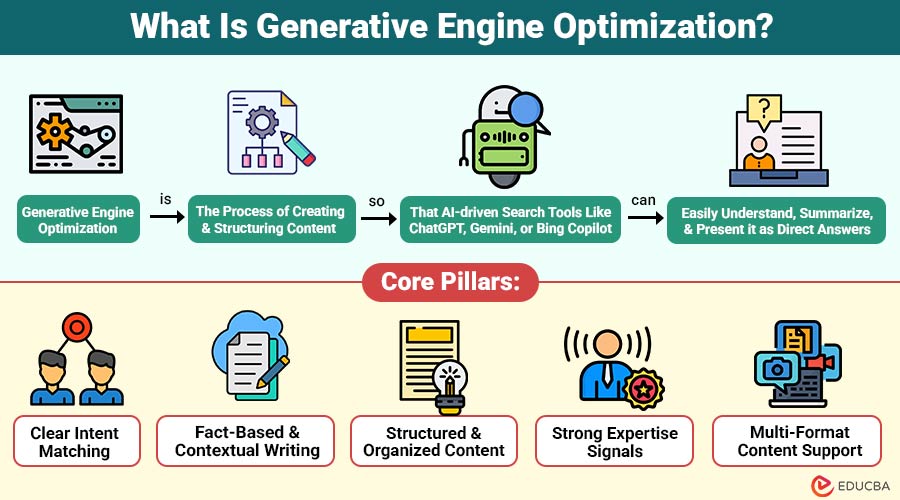
Generative Engine Optimization (GEO) is the process of creating and structuring content so that AI-driven search tools—like ChatGPT, Gemini, or Bing Copilot—can easily understand, summarize, and present it as direct answers. It focuses on clarity, accuracy, and context, rather than just keywords.
For example, if a user asks an AI, “How does cloud storage work?”, GEO-optimized content helps the AI pick your explanation and feature it as the main answer.
Table of Content:
- What Is Generative Engine Optimization?
- Why GEO Matters in the Era of AI Search?
- How Generative Engines Work?
- Core Pillars
- Keyword Strategy in the GEO Era
- GEO Content Framework
- Technical Optimization
- Future
Key Takeaways
- Generative Engine Optimization helps content appear in AI-generated answers by focusing on clarity, structure, and user intent.
- GEO relies on accurate, well-organized, and conversational content that AI can easily understand and summarize.
- Technical elements like schema markup, clean architecture, and updated information improve visibility in AI search.
- As AI-first search grows, GEO becomes essential for maintaining brand presence and capturing zero-click visibility across generative engines.
Why GEO Matters in the Era of AI Search?
GEO is important because AI search tools now provide direct answers instead of displaying lengthy lists of links. Here is why GEO matters:
- More Visibility in AI Answers: AI engines pick clear, structured, and reliable content. GEO helps your content appear at the top of AI-generated responses, increasing your reach.
- Higher Trust and Credibility: When AI tools repeatedly use your content as a source, users trust your brand more. GEO helps you present accurate, well-organized information that AI can easily verify.
- Better User Engagement: AI search answers are short and fast. GEO ensures your content is easy for AI to summarize, enabling users to access quick and helpful solutions.
- Competitive Advantage: Since most websites still focus only on traditional SEO, adopting GEO early helps you stand out in AI search rankings.
- Supports Future Search Trends: As AI tools replace classic search methods, GEO prepares your content for chat-based, voice, and conversational search.
How Generative Engines Work?
Generative engines utilize artificial intelligence to read, comprehend, and generate answers based on information available online. Here is how they work in simple steps:
- They collect information from many sources: AI tools scan articles, websites, and databases to gather facts. They do not copy content directly—they learn patterns and ideas from what they read.
- They understand the user’s question: Generative engines break down the query to find what the user really wants. This helps them decide the most relevant and accurate information to provide.
- They summarize complex information: AI tools take large amounts of content and turn it into short, clear answers. This is why structured and well-written content performs better.
- They generate a fresh response: Instead of pulling information from one place, AI creates a new answer using all the data it has understood. This ensures the final answer is easy to read and helpful.
- They update with new information: Generative engines continually learn from new content, making their answers more current and reliable over time.
Core Pillars of Generative Engine Optimization
Generative Engine Optimization is built on key pillars that help AI tools easily understand and use your content. Here are the main pillars explained:
- Clear Intent Matching: Content must match what users truly want to know. When your answers align with real user questions, AI tools are more likely to pick them.
- Fact-Based and Contextual Writing: AI prefers content that is accurate, well-supported, and explained in context. Providing clear facts and simple explanations helps AI trust your information.
- Structured and Organized Content: Using headings, bullet points, tables, and short paragraphs makes it easy for AI to scan and summarize your content quickly.
- Strong Expertise Signals: AI engines highlight content that shows authority. Adding author credentials, reliable data, and updated information strengthens trust.
- Multi-Format Content Support: Including images, examples, FAQs, and step-by-step sections helps AI understand topics better and generate richer answers for users.
Keyword Strategy in the GEO Era
Keyword strategy in the GEO era focuses on understanding user intent and creating content that AI can easily interpret and use in its responses. Here are the key points explained:
- Shift from Keywords to Intent: Instead of relying solely on exact keywords, GEO focuses on understanding what users actually mean. AI engines prefer content that clearly answers real questions, not just content stuffed with keywords.
- Use Topic Clusters: Group related topics together so AI can see your content as complete and trustworthy. A strong cluster makes it easier for AI to choose your pages when generating answers.
- Optimize for Conversational Queries: People now ask questions in natural language, like they speak. Creating content that matches these conversational patterns helps AI understand and feature your answers.
- Target Long-Form and Specific Queries: AI tools often provide detailed answers to complex questions. Covering niche, specific topics increases your chances of being used in AI-generated responses.
- Focus on Zero-Click Visibility: Since users may not click links, GEO keywords aim to get your answer featured directly in AI summaries, improving brand visibility even without clicks.
GEO Content Framework
The GEO Content Framework focuses on creating content that AI can easily read, understand, and use in its answers. Here are the essential points explained clearly and simply:
- Create Clear Content Blocks: Break information into small sections with headings and short paragraphs. This helps AI find and summarize key points quickly.
- Use Answer-Level Optimization (ALO): Begin each section with a direct, simple answer before explaining details. AI tools prefer content that gives quick clarity.
- Write in a Conversational Style: Use natural, easy-to-read language. Since AI search is conversational, this style aligns better with how users ask questions.
- Add Facts, Data, and Sources: AI trusts content that includes reliable information. Adding stats or sources helps improve credibility and accuracy.
- Include Multiple Formats: Use lists, examples, tables, and FAQs. These formats are easier for AI to scan and convert into helpful answers.
Technical Optimization for Generative Engines
Technical optimization makes your content easy for AI systems to find, read, and understand. Here is a clear breakdown of the key points
- Use Schema Markup Effectively: Adding structured data helps AI understand the purpose of your content, such as reviews, FAQs, or product details. This improves your chances of appearing in AI-generated answers.
- Organize Content with Clean Architecture: A well-structured site with clear navigation and internal links helps AI engines easily find and interpret your pages, enhancing their performance.
- Improve Page Speed and User Experience: Fast-loading pages with smooth interactions signal quality and reliability, making AI more likely to trust your content.
- Add Contextual Metadata: Titles, descriptions, and alt tags help AI understand your content’s topic and intent more accurately.
- Keep Content Updated: AI tools prefer fresh information. Backlinko’s AI optimization research shows that updated content with visible dates and semantic structure achieves higher citation rates across ChatGPT and Perplexity. Regular updates make your content more relevant and usable in AI search responses.
Future of GEO
The future of GEO will grow quickly as AI search becomes the main way people find information. Here are the essential points broken down clearly:
- Rise of AI-First Search: As more users rely on AI tools, traditional search engines will become less prominent. GEO will help content get picked as the main source in AI answers.
- More Focus on Conversational Queries: People will ask longer, more natural questions. Content must be written in a friendly, human tone for AI to understand and use it easily.
- Greater Importance of Accurate Information: AI will prioritize trusted, verified, and updated content. Brands that publish reliable information will win visibility.
- Increased Use of Multimodal Content: AI will analyze text, images, videos, and charts together. GEO will focus on optimizing these formats for AI understanding.
- Shift Toward Zero-Click Visibility: Instead of clicks, success will depend on appearing in AI summaries, highlights, and instant answers.
Final Thoughts
Generative Engine Optimization is becoming essential as AI-driven search becomes the new normal. By creating clear, structured, and trustworthy content, brands can improve their visibility in AI-generated answers. GEO helps you stay competitive, meet user expectations, and adapt to future search trends. Focusing on intent, accuracy, and organization ensures long-term success in an AI-first digital world.
Frequently Asked Questions
1. How is GEO different from traditional SEO?
Answer:- GEO focuses on optimizing content for AI-generated answers rather than ranking on search engine result pages.
2. Does GEO require technical skills?
Answer:- Basic technical elements help, but GEO mainly depends on clear, structured, and accurate content.
3. Can GEO work for small businesses?
Answer:- Yes, GEO helps small businesses get visibility in AI answers even without high domain authority.
4. Is GEO only for written content?
Answer:- No, GEO also supports images, tables, and FAQs that AI can use to generate richer responses.
Recommended Articles
We hope this guide on Generative Engine Optimization (GEO) helped you understand AI search optimization. For more insights, explore related tips below:


