


Cybersecurity for Students: Overview
In today’s digital world, understanding online security is crucial for anyone embarking on an e-learning path. The rise in cyber threats makes internet safety not just beneficial but necessary. This easy guide to cybersecurity for students helps you learn the basics you need to protect your online life.
Cybersecurity transcends mere hacker deterrence; it encompasses protecting personal data, securing sensitive information, and maintaining online privacy. As cyber attacks and data breaches escalate, the urgency for effective cybersecurity grows exponentially.
Why It Matters for Online Learners?
In the interconnected world, cybersecurity is a critical component of online learning for students. Digital platforms have become central to education, making online safety a crucial concern. Cybersecurity protects personal information, prevents data breaches, and shields students from cyber threats.
Understanding Cybersecurity
Cybersecurity refers to the use of tools and practices to protect computers, networks, and data from unauthorized access or misuse. The primary goal is to maintain the privacy, accuracy, and accessibility of your information when you need it. Protecting personal information from cyber threats is essential in a digital learning environment.
Why Online Learners Are Targets?
Online learners often use personal devices, public Wi-Fi, and multiple online platforms. This makes cybersecurity for students even more important. Students tend to have fewer security measures in place, making them prime targets for cybercriminals who exploit weak passwords, unsecured devices, and phishing attacks.
Potential Risks in the Digital World
Students face several online risks, including:
- Malware from untrusted downloads
- Hacking due to weak or reused passwords
- Identity theft, leading to financial or reputational damage
Understanding these risks is the first step toward strong cybersecurity for students.
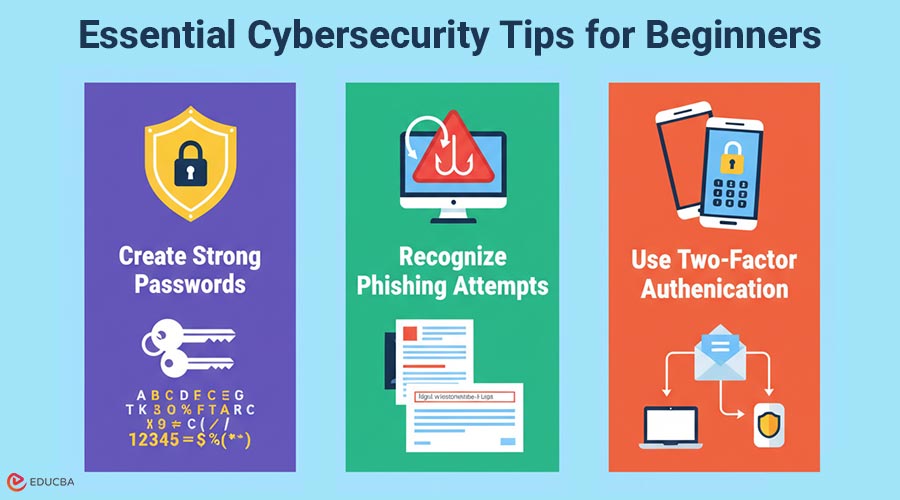
Essential Cybersecurity Tips for Beginners
Adopting basic cybersecurity measures is essential for anyone venturing online. We will explore three critical strategies for beginners to protect their digital identity effectively.
Creating Strong Passwords
Strong passwords form your first line of defense. A secure password should include:
- Uppercase and lowercase letters
- Numbers
- Special characters
Avoid birthdays, names, or common words. Using a password manager helps generate and store strong, unique passwords for every account, a crucial aspect of cybersecurity for students.
Recognizing Phishing Attempts
Phishing remains a major threat to student online security. To avoid falling into phishing traps:
- Be cautious of unsolicited messages asking for personal information
- Check the sender’s email address
- Avoid clicking unfamiliar links
- Verify suspicious messages directly with the organization.
Learning to spot phishing scams is a crucial aspect of cybersecurity for students.
Using Two-Factor Authentication
Two-factor authentication significantly enhances security, making it more challenging for cybercriminals to breach your accounts. This method uses a second step, such as a code sent to your phone, in addition to your password. Implementing two-factor authentication across all accounts can significantly bolster your online safety and protect your digital identity.
By integrating these strategies, beginners can establish a solid foundation for their online security, thereby reducing risks and navigating the digital world with confidence.
Why Planet VPN is Crucial for Your Online Security?
In the modern digital landscape, using tools that enhance privacy is essential. cybersecurity for students often requires stronger protection, and Planet VPN plays a vital role in this regard. This free VPN service, available at freevpnplanet.com, boosts your digital safety by encrypting your connection and hiding your identity from cyber threats.
Benefits of Using a VPN
A VPN enhances cybersecurity by:
- Encrypting your internet connection
- Preventing unauthorized tracking or data theft
- Helping bypass restricted or blocked websites
- Adding a safety layer to public Wi-Fi use
These features make VPNs a powerful asset in cybersecurity for students.
How to Set Up Planet VPN on Your Devices?
Configuring Planet VPN on your devices is remarkably simple, requiring only a few steps:
- Visit freevpnplanet.com and download the Planet Free VPN application tailored for your device.
- Install the app by following the on-screen instructions.
- Upon installation, launch the application and register for a free account or log in if you possess an existing one.
- Select a server from the options and connect to secure your internet connection.
Planet VPN is easy to set up, even for beginners, making it an ideal choice for enhancing cybersecurity for students.
Final Thoughts
As digital education continues to expand, cybersecurity for Students has become more important than ever. Students must stay informed about online risks and take proactive steps to safeguard their digital presence.
Grasping the fundamentals of cybersecurity is crucial. This includes understanding the significance of robust passwords, being vigilant against phishing attempts, and utilizing two-factor authentication. These actions can greatly enhance your online learning security. By adopting these practices, you can effectively counter the numerous digital threats that exist.
Furthermore, integrating tools like Planet VPN into your routine can significantly enhance your security. The benefits of Planet VPN, including anonymity and secure connections, provide a sense of security. This allows you to concentrate on your studies without the burden of digital security concerns. By adopting these strategies, you help create a safer and more secure online learning environment.
Recommended Articles
We hope this article on cybersecurity for students helps you understand the basics of staying safe online while learning. Check out our related articles to learn more about online privacy, internet safety tips, and protecting your digital identity.


