


Safe Browsing for Students: Overview
In the digital age, online education tools have revolutionized the learning landscape, providing students with unparalleled access to knowledge and opportunities for collaboration. However, this convenience brings significant risks. It is essential to understand the importance of safe browsing for students and implement robust cybersecurity measures. These measures are vital to safeguard student data and uphold academic integrity. This guide aims to equip students with the necessary tools and practices to navigate the online educational environment securely and safely.
Why Safe Browsing for Students is Crucial?
In the digital era, cybersecurity awareness is essential for students. The move to online learning has made protecting personal data and maintaining academic integrity more important than ever. This shift demands robust measures to protect against digital threats.
The Growing Importance of Cybersecurity in Education
The digitization of education has heightened the need to protect students’ online privacy. Data breaches have highlighted the importance of comprehensive cybersecurity measures. By enhancing cybersecurity awareness, schools can reduce the risk of data breaches and unauthorized access.
Common Online Threats Students Face
Students face various online threats that can disrupt learning and compromise their personal data. Key threats include:
- Educational Phishing Scams: Fake emails or websites trick students into sharing sensitive information.
- Malware Attacks: Malicious software can infect devices, leading to data loss and academic disruptions.
- Unsecured Public Networks: Using unsecured Wi-Fi can expose personal information to hackers.
Being aware of these risks and employing safe browsing practices for students is essential for a secure educational experience.
Impact on Academic Performance and Personal Data
Unaddressed online threats can have severe consequences beyond immediate security breaches. Compromised personal information can hinder a student’s academic progress, affecting grades and future prospects. Protecting student privacy is crucial to safeguard their academic and personal integrity, preventing long-term harm to their performance and well-being.
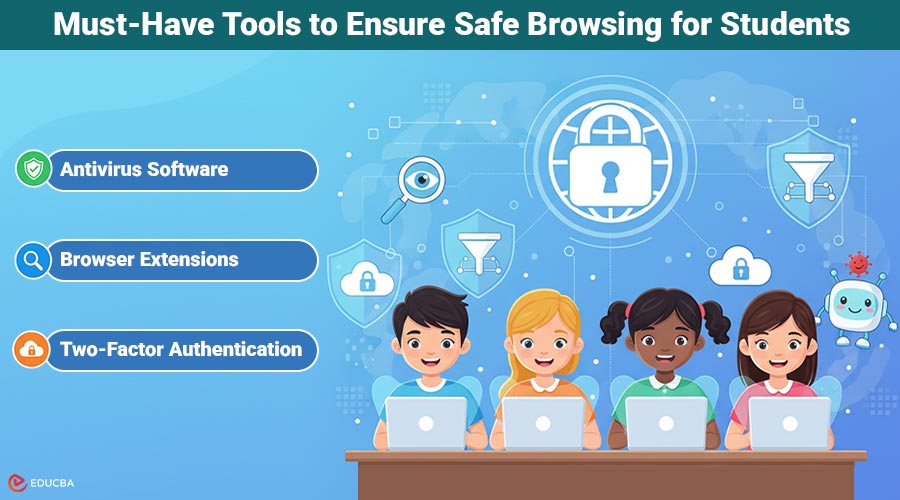
Must-Have Tools to Ensure Safe Browsing for Students
In the digital age, ensuring the security of online learning environments is paramount. Students must arm themselves with essential tools to protect their personal information and academic progress. This section examines essential tools that form the foundation of online learning security.
1. Antivirus Software
One of the foremost tools students should utilize is reliable antivirus software. This software is essential for identifying and eliminating malicious threats, such as trojans, viruses, and malware. Having a robust antivirus for students can prevent devastating cyber-attacks and ensure that their devices remain secure while accessing educational resources online.
2. Browser Extensions
Browser extensions play a significant role in safeguarding the online experience. Secure browsing extensions can block harmful websites, prevent phishing attempts, and enhance privacy by managing cookies and tracking. These extensions are indispensable for students who spend a considerable amount of time researching and accessing information online.
3. Two-Factor Authentication
Another critical aspect of online learning security is implementing two-factor authentication (2FA) for educational accounts. Two-factor authentication improves security by requiring an additional verification step in addition to a password. This helps prevent unauthorized access to students’ accounts and safeguards their academic information from potential breaches. By integrating these essential tools, students can not only enhance their online learning experience but also effectively safeguard their personal and academic information. Keep in mind that staying proactive about cybersecurity is essential for success in the digital education environment.
How FreeVPNmentor Can Help Students Practice Safe Browsing?
Adopting a robust solution like freevpnmentor enhances digital safety and ensures uninterrupted learning. Here is how FreeVPNmentor can safeguard students’ online journeys.
Benefits of Using a VPN for Online Education
Utilizing a VPN for online classes provides numerous benefits.
- Anonymity and Privacy: Hides IP addresses, protecting students from cyberattacks.
- Access to Educational Content: Circumvents geographical restrictions for global resources.
- Secure Connection: Ensures sensitive information remains protected during online activities.
Key Features of FreeVPNmentor Services
FreeVPNmentor stands out with premium features designed to enhance students’ digital security and privacy. Key attributes include:
- Data Encryption: All data transmitted through FreeVPNmentor is encrypted, protecting against unauthorized access.
- Access to Restricted Content: Students can access educational materials and resources that may otherwise be restricted in certain regions.
- High-speed Servers: FreeVPNmentor offers fast servers, ensuring smooth and uninterrupted online classes.
Steps to Get Started
Getting started with FreeVPNmentor is straightforward and user-friendly. Follow these steps to set it up:
- Visit the Website: Navigate to the FreeVPNmentor homepage.
- Create an Account: Sign up using your email and create a secure password.
- Download the App: Install the FreeVPNmentor app on your preferred device.
- Connect to a Server: Launch the app and connect to the server that offers the best combination of speed and security for your needs.
By integrating FreeVPNmentor into their digital toolkit, students can confidently navigate their online educational environment, assured of privacy and protection.
Final Thoughts
In the digital age, practicing safe browsing for students is more important than ever. By understanding common threats, implementing essential tools such as antivirus software, browser extensions, and two-factor authentication (2FA), and utilizing services like FreeVPNmentor, students can safeguard both their personal data and academic integrity. Ongoing vigilance, awareness, and proactive cybersecurity measures are essential for a secure online educational journey. By following these strategies, students can focus on learning while staying protected in the evolving digital landscape.
Recommended Articles
We hope this guide on safe browsing for students helps you navigate online learning securely. Check out these recommended articles for more tips and tools to protect your digital safety.


