
What is Contextual Marketing?
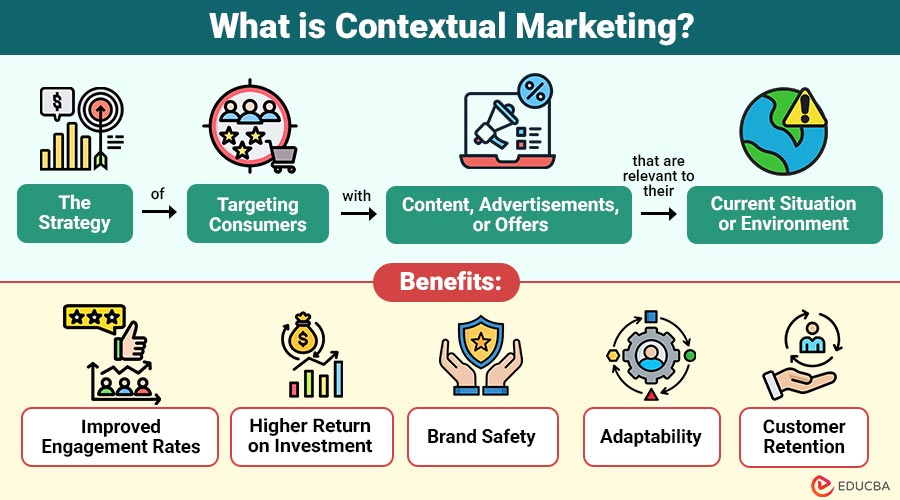
Contextual Marketing is the strategy of targeting consumers with content, advertisements, or offers that are relevant to their current situation or environment. It utilizes real-time data, including keywords, browsing history, location, and device type, to determine which content is most valuable at that moment.
For example, imagine a user browsing a blog about fitness equipment. While reading, they see ads for gym wear, protein supplements, or yoga mats. This is contextual marketing—ads aligned with the content and user intent.
Table of Contents:
- Meaning
- Why Contextual Marketing Matters?
- Working
- Key Components
- Benefits
- Strategies
- Real-World Examples
- Challenges
Key Takeaways:
- Contextual marketing delivers ads based on real-time user context, rather than tracking personal data.
- It enhances engagement and conversions by aligning ads with user intent and content relevance.
- AI and machine learning enable the accurate detection of context and the dynamic optimization of real-time content.
- This privacy-compliant strategy builds trust while maintaining effectiveness in the evolving digital landscape.
Why Contextual Marketing Matters?
Here are the key reasons why contextual marketing has become essential for brands in today’s privacy-driven digital landscape:
1. Enhanced User Experience
Users encounter meaningful, contextually relevant ads that match their current needs, resulting in smoother, less intrusive digital experiences.
2. Higher Conversion Rates
Relevant and timely messages capture user attention, significantly increasing engagement levels, click-through rates, and overall conversion performance.
3. Compliance with Privacy Regulations
Contextual marketing respects user privacy by avoiding the tracking of personal data, ensuring compliance with strict laws such as GDPR and CCPA.
4. Increased Brand Trust
Brands that prioritize context-based advertising foster stronger consumer trust by demonstrating respect for privacy and transparent marketing practices.
How Contextual Marketing Works?
Contextual marketing leverages a combination of data analytics, machine learning, and contextual signals to deliver highly relevant content. Here is how it works step-by-step:
1. Data Collection
The system collects data from user activities, including search queries, visited pages, device type, and location, to understand user behavior.
2. Context Analysis
AI algorithms analyze contextual signals, such as keywords, content type, and user intent, to identify relevance and predict engagement opportunities.
3. Content Matching
Based on contextual insights, the platform selects suitable ads, offers, or recommendations that align perfectly with the user’s current situation.
4. Delivery and Optimization
Personalized content is instantly delivered and continuously optimized through user interactions, engagement metrics, and real-time performance analysis.
Key Components of Contextual Marketing
Here are the core elements that make contextual marketing effective in delivering relevant and personalized experiences to users:
1. Content Relevance
The message or advertisement aligns precisely with the user’s intent, webpage topic, and current browsing context for maximum impact.
2. User Context
Elements like time, location, device type, and browsing situation determine which content or offer is most relevant to display.
3. AI and Machine Learning
Advanced algorithms study user behavior, detect contextual patterns, and dynamically refine marketing strategies for real-time content optimization.
4. Personalization Engines
These systems utilize contextual insights to create adaptive, individualized user experiences, rather than relying solely on predefined audience profiles.
Benefits of Contextual Marketing
Here are the major benefits that make contextual marketing a powerful and privacy-friendly approach for modern digital advertisers:
1. Improved Engagement Rates
Relevant and timely ads capture more attention, leading to higher user interaction and stronger engagement across digital platforms.
2. Higher Return on Investment
Contextually relevant advertising increases conversions, improving marketing efficiency and maximizing overall return on advertising spend.
3. Brand Safety
Advertisements are displayed only on suitable and relevant web pages, ensuring the brand maintains credibility and avoids inappropriate content.
4. Adaptability
Contextual marketing operates effectively across various devices, platforms, and environments, ensuring consistent performance and audience reach.
5. Customer Retention
Delivering contextually relevant experiences strengthens customer trust, satisfaction, and long-term brand loyalty over repeated interactions.
Effective Contextual Marketing Strategies
To make contextual marketing successful, brands must combine creativity with data-driven insights. Here are the top strategies:
1. Keyword and Topic Targeting
Analyze the keywords and themes of webpages or search queries to match ads with relevant content. For example, targeting “healthy recipes” pages for a food brand.
2. Geo-Targeting
Deliver ads based on the user’s physical location. For instance, promoting nearby restaurants or local events based on GPS data.
3. Device-Based Context
Optimize marketing messages based on the device in use. A mobile user might see short, visually engaging ads, while desktop users receive more detailed offers.
4. Real-Time Content Personalization
Update website banners, offers, or recommendations in real time based on user context, such as time of day or weather conditions.
5. Dynamic Display Ads
Utilize AI-driven display ads that dynamically adjust text, imagery, or calls-to-action (CTAs) based on contextual signals.
6. Contextual Email Marketing
Personalize email content based on context, such as recent website visits or local events happening near the recipient.
Real-World Examples
Here are some successful examples that demonstrate how leading brands use contextual marketing to deliver relevant and impactful advertising experiences:
1. Coca-Cola’s “Share a Coke” Campaign
Coca-Cola printed names on bottles and displayed personalized ads depending on demographics and regions. This campaign resonated globally because it effectively connected the brand message with the user’s personal identity.
2. Google Ads
Google’s AdSense utilizes contextual targeting, displaying ads based on the webpage’s content. If you read about travel destinations, you will likely see ads for hotels or flights.
3. Weather-Based Campaigns
Retailers like Amazon or Target run ads tailored to weather conditions—promoting raincoats when it is raining or sunscreen on sunny days.
Challenges in Contextual Marketing
While effective, contextual marketing also faces challenges:
1. Complexity in Context Detection
Accurately identifying user intent and emotional tone demands sophisticated AI models and continuous algorithmic refinement.
2. Limited Data Sources
Since it excludes behavioral data, contextual marketing relies on fewer insights, which can sometimes reduce campaign depth and precision in personalization.
3. Ad Placement Accuracy
Maintaining precise ad alignment with page content is vital to ensure relevance and prevent mismatched or ineffective placements.
4. Measuring Success
Tracking performance, ROI, and attribution becomes more complex without detailed behavioral data or cross-platform user tracking capabilities.
Final Thoughts
Contextual marketing strikes a balance between personalization and privacy by focusing on user context rather than personal data. It enables brands to deliver relevant, trust-driven messages while complying with strict privacy laws. As digital regulations evolve, this approach ensures ethical, engaging advertising. Early adopters gain higher engagement, stronger customer trust, and a sustainable advantage in a privacy-conscious marketplace.
Frequently Asked Questions (FAQs)
Q1. Is contextual marketing privacy-friendly?
Answer: Yes. It does not rely on personal data or tracking cookies, making it compliant with privacy regulations, such as GDPR.
Q2. Why is contextual marketing important for brands today?
Answer: It increases engagement, improves conversion rates, and builds trust without invading user privacy.
Q3. Which industries benefit most from contextual marketing?
Answer: Industries such as e-commerce, travel, entertainment, and consumer goods gain the most, as context-based ads enhance relevance and user engagement across platforms.
Recommended Articles
We hope that this EDUCBA information on “Contextual Marketing” was beneficial to you. You can view EDUCBA’s recommended articles for more information.

