


What is Project Closure?
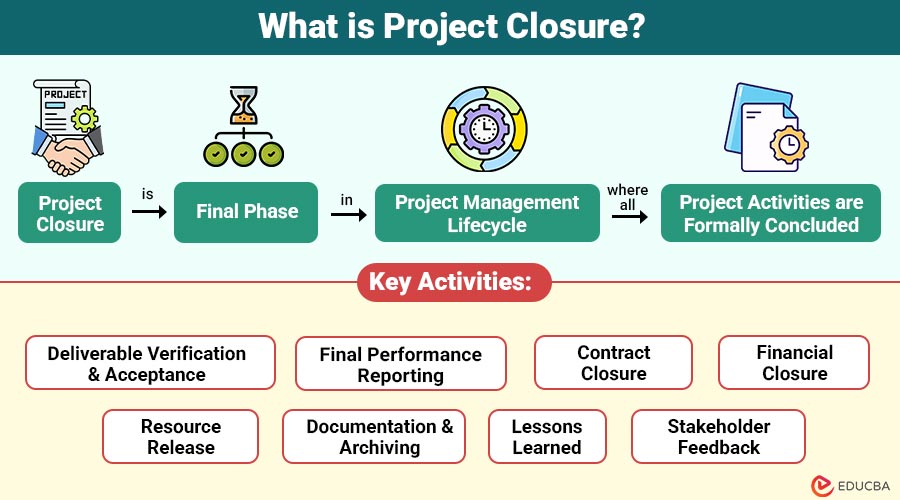
Project closure is final phase in the project management lifecycle, where all project activities are formally concluded.
This phase ensures that:
- All project deliverables meet quality standards and objectives.
- The team completes the contracts and agreements.
- Resources (human, financial, and physical) are released.
- The team captures the documentation and lessons learned.
- Stakeholders formally accept the completed project.
Project closure is not merely an administrative task; it provides an opportunity for reflection, evaluation, and continuous improvement for future projects.
Table of Contents:
Key Takeaways:
- Project closure ensures accountability, verifies deliverables, and strengthens organizational processes for smoother future project execution.
- Capturing lessons learned during closure fosters continuous improvement and prevents the repetition of previous project mistakes.
- Effective closure optimizes resource allocation, releases assets efficiently, and enhances overall productivity across organizational projects.
- Formal stakeholder acceptance during closure builds trust, reduces disputes, and enhances confidence in project management practices.
Importance of Project Closure
Here are some key aspects that highlight the importance of project closure:
1. Formal Acceptance of Deliverables
It checks that the project results match what was required and expected, reducing conflicts and giving the organization a formal confirmation that the project is successfully completed.
2. Resource Management
Releases team members, equipment, and financial resources, enabling the efficient reallocation of resources to new projects and improving overall organizational productivity.
3. Financial Closure
The finance team pays all bills, closes all contracts, and checks the budget to avoid money problems and keep everything clear.
4. Lessons Learned
Captures insights on successes and failures, improving future project management practices, and preventing repetition of past mistakes.
5. Documentation and Compliance
Completes, archives, and maintains all project documents for audits or future reference, ensuring compliance and organizational knowledge retention.
Key Activities in Project Closure
The project team performs multiple structured activities during project closure to ensure nothing is overlooked. Below are the primary tasks:
1. Deliverable Verification and Acceptance
- Verify that all project outputs meet predefined quality standards.
- Obtain formal approval from stakeholders or clients.
- Ensure any pending tasks are either completed or formally deferred.
2. Final Performance Reporting
- Prepare a comprehensive report that compares project outcomes against the initial objectives.
- Include details of schedule adherence, budget usage, risk management, and quality benchmarks.
- Share the report with stakeholders to ensure transparency and accountability.
3. Contract Closure
- Confirm that all contractual obligations with vendors, suppliers, or third-party partners are fulfilled.
- Resolve any outstanding claims or disputes.
- Ensure that all contracts are formally signed off.
4. Financial Closure
- Reconcile all project expenses and invoices.
- Release any remaining budget allocations.
- Document final project costs for accounting and future reference.
5. Resource Release
- Reassign project team members to new projects or operational roles.
- Return or reallocate equipment, software licenses, and physical assets.
- Ensure proper recognition and appreciation for the team’s contribution.
6. Documentation and Archiving
- Collect and organize all project documents, including plans, schedules, change requests, reports, and deliverables.
- Store documents in a centralized repository for audit and reference purposes.
- Ensure compliance with organizational or legal requirements.
7. Lessons Learned
- Conduct post-project reviews to analyze successes, challenges, and failures.
- Document best practices and recommendations for future projects.
- Share insights with other project teams to foster continuous improvement.
8. Stakeholder Feedback
- Engage stakeholders to understand their satisfaction level and collect feedback.
- Identify areas of improvement in communication, deliverable quality, or risk management.
- Use feedback to strengthen organizational processes.
Project Closure Checklist
To ensure no aspect of project closure is overlooked, project managers can use a checklist:
- Confirm all project objectives are met.
- Obtain stakeholder sign-off on deliverables.
- Conduct a final project review meeting.
- Complete contract and financial closure.
- Release project resources.
- Archive all project documentation.
- Conduct a lessons learned session.
- Share insights with the organization.
- Celebrate the project’s completion and recognize the team’s contributions.
Benefits of a Well-Executed Project Closure
Here are some key benefits that demonstrate the value of executing project closure effectively:
1. Improved Organizational Learning
The team writes down what they learned so the organization remembers it and avoids making the same mistakes again.
2. Stakeholder Satisfaction
Formal project closure and acceptance reassure stakeholders, strengthening trust and enhancing long-term professional client relationships.
3. Efficient Resource Utilization
Timely resource release supports smoother transitions, enabling efficient reassignment and improved productivity across upcoming organizational projects.
4. Risk Mitigation
Final audits and reviews address unresolved issues, reducing risks of disputes, financial errors, and compliance failures.
5. Performance Evaluation
Closure enables structured performance assessment, identifying strengths, weaknesses, and informing future staffing or training decisions.
Challenges in Project Closure
Even experienced project managers may face challenges during closure:
1. Incomplete Deliverable
Unfinished or substandard outputs slow approval, delaying project closure and creating additional rework for teams.
2. Stakeholder Conflicts
Varying expectations or interpretations of deliverables cause disagreements and complicate achieving formal client acceptance processes.
3. Documentation Overload
Extensive documentation demands significant time to properly organize, review, finalize, and securely archive project records.
4. Resource Management Issues
Lack of future project planning complicates timely resource reallocation, leaving team members underutilized or uncertain.
5. Lessons Learned Neglect
Teams often skip review sessions, missing chances to improve processes, share insights, and strengthen organizational practices.
Real-World Example
Here is a real-world example illustrating how project closure ensures successful completion and smooth transitions:
IT System Implementation Project:
A multinational company implemented a new ERP system across multiple departments. During project closure:
- The team validated all deliverables against functional requirements.
- Stakeholders formally approved the system.
- All vendor contracts for software licenses and support were closed.
- A post-implementation review identified workflow improvements and lessons learned for future IT projects.
- The organization reallocated resources to maintain the system and work on subsequent projects.
This organized way of closing the project made the ending smooth, prevented big issues, and increased stakeholders’ trust in the organization’s project management.
Final Thoughts
Project closure is a vital phase that ensures the formal completion of deliverables, their acceptance, and the release of resources. A well-organized project closure helps collect important lessons, keeps stakeholders happy, uses resources wisely, and reduces risks. When done properly, it turns the end of a project into a chance for the organization to learn, grow, and improve, making its project management stronger.
Frequently Asked Questions (FAQs)
Q1. How long does project closure take?
Answer: The complexity of the project determines how long it takes. While complex projects with several stakeholders may take weeks to complete, simpler initiatives might be finished in a matter of days.
Q2. Is project closure mandatory?
Answer: Yes, formal closure is considered best practice in project management, as it ensures accountability, resource release, and documentation of lessons learned.
Q3. Who is responsible for project closure?
Answer: Typically, the project manager oversees closure, but all stakeholders, team members, and support functions may be involved.
Q4. What happens if a project is closed prematurely?
Answer: Closing a project prematurely can result in incomplete deliverables, unresolved issues, and dissatisfied stakeholders, which can potentially harm an organization’s reputation.
Recommended Articles
We hope that this EDUCBA information on “Project Closure” was beneficial to you. You can view EDUCBA’s recommended articles for more information.

