


How To Prepare For IB, AP, and Cambridge Programs?
Balancing good study habits, planning, and time management is essential to prepare for IB, AP, and Cambridge programs. These advanced academic curricula foster intellectual depth and equip students with the skills necessary for success in higher education. Students joining such challenging courses often discover that success depends not only on academic prowess but also on discipline, curiosity, and flexibility.
Each program differs in terms of academic and personal development. The IB focuses on global-minded education, the AP on mastering college-level material, and the Cambridge curriculum on developing independent and analytical thinking. Learning how to prepare for IB, AP, and Cambridge programs early helps students cultivate the right mindset, study habits, and resources for success. Whether studying in local institutions or boarding schools in Canada, preparation plays a decisive role in educational outcomes.
Tips to Prepare For IB, AP, and Cambridge Programs
Here are some tips to prepare for IB, AP, and Cambridge programs:
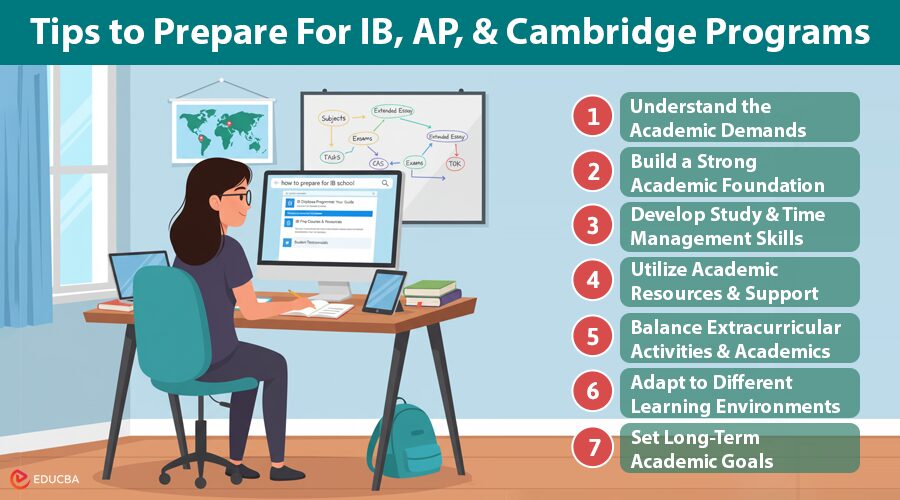
1. Understanding the Academic Demands
The first step to prepare for IB, AP, and Cambridge programs is understanding their academic rigor. The IB Diploma Programme, for example, requires proficiency in six subjects, Theory of Knowledge essays, an extended essay, and community service. The AP program challenges students to study college-level material and perform well on standardized exams. In contrast, Cambridge programs, such as IGCSE and A Levels, emphasize self-directed learning and research over rote memorization.
Students should familiarize themselves with the structure, objectives, and assessment criteria of their chosen program. Knowing what to expect reduces anxiety and aids in planning effective study routines. Those who develop strong critical reading, writing, and logical reasoning skills early will have a significant advantage when they prepare for IB, AP, and Cambridge coursework.
2. Building a Strong Academic Foundation
A solid foundation in mathematics, sciences, and language arts is crucial when you prepare for IB, AP, and Cambridge programs. Reviewing past coursework, identifying learning gaps, and engaging in problem-solving exercises strengthen core understanding. Enrichment activities, such as academic clubs or independent reading, further enhance intellectual confidence and curiosity.
Outside of the academic world, the same curiosity and desire to learn and explore a wide variety of subjects are also useful characteristics. The IB program promotes interdisciplinary learning, whereas AP and Cambridge promote in-depth study in specific subject areas. Students who inspire curiosity by reading widely, studying other cultures, or undertaking creative projects can develop the flexibility required for rigorous research. Such an attitude fosters a stronger academic identity, which in turn helps with coursework and university preparation.
3. Developing Study and Time Management Skills
Strong time management is crucial when preparing for IB, AP, and Cambridge studies. Students often juggle multiple assignments, projects, and extracurricular activities. Creating a structured schedule that balances study, rest, and recreation helps prevent burnout. Prioritizing tasks and setting realistic goals ensures a sustainable pace throughout demanding semesters.
It is also important to adopt effective study methods. Using active learning methods, such as summarizing notes, teaching others, and using flashcards, helps improve understanding and memory. In academic programs that involve extensive essay work, such as the IB and Cambridge, a timed academic writing practice helps build confidence and accuracy. Students who develop their organization and concentration skills early are in a better position to manage the long-term workload.
4. Utilizing Academic Resources and Support
Access to quality learning resources can greatly impact how effectively students prepare for IB, AP, and Cambridge programs. Schools often offer study guides, sample papers, and tutoring tailored to each curriculum. Online tools, such as video lessons, discussion boards, and practice tests, help students experience real exam conditions.
It is also necessary to include mentorship and peer support. Collaboration with seasoned teachers or other graduates who have completed similar programs can enable students to learn from their experiences. Numerous boarding schools in Canada, such as these, offer mentorship programs where seniors guide new students through the challenges of IB, AP, or Cambridge studies. The establishment of a support group provides emotional support and academic preparation.
5. Balancing Extracurricular Activities and Academics
While academic excellence is vital, holistic growth is equally important when you prepare for IB, AP, and Cambridge programs. Colleges seek well-rounded students who engage in sports, arts, volunteering, and leadership. The IB, in particular, values creativity, community service, and innovation. Participating in such activities fosters resilience, teamwork, and emotional intelligence.
Balancing between the extracurricular and academic life is a matter of discipline. Young people need to select activities that align with their interests to avoid overburdening themselves with responsibilities. Routine activities are structured and contain leisure time and interests that enhance mental well-being and prevent stress buildup. A balanced lifestyle will enable the students to deliver their best without jeopardizing their well-being.
6. Adapting to Different Learning Environments
Each program demands unique learning approaches. The IB emphasizes inquiry-based learning, AP promotes structured mastery, and Cambridge fosters independent analysis. To successfully prepare for IB, AP, and Cambridge, students must develop adaptability and self-awareness to switch between learning methods, such as group discussions, self-study, or digital tools.
Exposure to diverse learning environments, such as international classrooms or virtual platforms, also enhances adaptability. Students of international institutions or boarding schools in Canada generally find themselves in a multicultural setting that reflects the institution’s or school’s global vision. Adapting to working with students from diverse backgrounds is a valuable way to develop communication skills and broaden intellectual horizons, which are essential qualities for university life.
7. Setting Long-Term Academic Goals
Effective preparation means having clear long-term goals. Students should align their academic choices with their career aspirations when they prepare for IB, AP, and Cambridge programs. The IB diploma earns global recognition, AP courses provide college credits, and universities worldwide accept Cambridge qualifications. Choosing subjects that match your interests and goals helps you stay motivated.
It helps to have milestones that allow students to track their progress in both the short and long term. Self-evaluation also enables them to recognize their weaknesses and strengths at an early stage. Teachers and counselors can help refine educational plans to ensure every step contributes to greater academic achievement. Cause-based preparation fosters concentration and perseverance that extends beyond high school.
Final Thoughts
To succeed in IB, AP, and Cambridge programs, students need more than intelligence; they require resilience, curiosity, and thoughtful planning. Time management, a solid academic base, and balance between study and personal growth are essential for sustained achievement. Access to supportive networks, teachers, mentors, and peers further strengthens confidence and motivation.
These programs end up as pathways to intellectual preparedness and internationalization. They also encourage students to think creatively, communicate effectively, and apply their knowledge in innovative ways. A student with calm planning and an appropriate attitude and outlook can succeed in these upstream courses and continue to develop the expertise that will benefit them in college life and later on.
Recommended Articles
We hope this article helps you build the right mindset, study habits, and time management skills for academic success. Explore our related articles to discover more tips on international education pathways, effective study strategies, and university preparation guides.

