
What is Customer Advocacy?
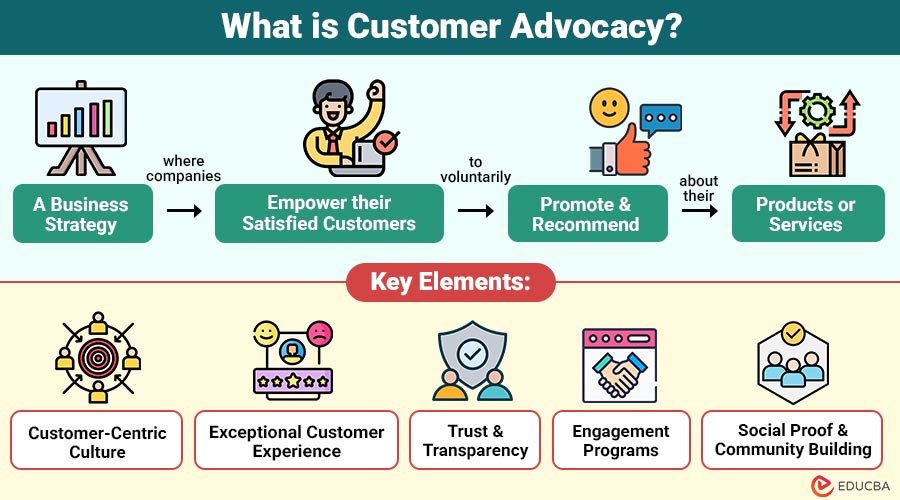
Customer Advocacy refers to a business strategy where companies empower their satisfied customers to voluntarily promote and recommend their products or services. It goes beyond customer satisfaction and loyalty—advocacy is about creating genuine enthusiasm that inspires customers to share positive experiences, reviews, and referrals.
Table of Contents:
- Meaning
- Why Customer Advocacy Matters?
- Key Elements
- How Customer Advocacy Differs from Loyalty?
- Benefits
- Strategies
- Real-World Examples
- Challenges
- Metrics to Measure Customer Advocacy Success
Key Takeaways:
- Customer advocacy transforms satisfied customers into enthusiastic promoters, driving organic growth and long-term trust.
- Genuine advocacy stems from exceptional experiences, transparency, and emotional connections—not just loyalty or incentives.
- Empowering and recognizing advocates enhances brand reputation, strengthens retention, and fuels sustainable business success.
- Data-driven tools and community engagement programs help identify, reward, and sustain high-impact customer advocates.
Why Customer Advocacy Matters?
Customer advocacy is crucial for both brand growth and customer retention. Below are key reasons why businesses prioritize advocacy:
1. Increased Brand Trust
Real customer recommendations build authenticity, enhancing brand credibility and trust more effectively than traditional advertisements.
2. Cost-Effective Marketing
Relies on organic promotion, minimizing paid advertising costs while generating long-term, sustainable business growth.
3. Customer Retention
Valued and satisfied customers remain loyal, continuously purchasing and recommending the brand to others, thereby ensuring lasting relationships.
4. Competitive Advantage
Passionate advocates humanize the brand, fostering emotional connections that effectively set it apart from market competitors.
5. Improved Customer Insights
Advocates share valuable experiences and feedback, enabling companies to refine products, enhance services, and optimize customer satisfaction.
Key Elements of Customer Advocacy
To establish an effective customer advocacy program, several core elements must be in place:
1. Customer-Centric Culture
The foundation of advocacy lies in putting customers first. This includes listening to their needs, valuing their feedback, and delivering personalized experiences tailored to their specific requirements.
2. Exceptional Customer Experience
Customers become advocates when they are delighted—not just satisfied. A seamless buying experience, proactive support, and consistent communication all contribute to advocacy.
3. Trust and Transparency
Trust is developed through open conversation. Businesses that are open and honest about their procedures, costs, and principles typically build closer bonds with their clients.
4. Engagement Programs
Structured programs, such as loyalty rewards, referral incentives, and brand ambassador initiatives, encourage customers to participate actively.
5. Social Proof and Community Building
Encouraging customers to share their stories and experiences on social platforms fosters community engagement and strengthens a brand’s reputation.
How Customer Advocacy Differs from Loyalty?
Although customer loyalty and customer advocacy are interconnected, they are not the same:
| Aspect | Customer Advocacy | Customer Loyalty |
| Focus | Encouraging customers to promote the brand | Retaining customers through satisfaction |
| Motivation | Driven by enthusiasm and emotional connection | Driven by positive experiences |
| Outcome | Brand promotion and referrals | Repeat purchases |
| Measurement | Measured by referrals and brand mentions | Measured by retention rate |
| Example | An advocate recommends it to friends and social networks | A loyal customer keeps buying |
Benefits of Customer Advocacy
Here are the key benefits businesses can gain by building and nurturing strong programs:
1. Stronger Brand Reputation
Advocates act as brand ambassadors, promoting the company authentically and effectively. This helps build trust faster than any paid advertisement.
2. Higher Conversion Rates
Real testimonials and user-generated reviews increase the likelihood that potential customers will make a purchase.
3. Reduced Marketing Costs
Word-of-mouth marketing from advocates reduces the need for large ad budgets.
4. Long-Term Customer Relationships
Advocacy fosters a community of engaged customers who continue supporting the brand over time.
5. Increased Customer Lifetime Value
Advocates often spend more, renew subscriptions, and attract new customers, thereby increasing overall business value.
Effective Strategies to Build Customer Advocacy
Building customer advocacy requires thoughtful planning and consistent effort. Below are the most effective strategies:
1. Deliver Exceptional Value
Make sure your product or service constantly fulfills or beyond customers’ expectations. Customer pleasure is where advocacy starts.
2. Personalize Customer Interactions
Utilize customer data to deliver personalized recommendations, offers, and communications. Personalization builds emotional connections.
3. Encourage Customer Feedback
Actively ask for reviews, ratings, and testimonials. Acknowledge and implement valuable suggestions to make customers feel heard.
4. Implement a Referral Program
Reward customers who refer others. This can include discounts, loyalty points, or exclusive access to new products and services, set up with tools like ReferralCandy.
5. Highlight Customer Success Stories
Publish case studies, testimonials, and interviews showcasing how customers have benefited from your offerings.
6. Engage on Social Media
Interact with your customers on platforms like X (Twitter), Instagram, and LinkedIn. Repost their content and appreciate their mentions.
7. Create an Ambassador Program
Develop a tailored program for your top advocates. Offer special recognition, early access, or VIP perks to strengthen loyalty and advocacy.
8. Train Employees to Be Advocates
Empower your internal team to embody brand values and deliver excellent customer service. Happy employees create happy customers.
Real-World Examples
Here are some well-known brands that have successfully leveraged customer advocacy to boost growth and trust:
1. Dropbox
Dropbox grew rapidly through its referral program, rewarding users with additional storage for inviting friends. This incentivized advocacy helped scale the brand globally.
2. Sephora
Sephora’s Beauty Insider Community enables customers to share product reviews, tutorials, and beauty tips. This user-generated content enhances trust and advocacy.
3. GoPro
GoPro’s marketing heavily relies on user-generated videos. Customers share adventurous clips filmed using GoPro cameras, showcasing authentic advocacy that attracts new users worldwide.
Challenges in Customer Advocacy
While the benefits are numerous, organizations often face certain challenges:
1. Maintaining Consistency
Ensuring consistent excellence across every customer touchpoint is challenging, but it is essential to sustain trust, satisfaction, and brand advocacy effectively.
2. Identifying True Advocates
Not every loyal customer becomes an advocate; businesses must recognize individuals who genuinely influence others through authentic recommendations and enthusiasm.
3. Measuring Advocacy Impact
Evaluating the influence of advocacy on revenue, engagement, and perception requires advanced analytics tools, accurate attribution models, and ongoing performance tracking.
4. Balancing Incentives and Authenticity
Offering rewards to advocates must not compromise genuine passion; maintaining authenticity ensures credibility and lasting trust in advocacy marketing.
Metrics to Measure Customer Advocacy Success
Tracking success helps refine strategies. Common metrics include:
1. Net Promoter Score
Evaluates the likelihood that consumers will promote your brand, taking into account their level of pleasure and potential for advocacy across various audiences.
2. Referral Rate
Indicates how many new customers existing ones bring through recommendations, showing advocacy strength and organic brand growth.
3. Customer Retention Rate
Demonstrates long-term satisfaction by revealing how many customers continue to purchase, indicating loyalty and evolving into an advocacy-driven relationship over time.
4. User-Generated Content
Tracks customer-created posts, reviews, and social mentions, highlighting authentic engagement, advocacy impact, and organic promotion across multiple online platforms.
Final Thoughts
Customer advocacy goes beyond marketing—it is a relationship-focused approach that drives sustainable business growth. By prioritizing customer satisfaction and success, companies turn happy customers into loyal brand advocates. These advocates build trust, attract new clients, and strengthen long-term loyalty. In today’s customer-centric digital era, advocacy remains a powerful strategy for fostering lasting connections and driving business success.
Frequently Asked Questions (FAQs)
Q1. How can businesses encourage advocacy?
Answer: By providing excellent experiences, listening to feedback, offering referral incentives, and recognizing advocates publicly.
Q2. Why is customer advocacy important in marketing?
Answer: Because it builds trust, reduces marketing costs, and drives long-term business growth through genuine customer promotion.
Q3. How can technology support customer advocacy programs?
Answer: Technology aids advocacy through CRM systems, social listening tools, and automation software that track referrals, monitor feedback, identify top advocates, and measure performance efficiently.
Q4. What industries benefit most from customer advocacy?
Answer: Customer advocacy is most impactful in technology, retail, SaaS, hospitality, and healthcare industries, where trust, reviews, and referrals strongly influence buying decisions.
Recommended Articles
We hope that this EDUCBA information on “Customer Advocacy” was beneficial to you. You can view EDUCBA’s recommended articles for more information.

