


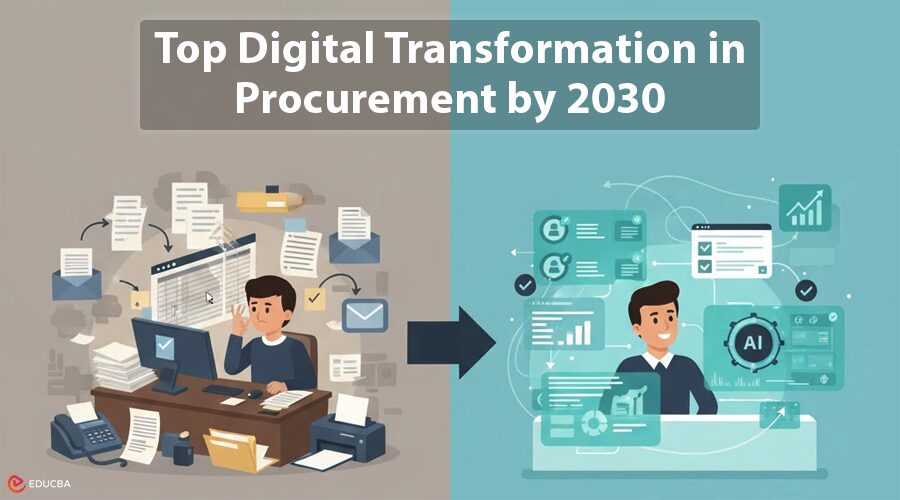
Digital Transformation in Procurement: Overview
As we look toward 2030, digital transformation in procurement stands on the edge of a historic evolution. The last decade focused on digitization, automating purchase orders, integrating spend data, and centralizing sourcing platforms. The next decade will focus on intelligence, autonomy, and strategic impact.
By 2030, procurement will not only facilitate transactions; it will drive enterprise outcomes, encompassing innovation, sustainability, resilience, and agility. Zycus is already shaping this future today through its Merlin AI Suite and Source-to-Pay (S2P) solutions, which drive this evolution by converging AI, data orchestration, and autonomous decision-making.
Top 6 Digital Transformation in Procurement by 2030
Here are the top 6 ways digital transformation in procurement will shape the future by 2030:
1. Procurement Will Move from Automation to Autonomy
Digital transformation in procurement began with automation, making repetitive, manual tasks faster and more accurate. However, by 2030, automation will be table stakes. The new standard will be autonomy systems that can interpret, decide, and act without constant human input.
Agentic AI, the next stage of artificial intelligence, will drive this change. Procurement platforms will no longer wait for users to trigger workflows. Instead, AI agents will proactively identify business needs, launch sourcing events, negotiate with suppliers, and manage contracts all within compliance frameworks.
Zycus’ Intake-to-Outcomes (I2O) vision exemplifies this transformation. It connects every procurement activity from payment request through AI-driven orchestration. By 2030, such systems will enable fully autonomous procurement ecosystems that deliver measurable business value in real time.
2. Data Will Become Procurement’s Core Currency
By 2030, digital transformation in procurement will center on data as its primary currency. Real-time insights from supply markets, supplier performance, and risk analytics will replace traditional dashboards.
AI-driven platforms will integrate external and internal data sources to create predictive visibility, anticipating disruptions, pricing trends, and supplier capacity constraints before they happen.
Zycus’ Spend Analysis, Supplier Management, and Contract Lifecycle Management (CLM) solutions already use AI to unify, cleanse, and contextualize data. In the coming decade, these insights will evolve into autonomous intelligence, enabling procurement leaders to make faster, smarter, and more strategic decisions.
In Procurement 2030, data will not only inform decisions, but also make them.
3. Procurement Will Become the Enterprise Control Tower
The digital transformation in procurement will also redefine the function’s role across the enterprise. By 2030, procurement will operate as the enterprise control tower orchestrating decisions across finance, supply chain, and operations.
AI-powered procurement systems will ensure every business request is:
- Governed: Automatically compliant with policy and regulatory standards
- Connected: Linked to the right suppliers, contracts, and budgets
- Measured: Evaluated for ROI, sustainability, and stakeholder satisfaction.
With platforms like Zycus’ Source-to-Pay Suite, organizations will gain unified visibility into every procurement activity, from supplier onboarding to payment reconciliation. This level of orchestration will transform procurement into a strategic center for enterprise intelligence.
4. Sustainability and Ethics Will Be Digital Imperatives
Digital transformation in procurement will closely tie the future of procurement to sustainability, ESG performance, and ethical sourcing. By 2030, stakeholders will expect full transparency across supply chains, from carbon footprints to human rights compliance.
Digital tools will automate ESG reporting and integrate ethical performance into supplier evaluations, enabling more comprehensive and accurate assessments. AI will help procurement teams model the environmental and social impact of every sourcing decision, making sustainability a measurable business metric rather than an abstract goal.
5. Human Roles Will Evolve — Not Disappear
As AI takes over repetitive, transactional work, digital transformation in procurement will redefine human roles. Procurement professionals will evolve into strategic value architects. Their focus will shift from execution to:
- Building supplier innovation ecosystems
- Managing risk and resilience
- Driving sustainability initiatives
- Designing AI governance frameworks.
Zycus’ philosophy has always emphasized human-AI collaboration where technology augments human insight, rather than replacing it. In Procurement 2030, this collaboration will define the most successful organizations.
6. The Road to 2030 Starts Now
Digital transformation in procurement has already begun. Organizations that start investing in AI-powered, integrated procurement platforms today will be the first to achieve autonomy by 2030.
Zycus’ Merlin AI Suite and Source-to-Pay ecosystem provide the foundation for that journey, combining automation, orchestration, and intelligence to help enterprises evolve from digital efficiency to strategic autonomy.
By 2030, procurement will drive business outcomes, sustainability, and innovation across the entire enterprise, emerging as a strategic powerhouse rather than a back-office function.
Final Thoughts
Digital transformation in procurement will drive the next decade, as Procurement 2030 builds on three pillars: autonomy, intelligence, and impact.
With visionaries like Zycus pioneering the future through Agentic AI and the Intake-to-Outcomes framework, the path ahead is clear:
Procurement’s next chapter is not just digital, it is autonomous, intelligent, and transformative.
Recommended Articles
We hope this article on Procurement 2030 helps you understand how digital transformation is reshaping the future of procurement. Check out our related articles to explore more about AI in procurement, autonomous systems, and strategies driving enterprise innovation.


