


What Is Organic Growth?
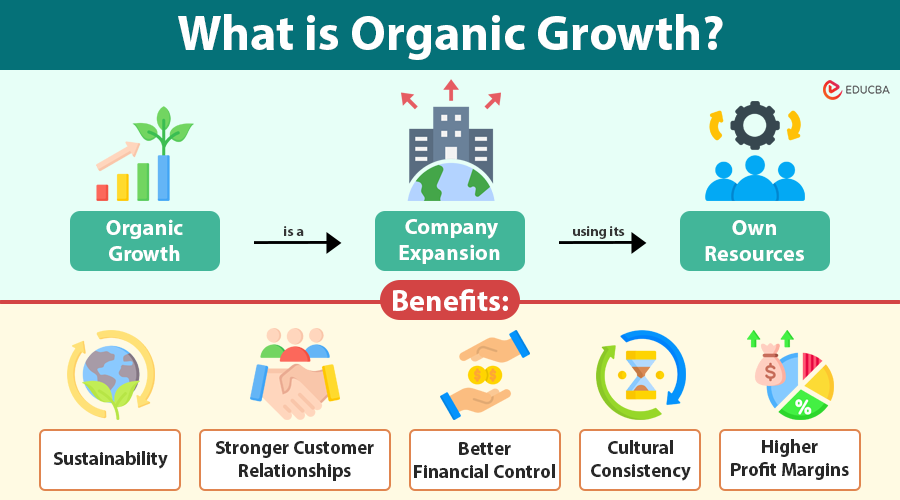
Organic growth is the process through which a company increases its revenue and business operations by utilizing its own internal resources and strengths. This growth is achieved through strategies such as increasing sales, enhancing marketing effectiveness, launching new products, and improving customer retention, all without relying on mergers, acquisitions, or external investments.
For instance, a local skincare brand that boosts its revenue by introducing a new product line and improving online marketing is experiencing organic growth. The company achieves this expansion through its own efforts rather than by purchasing another brand or seeking outside funding.
Table of Content
Key Drivers of Organic Growth
Several internal and strategic factors fuel organic business expansion. The following key drivers help companies strengthen their foundation, attract new customers, and sustain long-term success.
1. Product Innovation
Companies that innovate consistently attract new customers and retain existing ones. By adding new features, improving quality, or enhancing usability, a brand can increase customer satisfaction and encourage word-of-mouth referrals. Innovation keeps the business relevant and helps it stay ahead of competitors.
2. Customer Experience Enhancement
When businesses prioritize exceptional customer service, they naturally improve customer retention and lifetime value. Personalized interactions, prompt support, and trust-building communication create meaningful relationships that fuel organic growth. A satisfied customer not only returns but also promotes the brand to others.
3. Effective Marketing Strategies
Strong marketing strategies, such as SEO, content marketing, and social media engagement, enable brands to attract customers organically, thereby reducing their reliance on paid advertisements. By delivering meaningful content and upholding consistent brand communication, companies can enhance their market presence and build stronger credibility.
4. Brand Loyalty and Reputation
A trustworthy and reputable brand fosters repeat business and generates positive reviews. When companies consistently deliver quality and value, customers evolve into loyal advocates who naturally drive growth. A solid reputation also attracts new audiences through referrals and social proof.
5. Employee Productivity and Engagement
A motivated and engaged workforce plays a crucial role in driving organic growth. Skilled employees deliver higher performance, generate innovative ideas, and enhance customer satisfaction. When organizations invest in employee development and a positive culture, they build a team that actively supports long-term business expansion.
Benefits of Organic Growth
Organic growth offers several strategic advantages that strengthen a company’s foundation and ensure long-term sustainability. The following benefits highlight why many organizations prefer growing from within rather than relying on external expansion methods.
1. Sustainability
Companies achieve long-term growth by leveraging their internal capabilities and resources. This approach ensures stability, adaptability, and continuous improvement over time.
2. Stronger Customer Relationships
Businesses nurture loyal customers rather than focusing solely on short-term sales spikes. By emphasizing value and trust, they create deeper connections that support consistent revenue growth.
3. Better Financial Control
Firms maintain financial independence and avoid ownership dilution. By utilizing internal resources efficiently, companies can reinvest profits strategically for sustained growth and expansion.
4. Cultural Consistency
Organizations maintain their core values and identity during periods of growth and expansion, ensuring a consistent and cohesive approach. This alignment helps preserve the company’s brand integrity and work culture.
5. Higher Profit Margins
Without acquisition costs or external debt, profits remain within the company. This allows businesses to maximize returns and reinvest in innovation and employee development.
Challenges of Organic Growth
Although organic growth offers long-term stability, it also presents certain hurdles that require strategic focus and continuous effort. Businesses must address these challenges effectively to maintain momentum and achieve sustainable success.
While organic growth is sustainable, it often demands time, patience, and consistent effort. Some common challenges include:
- Slower Expansion: Growth occurs at a gradual pace compared to inorganic methods such as mergers or acquisitions.
- Limited Market Access: Without partnerships or external investments, companies may struggle to enter new markets or adopt advanced technologies.
- Resource Constraints: Businesses depend heavily on existing resources and workforce capabilities, which can limit scalability.
- Continuous Innovation Requirement: Organizations must continually evolve and respond to shifting market dynamics to maintain a competitive edge.
However, organizations that overcome these challenges often achieve more resilient success, stronger brand reputation, and deeper customer loyalty.
Strategies to Achieve Organic Growth
To sustain long-term success, businesses must adopt strategies that enhance internal performance and customer value. The following approaches help organizations naturally strengthen their market presence and drive growth.
1. Focus on Core Competencies
Strengthen the products or services that deliver maximum value. By refining your core offerings, you enhance brand reliability and create a solid foundation for expansion.
2. Leverage Digital Marketing
Leverage SEO, email marketing, and social media interactions to widen your reach and connect with a larger audience. Strong digital marketing efforts enhance visibility and foster long-term brand recognition. Businesses can support organic growth by making creator marketing easier to manage. SideShift brings creator recruitment, campaign coordination, performance tracking, and payouts into one platform, helping teams turn authentic creator content into a repeatable part of their digital marketing strategy.
3. Enhance Customer Retention Programs
Introduce loyalty programs, referral incentives, and personalized offers to retain existing customers. A strong retention strategy helps reduce churn and increase lifetime value.
4. Invest in Employee Training
Strengthen your workforce by promoting ongoing learning and professional development. Skilled employees innovate more, perform better, and contribute significantly to sustainable business growth.
5. Utilize Data Analytics
Examine customer data to understand their behaviors, preferences, and purchasing trends. Data-driven decisions help refine strategies and improve marketing effectiveness.
6. Expand Product Lines
Introduce complementary products or upgrade existing ones to capture new market segments. Diversifying offerings enhances revenue potential and strengthens brand competitiveness.
Examples of Successful Organic Growth
- Apple: Apple expanded organically through continuous innovation and customer loyalty, growing from the iPod to the iPhone and beyond.
- Starbucks: Starbucks built its brand through consistent quality and customer experience rather than rapid acquisitions.
- Nike: Nike focuses on powerful storytelling, strong brand identity, and customer engagement to fuel its global presence organically.
These companies demonstrate that long-term, internally driven growth can yield substantial rewards, independent of external dependencies.
Organic Growth vs. Inorganic Growth
Businesses can expand either through internal efforts or by acquiring external entities. The table below highlights the key differences between organic and inorganic growth based on several essential aspects.
| Aspect | Organic Growth | Inorganic Growth |
| Source | Internal resources | Mergers, acquisitions, or partnerships |
| Speed | Gradual and steady | Rapid but often short-term |
| Control | Full organizational control | Shared with external entities |
| Risk Level | Lower | Higher due to integration challenges |
| Customer Relationship | Stronger and more personal | Often transactional |
Final Thoughts
Organic growth provides businesses with a sustainable path to expansion, relying on internal capabilities, innovation, and customer trust. It enables companies to establish robust foundations, maintain control, and achieve long-term stability without relying on external mergers or acquisitions.
Although the process takes time and consistent effort, the results are enduring. Organizations that focus on continuous improvement, employee development, and customer satisfaction can achieve meaningful, lasting success driven by genuine growth from within.
Frequently Asked Questions (FAQ’s)
Q1. How is organic growth measured?
Answer: Businesses measure organic growth by tracking key performance indicators, such as revenue increases, customer acquisition rates, and market share, excluding the impact of mergers or acquisitions. Comparing year-over-year performance provides a clear view of genuine internal progress.
Q2. Can startups achieve organic growth effectively?
Answer: Yes, startups can achieve organic growth by focusing on product innovation, targeted marketing, and customer retention. While limited resources may slow early progress, organic growth helps startups establish credibility and a loyal customer base, reducing their dependency on external sources.
Q3. What industries benefit the most from organic growth?
Answer: Industries such as technology, retail, SaaS, and consumer goods often benefit most because they can scale through innovation, brand loyalty, and customer engagement rather than acquisitions. However, any business with strong internal processes can pursue organic growth.
Recommended Articles
We hope this guide on Organic Growth was helpful. Explore related articles on Inorganic Growth, Business Expansion Strategies, and Product-Led Growth to gain deeper insights into sustainable and scalable ways to grow your business.

